

7 Best Beans for French Roast at Home: 2026 Guide
Table of Contents
- Quick Comparison: 7 Best Beans for French Roast at Home
- How We Evaluated These French Roast Beans
- 1. Cafe de Mattier French Roast: Best Overall
- 2. Cafe de Mattier Italian Roast: Darkest Option
- 3. Cafe de Mattier Sumatra: Best Single-Origin
- 4. Cafe de Mattier 6 Bean Blend: Best for Espresso
- 5. Cafe de Mattier Bali Blue: Best Medium-Dark
- 6. Cafe de Mattier Honduras: Best for Caramel Notes
- 7. Cafe de Mattier Cowboy Blend: Best Everyday Dark Roast
- Brewing Tips for the Perfect French Roast
- Frequently Asked Questions
Last Updated: September 20, 2026
Quick Comparison: 7 Best Beans for French Roast at Home
Finding the 7 best beans for French roast at home starts with one clarifying fact: French roast is a roast level, not a brewing method, and the bean you start with decides whether that dark roast tastes smoky and sweet or simply burnt. At Cafe de Mattier, we roast in small batches from micro-lots and family-owned estates, so we have strong opinions about which green coffees survive a dark roast profile with their character intact. Below, we compare seven options side by side, explain how we evaluated them, and show you exactly which one fits your setup.

| Bean | Roast Level | Best For | Key Notes | Price |
|---|---|---|---|---|
| French Roast | Dark | Overall dark roast | Smoky, bold, low acidity | $23.99 |
| Italian Roast | Darkest | Maximum intensity | Deep, bittersweet, heavy body | $23.99 |
| Sumatra | Dark | Single-origin depth | Earthy, syrupy, dark chocolate | $23.99 |
| 6 Bean Blend | Dark | Espresso | Complex, balanced, rich | $23.99 |
| Bali Blue | Medium-dark | Balance seekers | Dark chocolate, molasses | $23.99 |
| Honduras | Medium-dark | Caramel lovers | Caramel, spice, brown sugar | $23.99 |
| Cowboy Blend | Dark and medium | Everyday drinking | Cocoa, caramel, vanilla | $23.99 |
How We Evaluated These French Roast Beans
We judged each bean on four criteria: how well it holds up under a dark roast profile, its origin profile and bean density, flavor clarity after oil extraction, and how forgiving it is to brew at home. A common mistake is assuming darker always means better for French press. We also weighed versatility: a bean that works in a French press, a drip machine, and an espresso basket earns a higher spot than one that only shines in a single method. Every option here is a one-time purchase at $23.99.
1. Cafe de Mattier French Roast: Best Overall
The best overall bean for French roast at home is Cafe de Mattier French Roast, a dark roast blending specialty-grade coffee from Central America. It delivers the smoky flavor and low acidity people expect from a French roast.

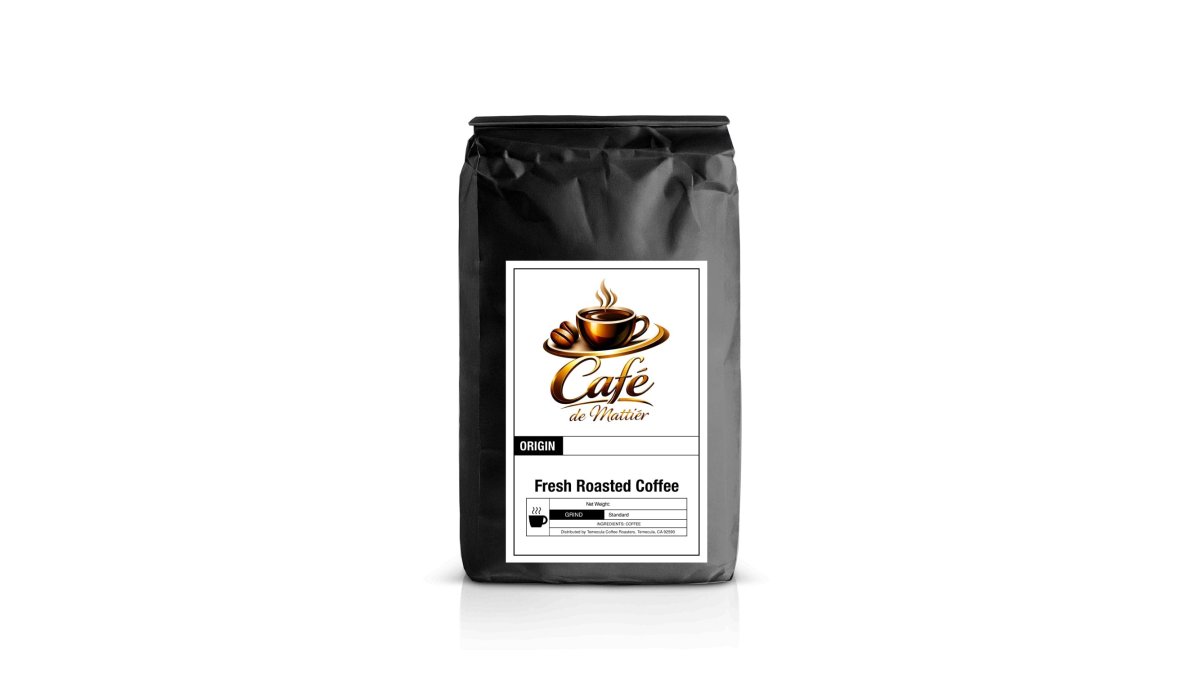
The blend composition matters here. Central American beans bring nutty sweetness and cocoa notes that survive caramelization during a long roast, so the cup stays full-bodied rather than bitter. If you are learning how to roast coffee beans at home, this is also the profile to aim for: a slow, even roast that pulls oils to the surface without scorching them. Grind coarse for French press, use a brewing ratio around 1:15, and keep water temperature just off boiling. You can read the Specialty Coffee Association's brewing standards for exact parameters. It is our top pick because it is the most complete dark roast in the lineup.
2. Cafe de Mattier Italian Roast: Darkest Option
Italian Roast is the darkest option in this comparison, a slow-roasted blend of specialty-grade Arabica and Robusta. If French roast still tastes mild to you, this is the next step: heavier body, deeper bittersweetness, and a finish that lingers.
The Robusta component adds crema and body, which is why Italian-style roasts are a staple in espresso culture. Bitterness management becomes the whole game at this roast level. Pull back your extraction time, grind slightly coarser, and drop water temperature a few degrees. Where it falls short: the intensity overwhelms delicate single-origin character, so do not buy it expecting floral notes. It is built for drinkers who want the roast, not the origin, to lead.
3. Cafe de Mattier Sumatra: Best Single-Origin
Sumatra is the best single-origin pick for French roast at home, with medium acidity, a syrupy body, and notes of dark chocolate, dried fruit, and earth. It comes from the Aceh region through the KBQB cooperative, grown between 1,100 and 1,600 meters and processed with traditional wet-hulling.
That wet-hull process, known locally as Giling Basha, creates the earthy, savory depth that defines the island's coffee, and it holds up beautifully against a dark roast profile because the bean density is high. The result is a long, lingering body that stays smooth even when you push the roast dark. If you have only ever tried Sumatra as a medium roast, a dark-roasted version will surprise you with how much cocoa comes forward. A common mistake is grinding it too fine for French press, which clogs the filter and over-extracts the earthiness into something muddy.
4. Cafe de Mattier 6 Bean Blend: Best for Espresso
The 6 Bean Blend is the best espresso choice among these French roast beans, a meticulous house blend of coffees from around the world roasted dark. It is built to perform under pressure, where single-origin beans often fall apart.
Espresso amplifies everything: acidity, sweetness, and defects. A blend solves this by balancing origins against each other, so no single characteristic dominates. This one pulls a rich, complex shot with enough body to stand up to milk without disappearing. For a French press, it works just as well, though the complexity reads differently, more layered and less sharp. The one drawback is that it is less transparent than a single-origin. You taste the craft of the blend, not the story of one farm.
5. Cafe de Mattier Bali Blue: Best Medium-Dark
Bali Blue is the best medium-dark option, roasted slightly lighter than a true French roast and tasting of dark chocolate, molasses, and brown sugar. Smallholder farmers from Kintamani grow it at 1,200 to 1,600 meters in volcanic loam, hand-picking and wet-hulling each lot before drying it on raised beds.
This is the pick for anyone who finds full French roast too aggressive. The slightly lighter roast preserves more flavor clarity and aroma, so you get the smoky character without losing the sweetness underneath. Volcanic soil contributes to the mineral richness in the cup, and the Bourbon, Typica, and Catimor varieties add structure. In practice, this is a versatile bag: excellent in a French press, forgiving in a drip machine, and pleasant as a pour-over when you want something softer than a classic dark roast.
6. Cafe de Mattier Honduras: Best for Caramel Notes
Honduras is the best choice if caramel is what you want from a dark roast, with a tasting profile of caramel, spice, and brown sugar. It is grown by 1,500 member growers of Cafe Organics Marcala in the La Paz region, between 1,300 and 1,700 meters, on clay-mineral soil, fully washed and sun dried.
The fully washed process is the key difference from Sumatra's wet-hulling. It produces a cleaner, sweeter cup where caramelization during roasting reads as genuine caramel rather than earth. That sweetness makes it a natural fit for French press, where the coarse grind and long steeping process draw out every note. Bean density from the high altitude means it resists the scorching that turns beans bitter. If you drink your coffee black and want the roast to taste sweet instead of harsh, start here.
7. Cafe de Mattier Cowboy Blend: Best Everyday Dark Roast
Cowboy Blend rounds out the list as the best everyday dark roast, combining dark and medium roasted coffee for cocoa, caramel, and vanilla tones. It is a less intense option here, and that is precisely the point.
Not every morning calls for maximum intensity. This blend gives you the comfort of a dark roast with a softer, sweeter edge that works with milk, cream, or nothing at all. The medium-roast component keeps some brightness alive, so the cup never tastes one-dimensional. Where it falls short: if you want the full smoky punch of a French roast, this is a step back. Think of it as the gateway bag, the one to hand a friend who says dark roast is too strong.
Brewing Tips for the Perfect French Roast
Two variables decide whether a dark roast tastes rich or ruined at home: grind size and water. Use a coarse grind for French press, roughly the texture of sea salt, and steep for four minutes. A brewing ratio of about 1:15 coffee to water, with water between 195 and 205 degrees Fahrenheit, keeps extraction even. Store beans in an airtight container away from light and heat, and let them degas for a few days after roasting before brewing.
Frequently Asked Questions
What characteristics make a coffee bean ideal for a French roast?
Beans with high density and low moisture content hold up best to the intense heat of a French roast. High-altitude grown beans from regions like Sumatra, Honduras, and Bali develop the smoky, bold flavors and syrupy body that define this roast level. Lower-density beans can turn ashy or flat when roasted this dark.
Are single-origin beans better than blends for dark roasting?
Single-origin beans let you taste how a specific region responds to dark roasting. A Sumatra or Bali Blue shows its earthy, dark chocolate notes clearly. Blends combine origins for balance and consistency. Both work well; the choice depends on whether you want terroir expression or a repeatable house profile.
How should I store my french roast beans to maintain freshness after roasting?
Store beans in an airtight container away from light, heat, and moisture. After roasting, beans need 12 to 24 hours to degas before brewing. For best flavor, use them within two weeks.
How does bean density affect the outcome of a home French roast?
Dense beans absorb heat slowly and evenly, which helps them reach French roast levels without scorching. High-density beans from altitudes above 1,300 meters develop deeper caramelization and richer surface oils. Low-density beans roast faster and can taste bitter or ashy when taken this dark.
What is the difference between French roast and Italian roast?
Italian roast is darker than French roast. French roast beans reach about 240°F to 245°F, producing smoky, bold flavors with low acidity. Italian roast goes further, to around 245°F to 250°F, creating a nearly black bean with intense bitterness and very little origin character. Both work in espresso and French press.