

What Is the Best Coffee for Meditation? A 2026 Guide
Table of Contents
- How Caffeine Actually Affects Your Meditation
- What Is the Best Coffee for Meditation? Key Selection Criteria
- Caffeine and Meditation Benefits: Where They Work Together
- Building a Mindful Coffee Ritual Before You Sit
- Brewing Methods That Shape Your Cup's Caffeine and L-Theanine Balance
- Decaf, Matcha, and Hojicha: Low-Caffeine Alternatives for Meditation
- Matching Your Coffee to Your Caffeine Metabolism
- Frequently Asked Questions
Last Updated: September 24, 2026
How Caffeine Actually Affects Your Meditation
The best coffee for meditation is a low-acid, medium or light roast with moderate caffeine: it delivers mental clarity without pushing your nervous system into jitters that make stillness difficult. This guide from Cafe de Mattier covers how caffeine interacts with your brain, which beans and brewing methods support a calm, alert sit, and how to match your cup to your caffeine sensitivity.
The Adenosine Block and Your Brain Waves
Adenosine accumulates in your brain while you are awake, creating what researchers call sleep pressure. Caffeine does not create energy; it masks the signal that you are tired by binding to adenosine receptors first.
When Caffeine Tips Into Jitters
Caffeine sensitivity varies enormously, and the line between clarity and agitation is personal. Common signs you have crossed it:
- A racing or noticeably elevated post-caffeine heart rate
- Restless hands, bouncing legs, or an urge to fidget
- A tight chest or shallow breathing
- Thoughts that jump instead of settling
- Cortisol levels spiking into a wired, anxious edge
What Is the Best Coffee for Meditation? Key Selection Criteria
The best coffee for meditation maximizes mental clarity while minimizing physical agitation. Four variables decide that: roast profile, acidity, bean origin, and processing.
Here is the short version before we go deeper:
| Criterion | What to Look For | Why It Matters for Meditation |
|---|---|---|
| Roast profile | Medium or light | Preserves flavor, moderates bitterness |
| Acidity | Low-acid coffee | Less stomach and nervous irritation |
| Bean origin | Washed, high-grown lots | Cleaner, more predictable cup |
| Processing | Washed or honey | Fewer harsh compounds, steadier energy |
| Caffeine level | Moderate, not extreme | Clarity without jitters |
Roast Profile, Acidity, and Bean Origin
Roast profile is the biggest lever most people ignore. Darker roasts taste bolder but carry more bitter, harsh compounds that sit heavy before a sit. Medium and light roasts keep more of the bean's floral and fruit character, which suits a sensory, reflective practice.
Processing Method and the Jitter Question
Processing method, how the fruit is stripped from the bean, shapes how your body responds. Washed beans are fermented and rinsed clean, producing a brighter, more predictable cup. Natural and honey processes leave more fruit mucilage on the bean, adding sweetness but also more lot-to-lot variability.
Caffeine and Meditation Benefits: Where They Work Together
Caffeine and meditation benefits reinforce each other when caffeine is a pre-practice tool rather than a habit. The stimulant sharpens alertness and focus; the practice trains sensory awareness and calmness. Stacked correctly, you get a clearer, more grounded sit.
Building a Mindful Coffee Ritual Before You Sit
A mindful coffee ritual is a short, repeatable sequence that turns brewing and drinking into part of the meditation rather than a preamble. The goal is to arrive at your cushion already settled.
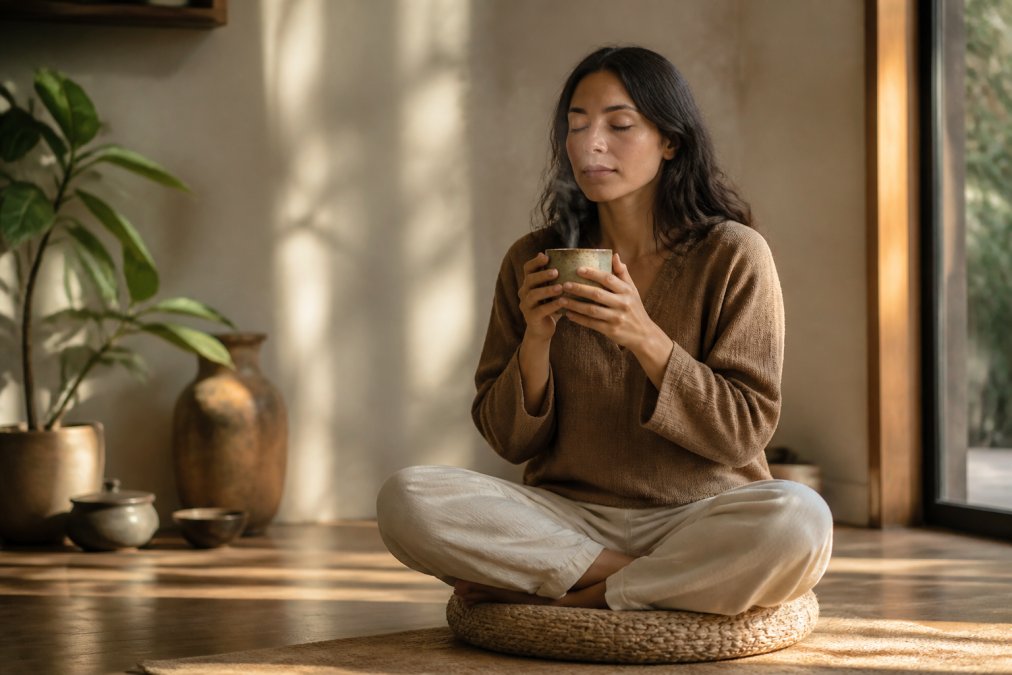
Try this sequence:
- Grind and smell first. Before brewing, cup the ground coffee and take three slow breaths. This is your transition into the practice.
- Brew without multitasking. Watch the water, listen to it, and stay with the process. No phone.
- Drink the first few sips standing still. Notice temperature, body, and aroma before you sit.
- Wait twenty minutes. Let the caffeine arrive while you do something quiet.
- Sit. Carry the same sensory attention from the cup into your practice.
Brewing Methods That Shape Your Cup's Caffeine and L-Theanine Balance
A working comparison:
- Espresso forces water through a fine grind at high pressure in about 25-30 seconds. A single shot typically lands around 60-75 mg of caffeine in a small, fast-absorbed volume. Great for a short sit, risky for a long one.
- Pour-over gives you direct control over grind and contact time, usually 2.5-4 minutes. You can dial caffeine up or down by adjusting dose and time, which makes it the most tunable method for matching a cup to a specific sit length.
- French press uses a coarse grind and full immersion for about 4 minutes, extracting more oils and caffeine. The result is often a heavier, jitterier cup because the oils and fine particles slow nothing down, they just add load.
- Cold brew steeps coarse grounds in cold water for 12-24 hours. It is lower in acid and often gentler on the stomach, but caffeine content varies widely by ratio and can run higher than a hot brew if the concentrate is strong.
- Aeropress sits in the middle: short contact time, moderate pressure, easy to keep consistent from cup to cup.
Temperature matters too. Water just off boil extracts caffeine aggressively; 185-195°F water extracts more slowly and pulls fewer harsh compounds. That single adjustment often does more for a meditation cup than changing beans.
Decaf, Matcha, and Hojicha: Low-Caffeine Alternatives for Meditation
Decaf and low-caffeine options are the most underrated answer to "what is the best coffee for meditation." If caffeine reliably tips you into jitters, the best coffee might be no coffee at all, or a cup with a fraction of the load.
Three options worth trying:
Coffee with Mushrooms Dark Roast →
- Decaf coffee keeps the ritual and the flavor while removing most of the stimulant. Choose a washed, medium roast so you are not trading caffeine for harshness.
- Matcha delivers caffeine alongside L-theanine, which many people find produces a calmer, more sustained alertness than coffee.
- Hojicha is a roasted green tea, low in caffeine and high in comfort, with toasted, grounding notes that suit a slow morning.
Matching Your Coffee to Your Caffeine Metabolism
Caffeine metabolism is the variable nobody can guess for you, and the one most guides skip. How fast your body clears caffeine depends on genetics, medications, liver function, pregnancy status, smoking, and tolerance. Two people can drink the same cup and have completely different sits.

-
Drink your normal cup and note the time
-
Rate your alertness and jitteriness at 20, 60, and 120 minutes
-
Repeat with half the dose on another day
-
Repeat with a low-caffeine option on a third day
-
Pick the version where you feel clear and steady at the 60-minute mark
-
Roast level. Light and medium roasts preserve more of the bean's original character and tend to deliver a cleaner, more even caffeine curve. Dark roasts carry more bitter, harsh compounds that can sit heavy before a sit, even at the same caffeine dose.
-
Processing method. Washed beans are fermented and rinsed clean, producing a brighter, more predictable cup. Natural and honey processes leave more fruit mucilage on the bean, which can add sweetness but also more lot-to-lot variability. For meditation, washed and honey-processed beans are the safer bet because they tend to deliver a steadier caffeine curve.
-
Dose and ratio. A 1:16 pour-over at 15 g of coffee lands around 90-110 mg of caffeine. Dropping to 10 g cuts that by roughly a third without changing the ritual.
Frequently Asked Questions
Is coffee good for meditation?
Coffee can support meditation when timed and dosed correctly. Caffeine blocks adenosine receptors, which increases alertness and helps you stay present during concentration meditation. The risk is overstimulation: too much caffeine activates the sympathetic nervous system and triggers a fight or flight response that makes sitting still difficult. A small cup 20 to 30 minutes before practice, roughly 50 to 100 mg of caffeine, tends to sharpen mental clarity without jitters. Individuals with high caffeine sensitivity may do better with matcha, hojicha, or a low-acid decaf.
What is the best coffee for meditation?
The best coffee for meditation is a low-acid, medium roast with moderate caffeine, because it delivers mental clarity without pushing post-caffeine heart rate into jitter territory. Blends such as Kopi Safari, a post-roast blend described as lively and grounding, or the Coffee with Mushrooms Medium Roast, which combines specialty coffee with Lion's Mane, Cordyceps, and Reishi, can suit a calm, focused sit. Avoid very high-caffeine light roasts right before practice.
How does caffeine affect mindfulness meditation?
Caffeine changes brain wave activity and cortisol levels, which shapes how a mindfulness practice feels. At moderate doses it promotes alertness and cognitive focus, making it easier to return attention to the breath. At higher doses it can shorten attention span, raise post-caffeine heart rate, and produce physical restlessness that competes with the stillness meditation requires. The practical move is to treat caffeine as a tool: keep the dose small, drink it 20 to 30 minutes before sitting, and notice how your body responds over several sessions before adjusting.
Can coffee help you reach a meditative state?
Coffee can help you reach a meditative state indirectly by reducing drowsiness and supporting sustained attention, but it cannot produce the state itself. The meditative state comes from the practice: steady posture, slow breathing, and returning attention to a single anchor. Caffeine removes the main obstacle, sleepiness, so the mind is alert enough to settle. Pair it with a mindful coffee ritual, drinking slowly and noticing aroma, warmth, and flavor, and the cup becomes a sensory warm-up that carries directly into your sit.
What type of coffee gives the most energy without jitters?
Matcha and hojicha often give steadier energy than coffee because matcha contains L-theanine, an amino acid that smooths caffeine's edge, and hojicha is lower in caffeine due to its roasted preparation. Among coffees, a medium roast brewed with a paper filter produces a gentler cup than espresso or cold brew, which concentrate caffeine per serving. Individuals with fast caffeine metabolism can handle a slightly larger dose; slow metabolizers should stay on the lower end. Pairing any cup with a light snack also blunts the spike.