

7 Best Slow Roast Coffee Beans for Balanced Flavor
Table of Contents
- What Makes Slow Roast Coffee Beans Taste More Balanced?
- How We Tested These Slow Roast Coffee Beans
-
7 Best Slow Roast Coffee Beans for Balanced Flavor
- 1. Bali Blue: A Single-Origin Study in Dark Chocolate and Molasses
- 2. Sumatra: Syrupy Body and Earthy Depth for a Lingering Finish
- 3. Honduras: Caramel and Spice from Volcanic Clay Soils
- 4. Latin American Blend: Nutty Hints with a Gentle Cocoa Aftertaste
- 5. African Kahawa Blend: A Complex Cup with Floral Notes
- 6. Cowboy Blend: Cocoa and Caramel with a Balanced Dark and Medium Roast
- 7. Italian Roast: A Dark, Slow-Roasted Blend of Arabica and Robusta
- Slow Roast Coffee Beans Comparison Table
- The Benefits of Slow Roasted Coffee for Acidity and Flavor Balance
- How to Brew Balanced Coffee at Home for the Best Extraction
- Understanding Tasting Notes in Premium Coffee
- Troubleshooting Bitter or Sour Notes in Slow Roast Coffee
- Frequently Asked Questions
Last Updated: September 7, 2026
Finding the 7 best slow roast coffee beans for balanced flavor comes down to understanding the roast itself. Slow roasting develops sugars gradually, producing mellow sweetness and low acidity rather than sharp, bitter edges (peer-reviewed research). At Cafe de Mattier, we craft small-batch, French-inspired roasts from micro-lots and family-owned estates. This tradition is a significant factor in whether a bean tastes smooth or harsh.
The 7 options range from single-origin Indonesian beans with syrupy bodies to complex African blends with floral finishes. All share a roast profile designed for flavor balance. But first, here is what most guides get wrong: they treat "slow roast" as a marketing term rather than a chemistry lesson.
What Makes Slow Roast Coffee Beans Taste More Balanced?
Slow roast coffee is roasted at lower temperatures over a longer window, changing how heat moves through the bean. This gentler approach allows the Maillard reaction, the chemical process that creates roasted flavor, to develop fully without burning the sugars on the bean's surface.
The key difference: rapid roasting pushes heat hard and fast, which can leave the interior underdeveloped while the exterior turns bitter. Slow roasting gives the entire bean time to reach the same temperature, producing a consistent extraction and a smooth, mellow cup.
Slow Roasting vs. Rapid Roasting: The Chemistry of Flavor
The chemistry of slow roasting vs. rapid roasting comes down to heat transfer and time. When beans are rushed, the exterior hits high temperatures quickly, triggering a bitter, burnt flavor before the interior finishes its chemical changes.
A common mistake is assuming darker always means more bitter. In a proper slow roast, a dark bean can taste surprisingly sweet, with notes of molasses and brown sugar, because the sugars were given time to develop.
How We Tested These Slow Roast Coffee Beans
We evaluated each bean on flavor balance, acidity level, body, and aftertaste. Every coffee was brewed using a standard pour-over method with consistent grind size and water temperature to ensure fair extraction.
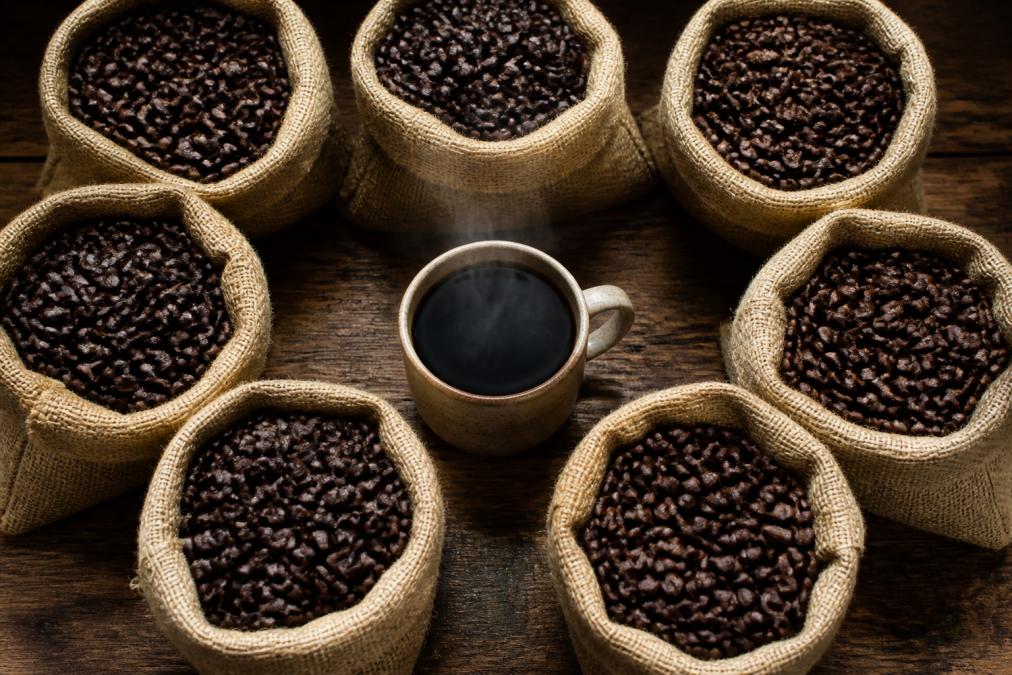
We prioritized medium to medium-dark roast profiles, as these offer a good balance of sweetness and depth without tipping into bitterness. We looked for whole beans with visible oil sheen indicating proper development.
7 Best Slow Roast Coffee Beans for Balanced Flavor
These are the beans that delivered the smoothest, most balanced cups in our testing. The list leads with a single-origin bean that exemplifies what slow roasting can achieve.
1. Bali Blue: A Single-Origin Study in Dark Chocolate and Molasses
A top pick for a slow roast coffee is the Bali Blue from Cafe de Mattier. Grown by smallholder farmers in the Kintamani region at 1200 to 1600 meters in volcanic loam, this med-dark roast delivers a tasting profile of dark chocolate, molasses, and brown sugar. The beans are hand picked, wet-hulled, and dried on raised beds, a process that preserves their natural sweetness.
What makes Bali Blue exceptional is its silk-like body. The slow roast coaxes out deep, chocolatey richness without the acrid bite that plagues faster dark roasts. At $23.99 for a 12-ounce bag, it is priced for the specialty market and delivers accordingly.
2. Sumatra: Syrupy Body and Earthy Depth for a Lingering Finish
Sumatra offers a completely different expression of slow roasting. Sourced from the Koperasi Baitul Qiradh Baburrayyan coop in Aceh, this single-origin bean is processed using the giling basha method, also known as wet-hulling. The result is a cup with medium acidity, syrupy body, and notes of dark chocolate and dried fruit.
What sets this Sumatra apart is its long, lingering finish. The earthy depth is unmistakable, but the slow roast keeps it grounded rather than overwhelming. For drinkers who find African coffees too bright or acidic, this is a mellow alternative that still delivers complexity.
3. Honduras: Caramel and Spice from Volcanic Clay Soils
The Honduras offering comes from 1500 grower members of Cafe Organics Marcala, a cooperative in the Marcala region. Grown at 1300 to 1700 meters in clay mineral soils, these beans offer a medium-dark roast with notes of caramel, spice, and brown sugar. The fully washed and sun dried process yields a remarkably clean cup.
This is the bean to choose for a gentle introduction to specialty coffee. Its flavor balance leans sweet and approachable, with a warm spice note that evokes baking rather than heat.
4. Latin American Blend: Nutty Hints with a Gentle Cocoa Aftertaste
For those who prefer a blend, the Latin American Blend combines shade-grown coffees from Central American rain forests and volcanic soils near the Amazon. This medium-dark roast offers nutty hints with mild fruity tones and a gentle cocoa aftertaste. The beans are processed using environmentally friendly washed methods and sun dried for up to 7 days.
This blend is remarkably forgiving to brew. Its balanced profile means you do not need precise equipment to get a good cup, making it a smart choice for busy mornings.
5. African Kahawa Blend: A Complex Cup with Floral Notes
The African Kahawa Blend is a study in complexity. This medium-dark roast of African grown coffees delivers hints of toffee, caramel, chocolate, raisins, green apples, and red fruits, finishing with a soft floral note. Coffee cherries are hand picked and processed at the farmers' homes, adhering to strict quality standards.
This is the most aromatic coffee in our lineup. The floral notes and bright fruit character are a testament to the beans' origin, while the slow roast keeps the acidity in check.
6. Cowboy Blend: Cocoa and Caramel with a Balanced Dark and Medium Roast
The Cowboy Blend takes a unique approach by combining both dark and medium roasted beans in a single bag. This creates a cup with cocoa, caramel, and vanilla tones that shift as the coffee cools. It is a clever way to achieve flavor balance, layering the depth of a dark roast with the brightness of a medium one.
This blend is versatile enough for espresso or drip coffee. The dual roast profile gives you a rich, full-bodied cup with a sweet finish, without the one-note bitterness that can plague pure dark roasts.
7. Italian Roast: A Dark, Slow-Roasted Blend of Arabica and Robusta
Rounding out our list is the Italian Roast, Cafe de Mattier's darkest offering. This slow roasted blend of specialty grade Arabica and Robusta is designed for those who want intensity with balance. The Robusta adds body and crema, while the Arabica contributes sweetness and complexity.
The inclusion of Robusta means higher caffeine content and a thicker mouthfeel, but the slow roast prevents the harsh, rubbery notes that low-grade Robusta can exhibit. At $23.99, it offers fresher beans.
Slow Roast Coffee Beans Comparison Table
| Coffee | Roast Level | Tasting Notes | Best Brew Method | Price |
|---|---|---|---|---|
| Bali Blue | Med-dark | Dark chocolate, molasses, brown sugar | Pour-over | $23.99 |
| Sumatra | Dark | Earthy, dried fruit, dark chocolate | French press | $23.99 |
| Honduras | Medium-dark | Caramel, spice, brown sugar | Drip | $23.99 |
| Latin American Blend | Medium-dark | Nutty, cocoa, mild fruit | Any | $23.99 |
| African Kahawa | Medium-dark | Toffee, red fruits, floral | Pour-over | $23.99 |
| Cowboy Blend | Dark & Medium | Cocoa, caramel, vanilla | Espresso or drip | $23.99 |
| Italian Roast | Dark | Full body, sweet, complex | Espresso | $23.99 |
The Benefits of Slow Roasted Coffee for Acidity and Flavor Balance
The benefits of slow roasted coffee extend beyond taste. For drinkers who find standard coffee too acidic or harsh on the stomach, a slow roast can be an improvement. The extended roasting time breaks down chlorogenic acids, which contribute to coffee's bitter and acidic bite (PubMed).

This is not just about comfort. The flavor balance achieved through slow roasting means the inherent qualities of the bean, its origin, variety, and processing, can come through more clearly. A fast roast can mask a mediocre bean with bitterness; a slow roast allows the bean's characteristics to be more prominent.
How to Brew Balanced Coffee at Home for the Best Extraction
Brewing balanced coffee at home starts with the right grind size and ratio. For pour-over, use a medium-fine grind, similar to sea salt, and a ratio of 1 gram of coffee to 16 grams of water. Water temperature should be between 195 and 205 degrees Fahrenheit; boiling water will scorch the grounds and introduce bitterness.
A common mistake is using stale beans. Slow roasted coffee is at its peak between 4 and 14 days after roasting, once degassing has occurred but before oxidation degrades the oils. Grind only what you need immediately before brewing, and store the rest in an airtight container away from light and heat. Following brewing guidelines from the Specialty Coffee Association helps ensure your extraction highlights the roast profile rather than hiding it.
Understanding Tasting Notes in Premium Coffee
Tasting notes in premium coffee are the flavors and aromas you perceive when brewing and drinking, distinct from the raw bean's smell. They are influenced by three factors: the bean's origin, the processing method, and the roast profile.
When you see descriptors like "chocolatey," "nutty," or "citrus," these refer to the coffee's aroma and flavor, not added ingredients. The slow roast tends to amplify the sweeter, deeper notes, such as caramel and cocoa, while muting the sharp, acidic ones.
Troubleshooting Bitter or Sour Notes in Slow Roast Coffee
If your slow roast coffee tastes bitter, the problem is usually over-extraction. This happens when the grind is too fine, the water is too hot, or the brew time is too long. Try coarsening your grind slightly and reducing your steep time by 15 to 30 seconds.
Sour or acidic notes, on the other hand, indicate under-extraction. The water passed through the grounds too quickly, pulling only the bright, acidic compounds and leaving the sugars behind. Fix this by grinding finer, using hotter water, or extending your brew time.
Choosing the best slow roast coffee beans for balanced flavor is about respecting the craft of roasting as much as the origin of the bean. The difference between a bitter, one-dimensional cup and a smooth, complex one is decided in the roaster, and it is a difference you can taste immediately. Cafe de Mattier approaches every batch with this philosophy, using small-batch production and French-inspired techniques to deliver complexity, floral notes, and a silk-like body in every roast. Explore our collection of single-origin and blended slow roasts and subscribe to our emails for brewing guides and new arrivals.
Frequently Asked Questions
What makes slow-roasted coffee beans taste more balanced?
Slow roasting allows more controlled heat transfer, which develops sugars and other compounds more fully. This extended process reduces sharp acidity and bitterness, creating a smoother, mellow cup with a complex body. Rapid roasting can leave beans tasting grassy or overly bitter. Our best slow roast coffee beans are developed over a longer period to reach a balanced flavor profile that highlights chocolate, nut, and caramel notes without harsh edges.
Are slow-roasted coffee beans better for pour-over or espresso?
Slow-roasted beans work well for both methods, but the best choice depends on your desired brew. For pour-over, a medium-dark slow roast like our Honduras or Latin American Blend preserves delicate tasting notes like spice and fruit. For espresso, a darker blend like our 6 Bean Blend or Italian Roast provides a syrupy body and rich crema. The slower roast ensures even extraction across both brewing methods.
Which roast of coffee has the best flavor for a smooth taste?
If you want a smooth, low-acid cup, a medium-dark or dark slow roast is usually the best choice. These roasts undergo a longer maillard reaction, which breaks down chlorogenic acids responsible for bitterness and sourness. Our Sumatra or Bali Blue beans, both slow roasted, deliver dark chocolate and molasses notes with a syrupy mouthfeel. This makes them an excellent choice for drinkers who find light roasts too acidic.
How can I identify high-quality, balanced coffee beans?
Look for whole bean coffee from a named origin or estate, with a clear roast date printed on the bag. High-quality beans are dense and have a consistent color after roasting. When you brew them, the aroma should be rich and the cup should have a smooth mouthfeel without harsh bitterness. Also, consider the tasting notes in premium coffee, such as chocolate, nut, or citrus, which indicate a well-developed roast profile.
How does the roasting process affect coffee acidity and smoothness?
The roasting process directly controls acidity. During slow roasting, the bean's internal temperature rises gradually, which allows organic acids to break down more completely. This reduces perceived acidity and produces a smoother, more mellow flavor. A rapid roast retains more of these acids, leading to a brighter, sometimes sour cup. Extended slow roasting also triggers caramelization, adding sweetness that further balances the cup.