

Best Water Temperature for Brewing Coffee: A Guide
Table of Contents
- Why the Best Water Temperature for Brewing Coffee Sits Between 195°F and 205°F
- How Water Temperature Affects Coffee Taste
- Coffee Brewing Temperature by Method
- Coffee Brewing Temperature Chart
- How to Measure Coffee Water Temperature
- Adjusting Temperature for Light, Medium, and Dark Roasts
- Troubleshooting Temperature by Taste
- Conclusion
- Frequently Asked Questions
Last Updated: October 21, 2026
Why the Best Water Temperature for Brewing Coffee Sits Between 195°F and 205°F
The best water temperature for brewing coffee is 195°F to 205°F (90°C to 96°C). That range is the sweet spot where hot water pulls flavor out of the grounds without scorching them.
Here at Cafe de Mattier, we roast in small batches and taste every lot against that range. It is the single number that decides whether your cup tastes alive or flat.
Water that is too cool leaves flavor locked inside the grounds. Water that is too hot drags out harsh, bitter notes you cannot undo. The middle ground is where sweetness, aroma, and body all show up at once.
Below, we break down how temperature changes taste, how it shifts by brew method, and how to fix a cup that tastes wrong.
How Water Temperature Affects Coffee Taste
Temperature controls how fast water dissolves the soluble compounds in coffee grounds. Hotter water dissolves more, and faster. Cooler water dissolves less, and slower.
Push too far in either direction and the cup tips out of balance. Here is what each side tastes like.
Under-Extraction: Sour, Salty, Thin
Under-extracted coffee tastes sour, salty, and thin. It finishes fast and leaves your mouth feeling empty.
This happens when the water is too cool, the brew time is too short, or the grind is too coarse. The water never gets deep enough into the grounds to pull out the sugars and body.
A common mistake is blaming the beans. If your light roast tastes like lemon juice, check your brew water temperature before you blame the roaster.
Over-Extraction: Bitter, Dry, Hollow
Over-extracted coffee tastes bitter, dry, and hollow. It leaves a chalky feeling on your tongue and a lingering harshness.
Boiling water causes this. So does a grind that is too fine or a brew that runs too long. The water keeps pulling past the good stuff and drags out the bitter compounds.
The fix is usually simple: drop the temperature a few degrees and shorten the brew.
Coffee Brewing Temperature by Method
Coffee brewing temperature by method shifts because each brewer holds heat differently, and some methods are far more forgiving than others. Here is where we would start for each common setup, plus a note on how much small temperature changes actually matter.
- Pour-over: 200°F to 205°F. The water loses heat as it travels through the air and into the dripper, so start near the top of the range. A preheated ceramic dripper holds heat better than a cold one.
- Drip machine: 195°F to 205°F at the brew head. Check your machine's spec sheet; many home models run cool, and the carafe temperature is not the same as the water temperature at the grounds.
- French press: 195°F to 200°F. Full immersion holds heat well, so you do not need to start as hot. The mass of water and grounds stays warm for the full steep.
- AeroPress: 185°F to 205°F. Lower temps work here because the brew is short and pressurized. The plastic body also loses heat quickly, so preheating helps.
- Espresso: 195°F to 205°F at the group head. Small changes matter more here because the brew is short and concentrated. Many machines let you adjust brew temperature in 1°F increments.
- Cold brew: cold or room temperature water, steeped for 12 to 24 hours. Temperature control matters less than time and grind. A refrigerator steep runs slower and often tastes cleaner.
For pour-over in particular, the Specialty Coffee Association brewing standards place the target right in that 195°F to 205°F window.
Which Methods Are Less Sensitive to Temperature
Immersion methods like French press and cold brew are more forgiving. A 5°F difference in a French press rarely ruins a cup because the full steep gives water time to work. Cold brew ignores the range entirely; time does the extraction.
Pour-over and espresso are less forgiving. In a pour-over, the water is in contact with the grounds for only a few minutes, so a cold dripper or a slow pour can drop the slurry temperature below the target. In espresso, the shot runs in 25 to 30 seconds, so a few degrees change the balance quickly.
A practical rule: if you are brewing immersion, adjust grind and time before you chase temperature. If you are brewing pour-over or espresso, temperature is one of the first variables to check.
Coffee Brewing Temperature Chart
This coffee brewing temperature chart gives you a quick reference. Use it as a starting point, then adjust for your gear and your beans.
| Brew Method | Target Water Temp | Why It Works |
|---|---|---|
| Pour-over | 200°F to 205°F | Heat lost in the pour; start hot |
| Drip machine | 195°F to 205°F | Depends on the machine's heater |
| French press | 195°F to 200°F | Full immersion holds heat |
| AeroPress | 185°F to 205°F | Short, pressurized brew |
| Cold brew | Cold water | Time replaces heat |
Write your own numbers on this table after a few brews. Your kitchen, your kettle, and your grinder all change the result.
How to Measure Coffee Water Temperature
Measuring coffee water temperature means checking the water where it meets the grounds, not where it sits in the kettle. A digital thermometer is the most reliable tool. A variable-temperature kettle gets you close, but the reading on its display is not the reading in the brew.
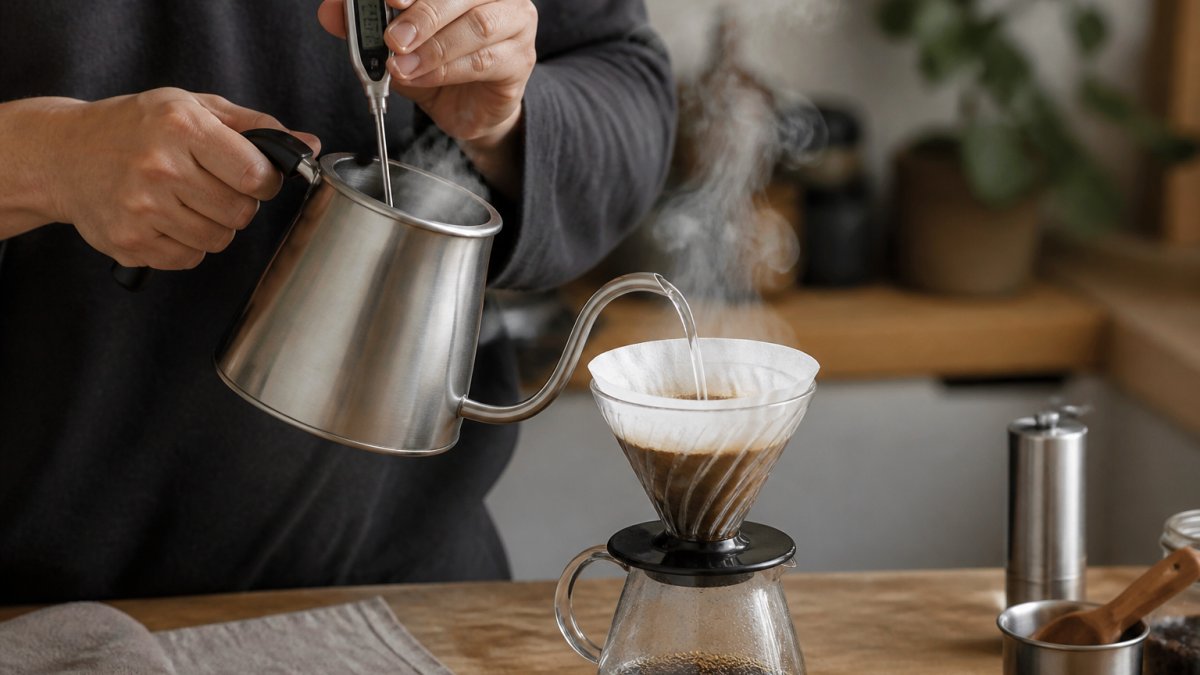
Here is how we would do it:
- Heat your water, then let it rest for 30 to 60 seconds off the boil.
- Stir, then take a reading with a digital thermometer.
- Pour and take a second reading in the coffee bed or slurry.
- Note both numbers. The gap between them tells you how much heat you lose.
Slurry Temperature vs. Kettle Setting
Slurry temperature is the actual temperature of the wet coffee and water mixture during the brew. It is always lower than your kettle setting.
Why? Heat escapes into the air, the dripper, and the grounds themselves. A kettle reading of 205°F might hit the coffee bed at 195°F. A cold, unrinsed dripper can pull it down further. Batch size matters too: a small pour-over loses heat faster than a full carafe. Ambient kitchen temperature and whether you preheated the vessel both change the result.
Preheat your brewer with hot water before you start. It is the cheapest fix in coffee, and most people skip it.
No-Thermometer Methods
If you do not own a thermometer, you can still get close. A common pattern is to bring water to a boil, then let it rest off the heat for about 30 to 60 seconds before pouring.
Kettle design matters. A thin-walled electric kettle loses heat faster than a heavy stovetop kettle. A gooseneck spout slows the pour and adds cooling time.
A simple test: pour a small amount of water into a room-temperature mug, wait 10 seconds, and touch the outside. If the mug is too hot to hold comfortably, the water is likely above the target range. This is a rough check, not a measurement.
The Limits of Precision
Temperature is not a single number that guarantees a good cup. Most practitioners find that a few degrees of variation within the 195°F to 205°F range will not ruin a brew, especially in immersion methods. The bigger variables are grind size, brew time, and the coffee-to-water ratio.
General recommendations are a starting point, not a rule. A light roast may taste better at the top of the range, a dark roast at the bottom. Your grinder, your water, and your taste buds all shift the target. Use the range as a guide, measure when you can, and adjust by taste before you chase a precise number.
Adjusting Temperature for Light, Medium, and Dark Roasts
Roast level changes how easily water pulls flavor from the bean. Light roasts are denser and give up their flavor slowly. Dark roasts are more porous and release flavor fast.
- Light roast: start at 200°F to 205°F. The extra heat helps you reach the sugars. Our Ethiopia Natural, a medium-light single origin with milk chocolate, fruity, and caramel notes, rewards a hotter brew.
- Medium roast: 195°F to 200°F. Our Brazil Santos, a smooth medium roast with cocoa notes, sits comfortably in the middle of the range.
- Dark roast: 190°F to 195°F. Our Italian Roast is our darkest, and it gives up flavor quickly. Cooler water keeps it from turning bitter.
A good rule: the darker the roast, the cooler the water.

Troubleshooting Temperature by Taste
Your tongue is the best thermometer you own. Taste the cup, name the flaw, and adjust one variable at a time.
| What You Taste | Likely Cause | Fix |
|---|---|---|
| Sour, salty, thin | Water too cool | Raise temp 5°F |
| Bitter, dry, hollow | Water too hot | Lower temp 5°F |
| Weak and watery | Cool water or coarse grind | Raise temp, grind finer |
| Harsh and sharp | Over-extraction | Lower temp, shorten brew |
Change one thing per brew. If you change the temperature and the grind at once, you will not know which one fixed it.
No thermometer? Let boiling water rest for about 30 to 60 seconds before you pour. That lands you near the target range for most brewers.
Conclusion
Getting the water temperature right is the fastest way to a better cup, and it costs nothing but attention. Start at 195°F to 205°F, measure in the slurry, and adjust by taste.
Great beans deserve that care. Our small-batch, French-inspired roasts are built for slow, mindful brewing, with complexity, floral notes, and a silk-like body in every cup. Try our Brazil Santos or Ethiopia Natural, both $23.99, and taste what the right temperature does.

Subscribe to our emails for brewing guides and new micro-lot releases.
Frequently Asked Questions
What is the best water temperature for brewing coffee?
The widely accepted range is 195°F to 205°F (90°C to 96°C). Within that band, 200°F is a reliable starting point for most brewers. Light roasts often benefit from the upper end near 205°F because their dense cell structure resists extraction. Dark roasts do better closer to 195°F, where you avoid pulling out harsh, bitter compounds. If your cup tastes sour, nudge the temperature up; if it tastes bitter or drying, drop it a few degrees. A variable-temperature kettle makes these small changes repeatable.
Should you use boiling water to brew coffee?
Straight off a rolling boil, water is around 212°F, which is above the recommended brewing range and can scorch coffee grounds, producing bitter and ashy notes. The practical fix is to let the kettle sit for 30 to 60 seconds after boiling before you pour. That brief cooling window brings water into the 195°F to 205°F zone. For pour-over, the water also loses heat as it travels from kettle to brew bed, so starting slightly hot is usually safer than starting too cool.
Does brewing temperature change coffee flavor?
Yes, and dramatically. Temperature governs how quickly soluble compounds leave the grounds. Water that is too cool under-extracts, leaving sour, salty, or weak coffee with thin body. Water that is too hot over-extracts, pulling out bitter, dry, and hollow flavors. The same beans at 195°F and 205°F can taste like two different coffees. Once you find the temperature that suits a given roast, keep it consistent so your grind and ratio adjustments stay meaningful.
How do you measure water temperature for brewing coffee without a thermometer?
Boil water, then wait. Roughly 30 seconds off the boil lands near 205°F, and 60 seconds lands closer to 195°F. This is approximate and depends on your kettle and room temperature, so treat it as a starting point. A variable-temperature kettle is more reliable and lets you set a target directly. If you brew often, an instant-read thermometer costs little and removes the guesswork. Whichever method you use, keep it consistent so you can judge changes to grind and ratio accurately.