

How to Store Floral Coffee Beans Fresh
Table of Contents
- Why Proper Storage Matters for Floral Coffee
- The Best Way to Store Coffee Beans
- How Long Do Coffee Beans Stay Fresh
- Creating the Ideal Storage Environment
- Freezing Coffee Beans for Extended Freshness
- Aroma-Preservation Methods for Delicate Profiles
- Frequently Asked Questions
Last Updated: October 12, 2026
Why Proper Storage Matters for Floral Coffee
Floral coffee beans demand different care than standard roasts, and knowing how to store floral coffee beans properly is essential to preserving their delicate aromas.
At Cafe de Mattier, we source single-origin beans with pronounced floral profiles from family-owned estates. Our Tanzania and Kenya coffees showcase jasmine and floral notes that reward careful storage. Neglect storage, and you're wasting the complexity that makes these beans special.

Fresh floral coffee smells alive; stale floral coffee smells flat. Your morning cup reflects every storage decision you made in the days and weeks before brewing.
The Best Way to Store Coffee Beans
To store floral coffee beans properly, combine three elements: an airtight container, an opaque barrier against light, and protection from temperature swings. Skip one, and your beans deteriorate faster.
Choose an Airtight Coffee Bean Storage Container
An airtight container is non-negotiable. Oxygen degrades coffee through oxidation. The moment air enters, flavor compounds break down. Airtight seals stop this process cold.
Look for tight-fitting lids that create a genuine seal. Test it: close the lid, press down, and feel resistance. If it slides shut with no pressure, it's not airtight enough.
The best airtight coffee bean storage containers come in two types:
- Metal tins with rubber gaskets: Durable and reliable. The gasket creates a true seal. Most survive years of daily use.
- Glass jars with locking clamps: Transparent (use opaque covers), but you see when beans are running low. Clamps provide strong seals.
- Vacuum-sealed bags with one-way valves: Excellent for long-term storage. The valve releases degassing gases while blocking oxygen.
Avoid plastic containers. They absorb coffee oils over time and can leach odors into beans.
Use Opaque or Light-Blocking Containers
Light accelerates staling. UV rays break down flavor compounds. Even indirect sunlight damages beans over time.
Use opaque containers exclusively. If yours is transparent, wrap it in dark cloth or place it in a dark cupboard. Never store beans on a countertop in sunlight or under kitchen lights.
Opaque containers keep light out completely, preserving delicate floral notes for weeks longer than clear ones.
Handle One-Way Valves and Degassing
Fresh roasted beans release carbon dioxide for 24-48 hours after roasting. A one-way valve lets this gas escape while blocking oxygen from entering.
If your beans arrive in a bag with a one-way valve, leave it sealed for the first 24 hours to allow initial degassing.
Don't squeeze the bag to force gas out. Let degassing happen naturally. Forcing it introduces oxygen.
When transferring beans, do it quickly: open the bag, pour into your airtight container, and seal immediately to minimize air exposure.
How Long Do Coffee Beans Stay Fresh
Freshness depends on roast date, storage method, and how often the bag is opened. Whole beans last longer than ground coffee because they expose less surface area to oxygen.
Freshness Timeline by Roast Date
The roast date tells you everything. Count forward from that date:
- Days 1-3: Peak freshness. Floral notes are at their brightest. Brew these first.
- Days 4-14: Still excellent. Flavors remain complex. Ideal drinking window for most beans.
- Days 15-30: Good, but declining. Floral notes fade noticeably. Still worth brewing.
- Days 31-60: Acceptable if stored perfectly. Flavor becomes muted. Floral profiles are barely detectable.
- Day 61+: Stale. Oxidation has progressed too far. Brew only if you have no alternative.
This timeline assumes whole beans in an airtight, opaque container kept at room temperature in a cool spot. Every storage mistake shortens these windows.
For Cafe de Mattier's floral coffees, brew within 14 days of the roast date, when jasmine and floral notes shine brightest.
Detecting Stale or Compromised Beans
Stale beans show clear signs:
Visual cues:
- Dull, flat appearance instead of glossy
- Uneven color or surface texture
- Visible dust or residue (sign of age)
Aroma test:
- Fresh beans smell rich and complex
- Stale beans smell flat or musty
- No floral aroma = stale
Taste:
- Stale coffee tastes thin and bitter
- Fresh floral coffee tastes smooth with clear notes
- If you can't taste floral character, the beans are past their prime
If beans show mold, smell rancid, or feel oily when they shouldn't be, discard them. Compromised beans aren't worth the risk.
Creating the Ideal Storage Environment
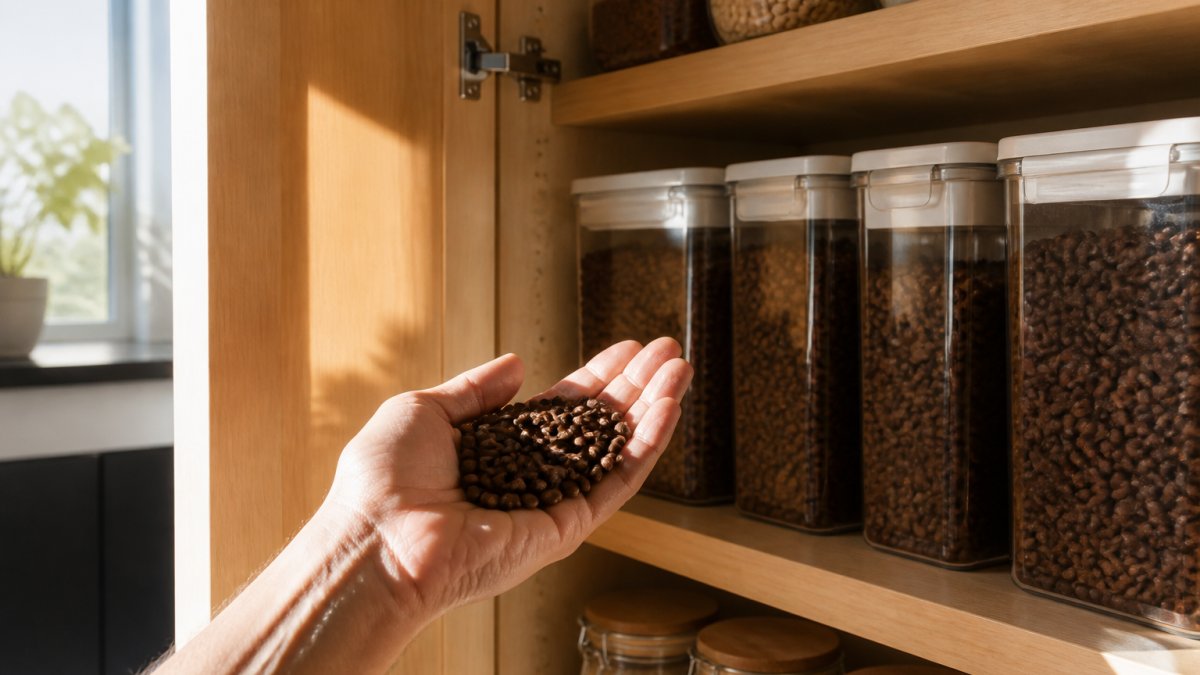
Location matters as much as the container, and for floral coffees the stakes are higher: the volatile compounds carrying jasmine, bergamot, and honeysuckle notes are the first thing heat, humidity, and temperature swings destroy. A dark pantry that keeps a dark roast drinkable for a month can flatten a floral Ethiopian in ten days.
Room Temperature and Cool Locations
Store beans between 60°F and 75°F. Cooler is better, and stability matters as much as the number itself.
Heat accelerates staling: every 10°F increase roughly doubles the rate of the reactions that break down coffee's aromatic oils.
Temperature swings are the quieter problem. Every move between warm and cool air migrates moisture in and out of the bean and the sealed headspace, stressing the volatile compounds you're protecting.
Best storage locations:
- Pantry or cupboard: Dark, stable temperature, away from appliances
- Closet shelf: Cool, dark, undisturbed
- Kitchen cabinet away from the stove: Never above or beside heat sources
- Basement shelf: Cool and stable, if humidity is controlled
Worst locations:
- Above the stove, oven, or toaster
- Near a window or in direct sunlight
- On the counter next to the refrigerator, dishwasher, or coffee maker
- On top of the refrigerator, where warm air rises and cycles constantly
Moisture and Humidity Control
Moisture ruins coffee, and floral coffee first. High humidity makes beans absorb water, promoting mold, speeding oxidation, and diluting the aromatic oils behind delicate top notes.
Keep storage areas dry, relative humidity between 50% and 60%. Most homes fall in this range if you avoid damp basements or humid kitchens; a cheap hygrometer removes the guesswork.
Signs of moisture damage:
- Beans feel sticky or oily when they shouldn't
- Musty or moldy smell
- Surface discoloration or visible mold
- Clumping or beans that stick together in the container
If your home runs humid, use a small dehumidifier near the storage area or move beans to a drier room.
Never store beans in the refrigerator unless you're freezing them.
Freezing Coffee Beans for Extended Freshness
Freezing works, it slows oxidation dramatically, keeping beans fresh 3-4 months instead of 4-6 weeks.
But freezing comes with a catch: condensation. When frozen beans warm up, moisture condenses on them and damages flavor. The key is preventing that.
Single-Portion Freezing and Condensation Prevention
Freeze beans in small portions so you thaw only what you'll use immediately and never refreeze.
Here's the process:
- Divide beans into weekly portions immediately after opening the bag. Use small airtight containers or vacuum-seal bags.
- Label each portion with the roast date and freeze date.
- Freeze at 0°F or below in the back of the freezer, away from the door.
- Thaw only one portion at a time. Leave the container sealed while thawing. This prevents condensation from forming on beans.
- Thaw at room temperature for 1-2 hours. Don't open the container until beans reach room temperature.
- Brew immediately after thawing. Use within 24 hours.
Keeping the container sealed during thawing is critical: as the beans warm, the air inside warms too, preventing moisture from condensing on the beans themselves.
Never thaw beans in the refrigerator. The temperature swing is too extreme. Never thaw and refreeze. This cycles beans through temperature changes that damage flavor.
Freezing works best for beans you won't use within two weeks. For weekly use, room-temperature storage in an airtight, opaque container is simpler and equally fresh.
Aroma-Preservation Methods for Delicate Profiles
Here's how the main methods actually protect (or fail to protect) those delicate top notes.
Vacuum-sealed bags preserve aroma longer than standard airtight containers by removing most oxygen and headspace in one step.
Freezing in vacuum-sealed portions preserves aroma for months, since the frozen state slows essentially all chemical reactions, including those degrading volatile aromatics.
The comparison below is a starting point, not a rule, the right method depends on how fast you drink the coffee and whether you'll portion and thaw.
| Storage Method | Aroma Preservation | Ease of Use | Best For |
|---|---|---|---|
| Airtight container, room temp | 4-6 weeks | Daily use | Regular consumption |
| Vacuum-sealed bag | 6-8 weeks | Daily use | Moderate consumption |
| Frozen portions | 12-16 weeks | Thaw required | Long-term storage |
| Ground coffee | 3-5 days | Immediate | Same-day use only |
How to Choose Based on How You Drink
- You finish a bag in under two weeks. Airtight, opaque container at room temperature. Simple, no thawing, and floral notes stay bright through the whole bag.
- You drink a bag over three to six weeks. Vacuum-seal in one- or two-week portions and keep the active portion in an airtight container. This limits how often the whole supply is exposed to air.
- You buy more than you'll drink in a month. Freeze in single-use portions immediately after opening. Thaw one portion at a time in its sealed container and brew within a day.
- You sometimes grind ahead. Don't, for floral beans especially. If you must, grind only what you'll brew within 24 hours and store it airtight and dark.
For a floral coffee like a jasmine-forward Tanzania or a bright, floral Kenya, most specialty roasters recommend: airtight and opaque at room temperature for the first two weeks, then single-portion freezing beyond that. This keeps the aromatics you paid for intact through their most expressive window and protects the rest from the slow fade that follows.
Frequently Asked Questions
How long do coffee beans stay fresh after opening?
Opened whole beans stay fresh for 2 to 4 weeks when stored in an airtight container in a cool, dry place. Floral coffees with delicate aromas begin losing complexity within the first week of opening. Freezing in single-portion bags extends freshness to 3 to 4 months. Ground coffee deteriorates faster, losing flavor within days. Check the roast date on your bag and aim to use beans within 30 days of opening for optimal floral notes and aroma preservation.
Should coffee beans be stored in the freezer?
Yes, freezing coffee beans works well for long-term storage when done correctly. Freeze whole beans in airtight, vacuum-sealed bags or containers to prevent condensation and moisture absorption. Remove only the portion you need, then return the rest to the freezer immediately. Floral coffees benefit from freezing because it slows oxidation and preserves delicate aromas for 3 to 4 months. Avoid repeated thawing and refreezing, which introduces condensation and damages flavor complexity.
Does an airtight container keep coffee beans fresh?
An airtight container is essential for preserving floral coffee beans. It blocks oxygen, which accelerates oxidation and flavor loss, and prevents moisture and odor absorption. Pair airtight storage with an opaque or light-blocking container to shield beans from light exposure, which degrades delicate aromas. Store the sealed container in a cool, dry cupboard or pantry away from heat sources. Airtight containers maintain freshness for 2 to 4 weeks after opening; freezing extends that timeline significantly.
What is the best way to store fresh coffee beans?
Store floral coffee beans in an airtight, opaque container kept in a cool, dry cupboard or pantry at room temperature (60°F to 75°F) with relative humidity between 50% and 60%. Keep the original bag if it has a one-way degassing valve; if not, transfer to an airtight container immediately after purchase. Avoid refrigeration unless freezing in single-portion bags. For optimal aroma preservation, use beans within 2 to 4 weeks of opening, or freeze for extended freshness. Check the roast date and store away from heat, light, and moisture.