

Pair Flavored Coffees With Your Meditation Practice
Table of Contents
- Why Pair Flavored Coffees With Your Meditation Practice
- Understanding Coffee Flavor Pairings for Meditation
- How to Taste Coffee Mindfully During Your Practice
- Building Your Morning Coffee Meditation Routine
- Creating Your Slow Coffee Ritual With Flavored Varieties
- Caffeine Sensitivity and Meditation Timing
- Common Mistakes to Avoid
- Frequently Asked Questions
Last Updated: October 14, 2026
Why Pair Flavored Coffees With Your Meditation Practice
Pairing flavored coffees meditation turns your morning routine into a sensory anchor for mindfulness. At Cafe de Mattier, we believe coffee preparation can deepen your meditation rather than distract from it. The key is intentionality: choose a flavored coffee that aligns with your meditation goals, then approach it with full sensory awareness.

Combining coffee and meditation engages multiple senses: the aroma becomes part of your practice, the warmth grounds you in the present, and the flavor becomes an object of focus. Everyday rituals can serve as gateways to deeper attention and calm.
Understanding Coffee Flavor Pairings for Meditation
The best flavored coffee for meditation depends on what you're trying to cultivate.
| Flavor profile | Meditation intention | Sensory prompt to return to | Intensity note |
|---|---|---|---|
| Vanilla, cream, butter | Self-compassion, softening | "Where does the sweetness land on my tongue first?" | Low to medium; gentle enough for longer sits |
| Hazelnut, almond, walnut | Grounding, centering | "Feel the weight of the cup in both hands." | Medium; earthy notes hold attention without spiking it |
| Cinnamon, cardamom, clove | Clarity, decision-making | "Notice the warmth spreading from the chest outward." | Medium to high; spice reads as alerting, so keep the cup small |
| Citrus, berry, stone fruit | Energizing, creative flow | "Follow the brightness from the front of the mouth to the back." | Medium; acidity keeps attention lively but can feel sharp |
| Mocha, caramel, maple | Depth, patience, longer sits | "Count three breaths between each sip." | High; rich and sweet, best for 20-minute sessions |
| Decaf or half-caf versions of any of the above | Evening practice, caffeine sensitivity | "Notice the aroma without expecting a lift." | Same flavor, no stimulant load |
How to read the table. Pick the row matching your intention for the day, not the flavor you like most.
Grounding and centering. Warm, nutty flavors like hazelnut anchor your attention to the present, encouraging stability without overwhelming your senses.
Warmth and comfort. Vanilla-based flavors create ease and gentleness. French Vanilla coffee, with its creamy sweetness, invites a softer, more receptive state of mind, ideal for self-compassion.

Energy and clarity. Spiced flavors like cinnamon activate mental sharpness, supporting focus without the jittery edge of excessive caffeine.
Richness and depth. Mocha and caramel offer complexity and indulgence, suiting longer sessions.
Choosing without overpowering the practice. A flavored coffee should widen your attention, not narrow it into a tasting exercise. Three filters:
- Aroma intensity. If you can smell the flavor from across the room before you brew, it will likely dominate the sit. Choose medium-aroma beans for meditation and save the loud ones for a weekend treat.
- Added sweeteners and syrups. Flavored beans carry their flavor in the roast; flavored syrups add sugar and can spike and crash your energy mid-sit. Read the label and prefer beans over syrups.
- Flavor vs. flavoring. Natural flavor notes from the bean (fruit, cocoa, nut) tend to unfold slowly, which gives your attention more to do. Artificial flavorings often arrive all at once and then disappear, which shortens the sensory runway.
A note on individual sensitivity. Caffeine responses vary widely and shift with sleep, stress, and time of day, there's no universal "right" amount before meditation. If you have a medical condition or take medication, talk with a healthcare professional about caffeine first (the FDA).
The Flavored Coffees Sample Pack from Cafe de Mattier lets you explore multiple flavor profiles at once.
How to Taste Coffee Mindfully During Your Practice
Mindful coffee tasting isn't about speed, it's about slowing down enough to notice what's happening in your cup and your mind.
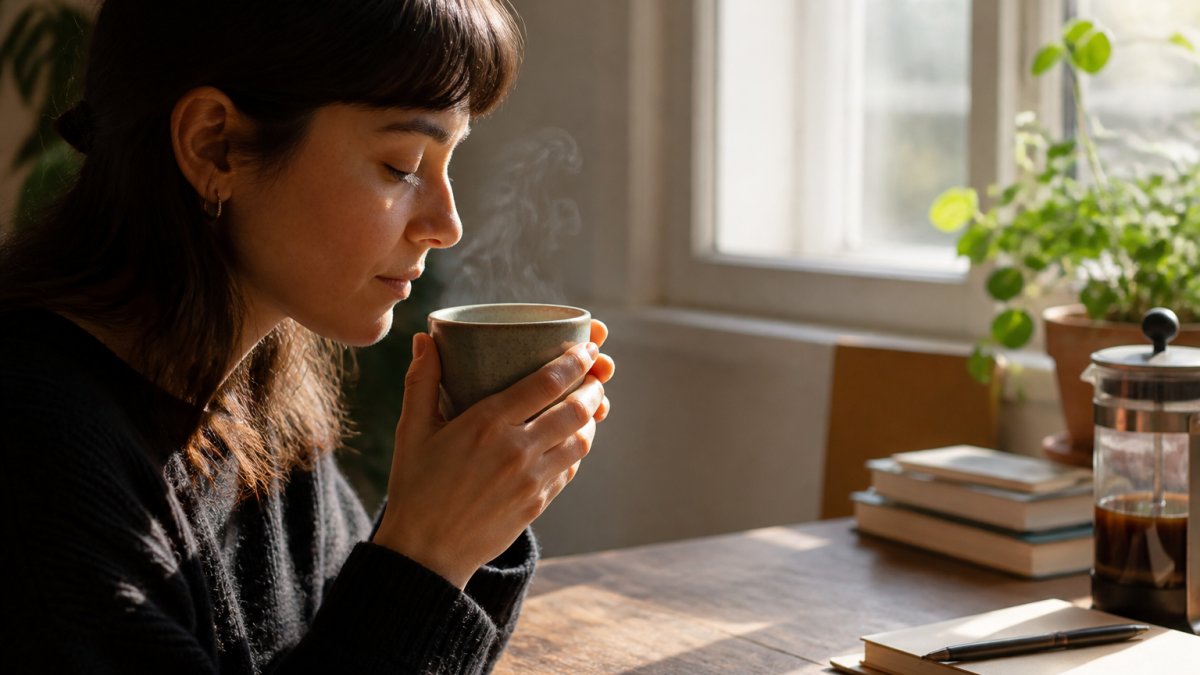
Preparation and Sensory Awareness
Before you brew, set an intention: calm? Focus? Gratitude? Naming it bridges your meditation and your coffee.
Brew deliberately. Notice the sound of water heating, watch the color deepen, pay attention to the aroma filling your space. These observations are already part of your meditation.
Pour into a cup you enjoy holding. The warmth should feel pleasant against your hands, it becomes a physical anchor for your attention.
The Sipping Sequence
Bring the cup to your nose before drinking. Pause for several breaths, the aroma is often where the most interesting sensory information lives. Notice if the smell matches what you expected: calming? energizing?
Take your first sip slowly. Don't swallow immediately, let the coffee coat your mouth. Notice the temperature and texture. Specialty-grade coffee from small-batch roasters like Cafe de Mattier carries more complexity, giving you more to notice.
Pay attention to flavor in layers: first impression, middle notes, finish. Flavored coffees reveal their character gradually, the hazelnut in a well-made hazelnut coffee unfolds rather than announcing itself. Swallow slowly and notice the aftertaste; it's part of the experience too.

Building Your Morning Coffee Meditation Routine
A sustainable practice needs structure. Here's a 15-minute routine, plus adaptations for walking meditation and mindful brewing when you have more time.
The 15-Minute Core Routine
| Minutes | What you do | Why it works |
|---|---|---|
| 0:00-2:00 | Settle into your seat. Three slow breaths. Let your body arrive. | Signals the nervous system that practice is starting |
| 2:00-4:00 | Hold the warm cup. Aroma only, no sipping. | Aroma is the most information-dense part of the experience |
| 4:00-6:00 | First sip. Hold it. Notice temperature, texture, where the flavor lands. | Slows the automatic swallow reflex |
| 6:00-10:00 | Alternate: one sip, then three breaths of stillness. | Turns the coffee into a recurring anchor instead of a single event |
| 10:00-13:00 | Set the cup down. Sit with the aftertaste and the residual warmth. | Trains attention to rest without an object |
| 13:00-15:00 | One final sip. Note one word for how you feel. | Closes the practice and gives you a data point for your journal |
Step 1: Choose your time. Pick a specific window each morning when you can sit undisturbed for at least 10 minutes.
Step 2: Prepare your space. Find a place to sit comfortably, a chair by a window, a quiet kitchen corner.
Step 3: Brew your coffee first. Have it ready before you sit down so you don't interrupt your practice to brew.
Step 4: Sit and settle. Take three full breaths before you pick up your cup and let your body adjust to stillness.
Step 5: Begin the sensory sequence. Follow the tasting sequence above: aroma first, first sip, slow swallowing, full attention.
Step 6: Sit with the remainder. You don't need to finish your coffee during the meditation.
Adaptation A: Walking Meditation
If sitting still feels difficult, restless legs, a busy mind, a small apartment, walk instead. Pour the coffee into a travel mug and pace a slow loop: ten steps one direction, turn, ten steps back. Sip only when you stop at each turn. The walking rhythm becomes the anchor; the coffee becomes the punctuation. Ten minutes is plenty.
Adaptation B: Mindful Brewing as the Practice
On days when you have 20 minutes instead of 15, let brewing itself be the meditation and skip the seated portion:
- Grind. Listen to the grinder. Notice the smell released the moment the beans crack.
- Heat water. Watch the surface for the first small bubbles. Don't rush to a boil.
- Bloom. Pour a small amount of water over the grounds and watch them swell. This is the coffee releasing gas, a visible, slow event.
- Pour. Follow the water in a spiral. Keep your eyes on the stream.
- Wait. Let the brew finish without checking your phone. The wait is the practice.
When you finally sip, you've already been meditating for ten minutes without calling it that.
Adaptation C: Short Version for Busy Mornings
When you only have five minutes, compress the core routine: two breaths, one long aroma pause, three slow sips, one closing breath. The point isn't duration, it's that the pattern still fires. A five-minute version done daily beats a 20-minute version done twice a week.
When the Routine Breaks
It will break, travel, illness, a sick kid, a 6 a.m. meeting. Two rules keep the practice alive:
- Never skip two days in a row. One missed day is noise. Two is the start of a new habit you didn't want.
- Shrink, don't skip. On a chaotic morning, do the five-minute version. The ritual survives on continuity, not on length.
A Simple Journal Entry
After each session, write one line: flavor, intention, one word for how you felt. After two weeks you'll have a personal map of which flavors support which states, data no article can give you.
Creating Your Slow Coffee Ritual With Flavored Varieties
A ritual like pair flavored coffees meditation is a practice you return to because it serves you. Start by choosing one flavored coffee for a full week, don't switch daily, or you won't notice subtle qualities. After a week, you'll have a felt sense of how that flavor affects your mental state, then experiment with another.
Keep a simple journal: flavor, intention, how you felt during and after. You'll start to see patterns, maybe hazelnut supports focus better for you, maybe vanilla feels too sweet early in the morning.
The ritual itself is simple: same time, same place, same sequence. The repetition is what makes it a ritual, your nervous system recognizes the pattern and settles into it before you even start.
Caffeine Sensitivity and Meditation Timing
Caffeine affects meditation, and it affects different people differently. It's a stimulant that increases heart rate and activates your nervous system (The Neurophysiology of Caffeine as a Central Nervous System Stimulant and the Resultant...).
Timing matters. If you're sensitive to caffeine, drink your coffee after meditation rather than before, you meditate calm, then enjoy the coffee as a transition into your day.
If caffeine supports your focus, drink it before you sit down, give it 5-10 minutes to begin working, then start your practice.
Pay attention to your own response. Some people meditate best on an empty stomach, others need food and coffee, neither is wrong.
Common Mistakes to Avoid
Rushing the Sequence
The biggest mistake is treating mindful coffee tasting like a task to complete.
Choosing the Wrong Flavor for Your Goal
If you're trying to calm your mind but pick a flavor that feels too stimulating, the practice feels off.
Meditating on an Empty Stomach When You're Hungry
Hunger is a distraction. If you need food before your practice, eat something. A small breakfast won't undermine your meditation. A growling stomach will.
Assuming You Need Perfect Conditions
You don't need silence, a special room, or expensive equipment. You need intention, a cup of coffee you enjoy, and about 10 minutes. Start there.
Abandoning the Practice Too Soon
Meditation takes time to feel natural. Give your routine at least two weeks before deciding whether it works, your nervous system needs repetition to recognize the pattern.
Frequently Asked Questions
Which coffee flavors work best for a morning coffee meditation?
French Vanilla and Hazelnut pair well with grounding morning intentions, while Mocha suits focus-building practices. Vanilla's creamy sweetness encourages calm, hazelnut's earthiness anchors attention, and mocha's richness deepens concentration. Start with one flavor for a week to notice how it affects your mental state, then experiment with others. Cafe de Mattier's Flavored Coffees Sample Pack ($24.99) lets you try six varieties to discover your ideal pairing.
Should I drink coffee before or after meditation?
If you prefer to meditate first, wait 10-15 minutes after finishing before brewing. This allows your mind to settle without caffeine's initial surge interfering with stillness.
How do I know if a flavored coffee will overpower my meditation experience?
Start with lighter flavors like Mint or French Vanilla if you're sensitive to strong tastes. The medium roast profile ensures the coffee's base complexity remains present alongside the flavor notes. Taste the aroma first, then take small sips to gauge intensity before committing to a full cup.
Can I practice coffee meditation with caffeine-free options?
Yes. The meditation benefits come from sensory awareness and ritual, not caffeine itself. If caffeine disrupts your practice or causes jitteriness, you can apply the same mindful sipping approach to decaffeinated coffee, herbal blends, or even warm water with natural flavoring.
Pairing flavored coffees with your meditation practice is a small shift that creates real change. You're not adding complexity to your life, you're bringing intention to something you already do. The best way to start is to choose one Cafe de Mattier flavored coffee that appeals to you, pick a time and place, and commit to the sequence for one week. Notice what happens. The practice will teach you what you need to know.