

Best Specialty Coffee Gift Sets 2026
Table of Contents
- Top Specialty Coffee Gift Sets at a Glance
- Best Sellers Sample Pack: Explore Six Distinct Roast Profiles
- Single-Origin Coffee Gift Ideas for Connoisseurs
- Flavored and Specialty Blends for Diverse Palates
- How to Choose Specialty Coffee Beans as Gifts
- Coffee Tasting Notes Guide: Understanding Flavor Profiles
- What Makes These Gift Sets Stand Out
- Conclusion
Last Updated: August 19, 2026
Top Specialty Coffee Gift Sets at a Glance
Choosing the right specialty coffee gift sets requires understanding what separates a thoughtful present from something that sits unopened on a shelf. The best options balance accessibility with genuine quality, offering recipients a chance to explore coffee as a sensory experience rather than just a caffeine delivery system.
At Cafe de Mattier, we've spent years curating coffee gifts that resonate with both casual drinkers and serious enthusiasts. The specialty coffee gift sets we recommend share three core qualities: they introduce drinkers to distinct flavor profiles, they arrive fresh enough to taste the roaster's intention, and they come presented in a way that signals care went into the selection.

This guide covers eight approaches to specialty coffee gifting, from sampler packs that let recipients discover their preferences to single-origin selections for the connoisseur who already knows what they like.
| Gift Type | Best For | Price Range | Key Benefit |
|---|---|---|---|
| Sampler packs | Explorers trying new roasts | $20-30 | Variety without commitment |
| Single-origin sets | Connoisseurs with preferences | $25-35 | Depth and terroir expression |
| Flavored blends | Casual drinkers | $20-25 | Approachable, familiar flavors |
| Specialty infusions | Wellness-focused recipients | $20-25 | Functional coffee experience |
| Premium single-lots | Coffee aficionados | $30-50+ | Rare, limited availability |
Best Sellers Sample Pack: Explore Six Distinct Roast Profiles
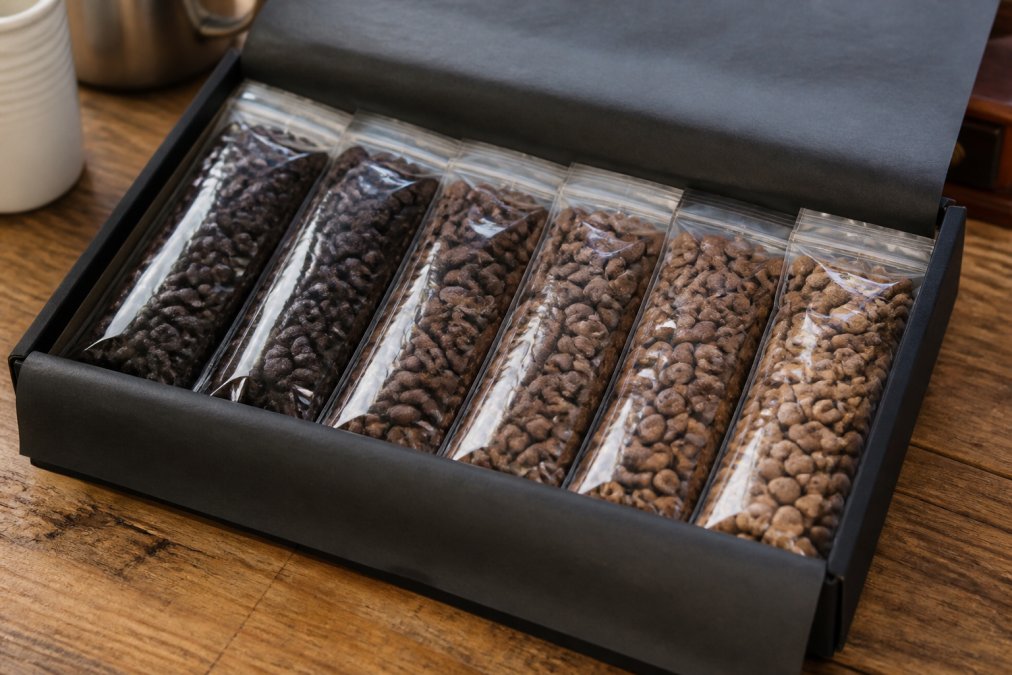
The Best Sellers Sample Pack from Cafe de Mattier represents the most practical entry point for gift-givers uncertain about a recipient's preferences. At $24.99, this sampler delivers six 2-ounce packs spanning the roast spectrum from dark to medium, each teaching how roasting technique shapes flavor.
The 6Bean Blend arrives as a dark roast house blend for espresso, emphasizing cocoa and body. The Cowboy Blend layers cocoa, caramel, and vanilla between dark and medium roasts. The Breakfast Blend offers South American smoothness at medium roast. The single-origin selections, Peru, Mexico, and Bali, shift focus to terroir and processing. Peru's medium roast expresses salted caramel and citrus from high-altitude Piura and Amazonas regions. Mexico's medium roast brings chocolate and cinnamon from Chiapas and Oaxaca. Bali's medium-dark roast showcases dark chocolate and molasses from volcanic Kintamani soil, using wet-hulled processing.
For gift-givers, this sampler solves the "I don't know what they like" problem elegantly. Recipients discover preferences organically, and the variety keeps the experience from feeling like a single-note gift.
Single-Origin Coffee Gift Ideas for Connoisseurs
For recipients who already know their coffee preferences, single-origin selections cut through the noise. The Single Origin Favorites Sample Pack from Cafe de Mattier at $24.99 delivers six distinct origins, each representing a specific region's terroir and processing tradition.

This pack targets the coffee enthusiast who understands that Brazil Santos tastes nothing like Ethiopia. Each origin comes from micro-lots and family-owned estates, carrying the signature of the grower's choices as much as the soil and altitude.
The Brazil Santos medium roast brings elegant smoothness with cocoa notes from volcanic loam at 750-1,050 meters. Colombia's medium roast from smallholder farmers in Medellin expresses dried orange, berry, and chocolate. Costa Rica's medium roast from Alajuela delivers sweet apple, raisin, and honey. Ethiopia's medium-light roast showcases milk chocolate, fruity notes, and caramel from indigenous heirloom cultivars in Sidama. Honduras medium-dark brings caramel and spice from 1,300-1,700 meters. Tanzania medium-light finishes with pear, floral, and strawberry notes.
What separates this gift is transparency about origin. Recipients see grower names, altitude, processing method, and tasting profile for each coffee, transforming the gift into an education about how geography and technique create flavor.
Flavored and Specialty Blends for Diverse Palates
Not every coffee drinker wants to taste terroir or contemplate roast profiles. The Flavored Coffees Sample Pack from Cafe de Mattier at $24.99 acknowledges that some recipients prefer coffee as a vehicle for recognizable flavors: vanilla, hazelnut, cinnamon, caramel, mocha, and cinnamon hazelnut.

This sampler solves a real problem for people who find black coffee too bitter or one-dimensional. Each flavor starts as specialty-grade single-origin coffee roasted to medium in small batches, then flavored with high-quality flavoring oils while still warm. This approach preserves the coffee's body and complexity underneath the flavor infusion rather than masking low-quality beans.
French Vanilla brings creamy sweetness. Hazelnut pairs with Brazilian coffee for nutty depth. Cinnabun delivers cinnamon roll flavor without added sugar. Caramel offers buttery sweetness. Mocha combines chocolate richness with coffee's natural bitterness. Cinnamon Hazelnut blends two complementary spice and nut notes.
For gift-givers, flavored blends work exceptionally well for recipients who describe themselves as "not really a coffee person" or who typically add cream and sugar to mask coffee's natural taste.
How to Choose Specialty Coffee Beans as Gifts
The decision tree for selecting specialty coffee gift sets starts with one question: what does the recipient already own? A coffee enthusiast with a burr grinder, scale, and pour-over equipment has completely different needs than someone who uses an automatic drip machine.
Brewing Equipment Compatibility matters more than roast profile or origin. Whole bean coffee requires a burr grinder to unlock flavor; blade grinders create a muddy, bitter cup that wastes the coffee's potential. If you're uncertain whether they own a burr grinder, either ask directly or include a recommendation in your gift message.
The brewing method also shapes which coffee shines. Filter coffee and pour-over benefit from medium roasts that highlight acidity and brightness. Espresso machines pull best from darker roasts that have developed body and sweetness. French press favors medium-dark roasts with enough body to stand up to immersion brewing. Cold brew works with any roast, though medium and dark roasts typically produce smoother results.
Sourcing transparency separates thoughtful gifts from commodity coffee. The best specialty coffee gift sets include grower names, altitude, processing method, and tasting notes. Cafe de Mattier's sourcing approach emphasizes micro-lots and family-owned estates because these details matter to people who appreciate coffee as a craft product.
Freshness guarantees protect the gift's value. Whole bean coffee stays fresh for 2-4 weeks after roasting if stored in an airtight container away from heat and light. Roasted-to-order options ensure maximum freshness, while sampler packs with multiple small bags let recipients open one at a time, preserving the rest.
Price-to-value ratio varies dramatically. A $25 specialty coffee gift set can deliver more perceived value than a $50 generic gift if it includes variety, transparency, and genuine quality. Sampler packs offer this advantage through multiple small bags that create an experience of discovery.
Coffee Tasting Notes Guide: Understanding Flavor Profiles
Coffee tasting notes describe the flavors you perceive when drinking coffee, much like wine tasting notes capture fruit and oak impressions. Understanding this vocabulary transforms a cup of coffee from "tastes good" into a sensory experience with identifiable characteristics.
Fruit notes appear most commonly in light and medium roasts, especially coffees processed using natural or honey methods. You might taste berry, citrus, stone fruit, or tropical fruit depending on origin and altitude. A Peru coffee might show citrus brightness, while an Ethiopian coffee expresses berry complexity.
Chocolate and cocoa notes emerge across roast levels, though medium and dark roasts emphasize them more prominently. These notes range from milk chocolate sweetness to dark chocolate bitterness depending on roast depth.
Spice and herb notes, cinnamon, clove, nutmeg, cardamom, appear in coffees from specific origins and roast levels. Medium-dark roasts tend to show spice notes more clearly than light roasts.
Floral and tea-like notes appear primarily in light and medium-light roasts. Ethiopian coffees frequently express jasmine and floral characteristics. These delicate notes get lost in dark roasts, which is why origin matters for light-roasted specialty coffees.
Body describes coffee's mouthfeel, whether it feels light and tea-like or heavy and syrupy. This depends on processing method, roast level, and brewing technique. Natural-processed coffees tend toward heavier body. Washed coffees often feel cleaner and brighter.
When evaluating a specialty coffee gift set, the tasting notes on each package function as a guide to what you should experience. They point you toward what the roaster intended, which deepens the recipient's experience.
What Makes These Gift Sets Stand Out
The specialty coffee gift sets that deliver genuine value share characteristics that go beyond packaging and marketing.
Unboxing experience matters more than coffee enthusiasts admit. A well-designed gift box with multiple small bags creates a sense of discovery. When recipients open the box and see six distinct coffees with different labels and tasting notes, they feel the giver invested thought into the selection.
Freshness at delivery determines whether the gift tastes like craft coffee or stale commodity. Roasted-to-order options ensure maximum freshness, while sampler packs with multiple small bags let recipients open one at a time, preserving the rest.
Brewing accessibility separates gifts that get used from gifts that sit on shelves. The best specialty coffee gift sets assume the recipient might not own advanced brewing equipment. Sampler packs work with any brewing method. Single-origin sets work best for recipients you know already brew specialty coffee. Flavored blends work universally.
Transparency about sourcing signals authenticity. When a gift includes grower names, altitude, processing method, and tasting notes, it tells the recipient that someone cared about the coffee's story, not just its packaging.
Ethical sourcing credentials matter to many coffee drinkers. Cafe de Mattier's emphasis on micro-lots and family-owned estates reflects a commitment to direct relationships with growers, typically meaning better prices for farmers and more control over quality.
Conclusion
Specialty coffee gift sets work because they respect the recipient's intelligence and taste. Whether you choose a sampler pack that invites exploration, a single-origin set for the connoisseur, or a flavored blend for someone who enjoys coffee as comfort, the best gifts acknowledge that coffee is more than caffeine, it's a daily ritual worth getting right.
Cafe de Mattier's specialty coffee gift sets, from the Best Sellers Sample Pack to the Single Origin Favorites, deliver complexity and balance through small-batch, French-inspired roasting. Each set includes transparency about origin, grower, altitude, and tasting notes, along with freshness guarantees that let recipients experience the roaster's intention. Subscribe to our emails to stay updated on limited releases and seasonal offerings.
Frequently Asked Questions
What makes a specialty coffee gift set different from regular coffee gifts?
Specialty coffee gift sets feature single-origin or micro-lot beans sourced from family-owned estates, roasted in small batches to highlight complex tasting notes. Unlike mass-produced coffee, specialty sets emphasize freshness, traceability, and flavor complexity. Whole bean formats preserve the coffee's nuanced profile, from floral notes to silky body, ensuring a premium experience that standard coffee cannot match.
How do I choose specialty coffee beans as gifts for someone unfamiliar with coffee culture?
Start with sample packs that offer variety without overwhelming commitment. A Best Sellers Sample Pack provides six different roast profiles, from medium breakfast blends to dark espresso blends, letting recipients discover their preference. Include a brief guide to tasting notes so they understand what to look for. Avoid single-origin beans initially; instead, choose approachable flavored options or balanced house blends that deliver flavor without requiring a refined palate.
What should I look for in coffee tasting notes when selecting a gift?
Tasting notes describe the coffee's flavor profile, think salted caramel, dark chocolate, citrus, or floral hints. Match these notes to the recipient's preferences: chocolate and caramel notes appeal to those who enjoy sweetness; fruity or citrus notes suit adventurous drinkers. Notes also indicate roast level: lighter roasts highlight fruit and floral complexity, while darker roasts emphasize cocoa and molasses. Understanding these profiles ensures you select a coffee they'll genuinely enjoy.
How can I ensure the coffee stays fresh after gifting it?
Whole bean coffee stays fresh for 2-4 weeks when stored in an airtight container away from light, heat, and moisture. Gift sets with 2oz packs are ideal because smaller portions are consumed quickly, preserving freshness. Small-batch roasted coffee, roasted to order, arrives fresher than mass-produced alternatives. Include storage instructions with your gift, and recommend grinding just before brewing to maximize flavor and aroma retention.
This article was written using GrandRanker