

Why Single Origin Coffee Costs More: The Real Price
Table of Contents
- What Is Single Origin Coffee and Why Does It Matter
- Specialty Coffee vs Commercial Coffee: A Price Comparison
- The True Cost of Growing Single Origin Coffee
- Supply Chain Transparency and What It Costs
- The Cost of Failure in Small-Batch Processing
- Roasting Precision and the Economic Breakdown of a Bag
- How a Coffee Sensory Evaluation at Home Kit Reveals the Difference
- Conclusion
Last Updated: August 18, 2026
What Is Single Origin Coffee and Why Does It Matter
Single origin coffee is coffee sourced from a single farm, estate, cooperative, or defined geographic region, rather than blended from multiple origins. At Cafe de Mattier, we source from micro-lots and family-owned estates precisely because traceability forces every link in the supply chain to be accountable. You know the farm, the altitude, and the harvest season. That transparency costs money at every stage.

Single origin coffee sits at the heart of the third wave coffee movement, which treats coffee as an agricultural product with distinct terroir, the way wine drinkers think about a specific vineyard. The flavor profile of a washed-process Ethiopian from a high-altitude micro-lot is irreproducible. That irreproducibility is the whole point, and it is also a significant driver of cost.
Specialty Coffee vs Commercial Coffee: A Price Comparison
Commercial coffee is traded on the New York C Market, a futures exchange where green coffee is priced as an interchangeable bulk good. Quality is irrelevant to the price. Yield and volume are everything.
Specialty coffee operates outside that market logic. A coffee earns specialty status by scoring 80 or above on a standardized cupping score scale developed by the Specialty Coffee Association. Coffees scoring in the high 80s and 90s command prices that reflect their scarcity and the labor required to produce them. According to the Specialty Coffee Association's grading standards, only a small fraction of the global coffee harvest meets the threshold for specialty classification.
The price gap between commodity coffee and specialty single origin reflects real differences in production costs, supply chain structure, and quality assurance standards.
| Factor | Commodity Coffee | Single Origin Specialty |
|---|---|---|
| Pricing basis | C Market futures | Direct trade / cupping score |
| Sourcing | Multiple origins blended | Single farm or micro-lot |
| Traceability | Minimal | Full supply chain transparency |
| Harvest method | Often mechanical | Selective hand-picking |
| Quality control | Standardized blend | Lot-by-lot cupping and grading |
| Flavor profile | Consistent, neutral | Distinct, terroir-driven |
The True Cost of Growing Single Origin Coffee
Growing single origin coffee at specialty quality is expensive before a single bean leaves the farm.

High-Altitude Farming and Low Yields
Altitude is a direct determinant of bean density, sugar development, and flavor complexity. Coffee grown at higher elevations, typically above 1,200 meters, develops more slowly, producing harder, denser beans with concentrated sugars that translate into bright acidity and layered flavor profiles.
The trade-off is yield. High-altitude farms produce fewer cherries per tree than lower-altitude commercial plantations. Terrain is steep and difficult to mechanize. All of this means per-pound production costs are structurally higher than on flat, low-altitude commercial farms. Small-holder farmers managing these conditions have quality as their advantage, but quality alone does not guarantee a fair price unless the buyer is specifically seeking it.
Hand-Picking, Labor, and Fair Wages
Selective hand-picking is the standard for high-quality single origin coffee. Pickers move through plants multiple times during harvest, selecting only cherries at peak ripeness. This is skilled, painstaking work.
Mechanical strip-harvesting pulls all cherries off a branch simultaneously regardless of ripeness. It is fast and cheap, but produces mixed-maturity harvests requiring more intensive sorting and resulting in less consistent flavor.
Fair wage commitments add another layer. According to the Fair Trade USA standards for coffee, certified buyers pay a minimum price floor plus a social premium that goes directly to farmer communities. That premium is real money built into the cost of every pound.
Supply Chain Transparency and What It Costs
Transparency in the supply chain is the defining characteristic of serious single origin coffee, and it adds cost at every step.
A commercial coffee blend might pass through a commodity broker, trading company, importer, and distributor before reaching a roaster. At each stage, the coffee loses its identity. Single origin traceability requires the opposite. The micro-lot must be kept separate throughout processing, transport, and storage. That means smaller shipments, dedicated handling, and more documentation. Quality assurance checks happen at the farm level, at the mill, and again on arrival.
As documented in the USDA's overview of specialty coffee import requirements, green coffee imports require phytosanitary certification and FDA food safety compliance. For small lots, fixed compliance costs represent a higher percentage of total shipment value than for bulk commodity containers.
Logistics and Import Overhead for Small Lots
Shipping a small micro-lot is not proportionally cheaper than shipping a large commercial container. It is often more expensive per pound.
A 20-foot container of commercial green coffee might hold 250 bags of 60 kilograms each. Freight, insurance, customs brokerage, and port handling fees spread across that volume. A micro-lot shipment of five to twenty bags carries many of the same fixed costs, concentrated into a fraction of the weight.
Specialty importers who specialize in traceable green coffee build relationships with farms, travel to origin, and maintain quality control infrastructure. That overhead is legitimate and necessary, and it is reflected in the price per pound that roasters pay.
The Cost of Failure in Small-Batch Processing
Processing methods, whether washed, natural, or honey process, each carry distinct risk profiles. A natural process coffee requires precise monitoring over weeks. If humidity spikes or a batch gets rained on at the wrong moment, the entire lot can develop fermentation defects that make it unsaleable as specialty.
For a small-holder farmer producing a single micro-lot, a failed batch can represent the entire harvest. The risk premium built into specialty coffee pricing reflects this reality. When you buy a well-processed single origin, you are also paying for all the batches that didn't make it.
Roasting Precision and the Economic Breakdown of a Bag
Roasting is where the investment in quality either compounds or collapses.
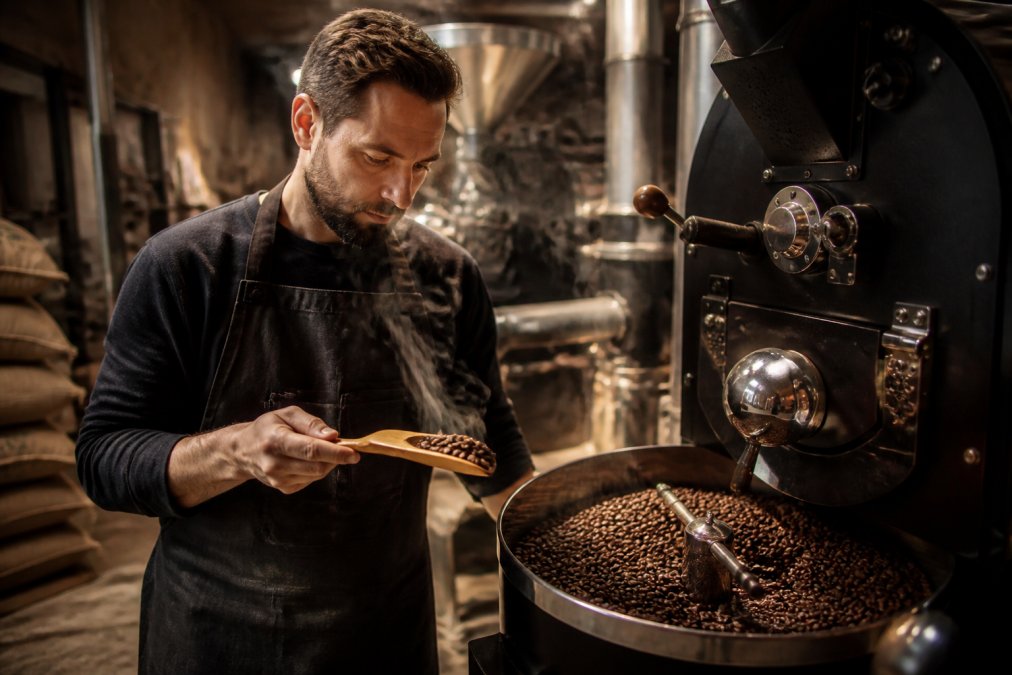
A specialty green coffee with an exceptional cupping score can be ruined by an imprecise roast profile. The roaster's job is to develop the bean's inherent character without masking it. That requires small-batch equipment, careful temperature profiling, and experience to recognize when a specific lot needs a different approach.
Small-batch roasting equipment costs significantly more per pound of output than industrial drum roasters. Energy costs are higher. The roaster's time, spent developing profiles for each new lot, is a skilled labor cost that commodity roasters don't carry.
Here is a simplified breakdown of where cost accumulates in a bag of single origin specialty coffee:
| Cost Layer | What Drives It |
|---|---|
| Farm production | High-altitude low yield, selective harvesting, fair wages |
| Processing | Method-specific infrastructure, failure risk on small lots |
| Export and import | Small-lot freight, compliance, quality assurance |
| Green coffee markup | Importer relationship overhead, traceability infrastructure |
| Roasting | Small-batch equipment, profile development, skilled labor |
| Packaging and shelf life | Specialty-grade bags with one-way valves, shorter optimal window |
Cafe de Mattier's slow-roast tradition is built around this reality. French-inspired roasting techniques applied to micro-lot green coffee require attention that high-volume production simply cannot give.
How a Coffee Sensory Evaluation at Home Kit Reveals the Difference
The most direct way to understand why single origin coffee costs more is to taste the difference against a commercial blend under controlled conditions. A coffee sensory evaluation at home kit gives you the tools to do exactly that.
A basic home cupping setup includes a standardized brewing ratio, a cupping spoon, and a tasting framework. The Specialty Coffee Association's cupping protocol involves evaluating fragrance, aroma, flavor, aftertaste, acidity, body, balance, and overall impression. When you cup a washed Ethiopian against a commodity blend, the distinction is clear. The Ethiopian might show jasmine florals in the dry fragrance, stone fruit in the wet aroma, and clean, bright acidity in the cup. The blend might show roast character and not much else.
The Cafe de Mattier Single Origin Favorites Sample Pack is an ideal starting point for this kind of comparison. Six two-ounce packs of distinct single origin coffees, including the Brazil Santos with its cocoa-forward elegance and the Colombia with its dried orange and berry complexity, give you enough variety to begin recognizing how terroir, processing method, and roast profile interact. At $24.99, it's a low-commitment way to run your own sensory evaluation before committing to a full bag.

Understanding the economics of single origin coffee changes how you read a price tag. The premium reflects the accumulated cost of doing everything right, from a hillside farm to a small-batch drum roaster, with no shortcuts taken anywhere in the chain. According to the Specialty Coffee Association's research on value chain economics, the farmer's share of the final retail price in specialty coffee is meaningfully higher than in commodity chains, but only when buyers actively structure their sourcing to ensure it.
Single origin coffee costs more because producing it honestly is expensive. Every element of the premium, altitude, hand-picking, fair wages, small-lot logistics, processing risk, and roasting precision, reflects a real cost that someone in the chain has to absorb. When that cost is shared fairly, the farmer earns a living wage, the roaster can invest in quality, and the cup in your hand is genuinely worth what you paid for it.
Cafe de Mattier's commitment to micro-lots and family-owned estates, roasted in small batches using a slow-roast tradition, is built on exactly this foundation. Explore the Single Origin Favorites Sample Pack to experience the full range of what traceable, carefully sourced specialty coffee can be, and subscribe to our emails for new arrivals, roasting notes, and guides to getting the most from every cup.
Frequently Asked Questions
Are single origin coffees objectively better than blends?
Not objectively, but differently. Blends are designed for consistency, balancing flavors across multiple sources to produce a predictable cup year-round. Single origin coffees express the specific terroir, altitude, and processing methods of one farm or micro-lot, which means more distinct and traceable flavor profiles. For drinkers who value complexity, floral notes, and traceability over uniformity, single origin coffee offers something a blend structurally cannot: a direct connection to one place and one harvest.
How do labor costs and fair trade practices impact coffee pricing?
Hand-picking ripe coffee cherries at high-altitude farms is among the most labor-intensive steps in food production. Smallholder farmers who sort by hand, rather than machine-strip entire branches, require more working hours per pound of green coffee. When roasters commit to fair wage or direct trade agreements, those labor costs are reflected in the green coffee price paid upstream. That premium flows through the supply chain, adding several dollars per pound before roasting, packaging, or import overhead are even factored in.
What role does scarcity play in the price of micro-lot coffee?
Micro-lot coffee, by definition, comes from a small, precisely defined section of a farm, often just a few acres. Total production may be only a few hundred pounds per harvest. That scarcity limits supply while specialty roasters compete for the same lots, which pushes the price per pound well above commodity coffee levels. Unlike commodity coffee traded on global exchanges, micro-lot pricing reflects actual cupping scores, yield size, and direct relationships between roaster and grower, not just market volatility.
Does the roasting process for single origin beans differ from blends?
Yes, significantly. Blends are often roasted to a single profile that masks variation across origins. Single origin coffee demands a tailored roasting profile built around that specific bean's density, moisture content, and altitude of growth. A slow-roast approach, as used with micro-lot beans, allows the roaster to develop complexity without scorching delicate floral or fruit notes. This precision roasting requires smaller batch sizes, more time per roast, and a higher rate of discarded batches, all of which add to the final price per bag.
This article was written using GrandRanker