

Counter Culture Alternative for Micro Lots: Top Picks
Table of Contents
- What Is a Coffee Micro-Lot?
- Why Seek a Counter Culture Alternative for Micro Lots
- Best Small-Batch Coffee Roasters for Micro-Lot Beans
- How to Brew Micro-Lot Coffee for Best Flavor
- Comparing Micro-Lot Coffee Subscriptions: Flexibility and Value
- Micro-Lot Coffee vs. Mass-Market Specialty: Flavor and Freshness
- Conclusion
- Frequently Asked Questions
Last Updated: September 10, 2026
What Is a Coffee Micro-Lot?
A coffee micro-lot is a small, traceable quantity of coffee, typically harvested from a single plot, a single day's picking, or a distinct section of one farm, and kept separate from the rest of the harvest through milling and export. Where a standard "single-origin" bag might blend beans from hundreds of farms across a region, a micro-lot represents one producer's best work, isolated and scored on its own.
That separation is the whole point. At Cafe de Mattier, we build our small-batch roasts around these lots because they let a specific terroir, altitude, and processing method show up clearly in the cup. The Specialty Coffee Association's cupping standards define how these lots are graded, and a micro-lot generally needs a cupping score of 80 or above to earn the "specialty" label at all.
Why does the distinction matter for your morning coffee? Because traceability changes what you can taste. A micro-lot from a high-altitude Ethiopian plot and one from a low-grown commodity blend are not the same product in a nicer bag. They are grown, picked, processed, and roasted with a different level of attention, and that shows up in flavor notes you can actually name.
Why Seek a Counter Culture Alternative for Micro Lots
The most common reason buyers start hunting for a Counter Culture alternative for micro lots is simple: they want the same transparency and small-lot sourcing without the subscription friction or the rotating menu that never quite settles. Counter Culture built its reputation on direct trade and seasonal offerings, and that model works well for some drinkers. It works less well for anyone who wants a consistent, repeatable cup from a roaster whose entire identity is micro-lot sourcing.
A few practical gaps push people to look elsewhere:
- Consistency over novelty. Rotating seasonal menus mean your favorite lot disappears in weeks. A roaster focused on a stable core of micro-lots lets you reorder the same profile.
- Subscription control. Many buyers report getting locked into delivery schedules they can't pause. Flexibility matters more than most roasters admit.
- Freshness guarantees. Micro-lots are delicate. If a bag sits in a warehouse before shipping, the floral and fruit notes fade fast.
This is where the search usually gets interesting, because the roaster you switch to should be built around micro-lots from the start, not a large operation adding a "reserve" line.
Best Small-Batch Coffee Roasters for Micro-Lot Beans
The best small-batch roasters for micro-lot beans share three traits: they name the farm or cooperative, they print a roast date rather than a best-by date, and they roast in quantities small enough to move through inventory quickly. Everything else is preference.
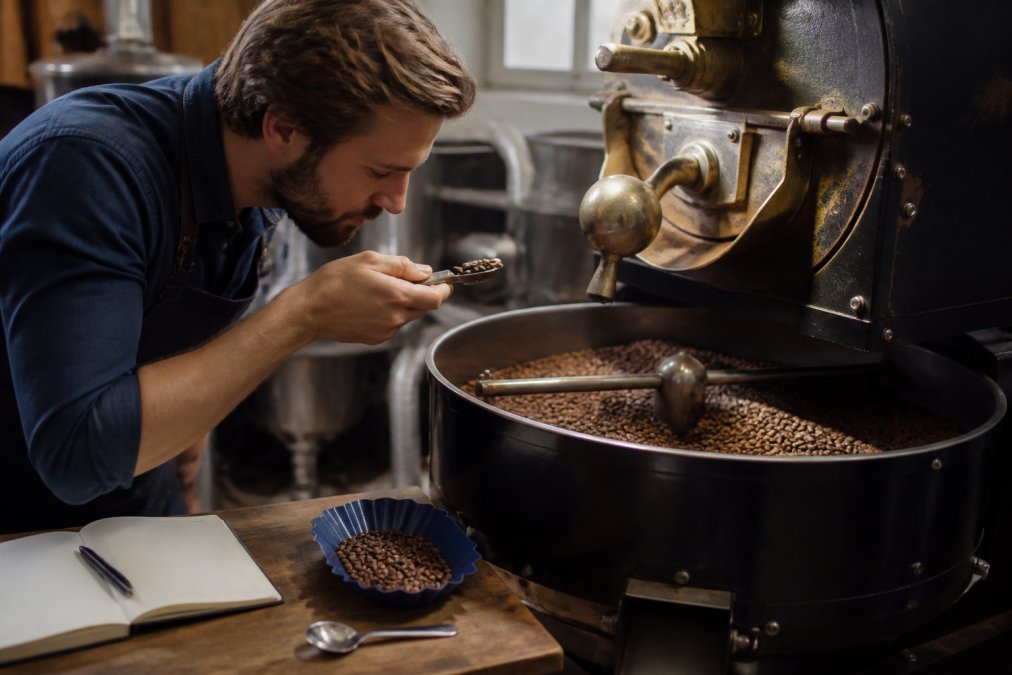
Cafe de Mattier: French-Inspired Slow Roasts
The French-inspired slow-roast tradition is a genuine differentiator in a market where most roasters push beans through a fast, high-heat profile. Slower roasting develops a silk-like body and lets floral notes survive the process instead of getting scorched off.
The lineup is built entirely on micro-lots and family-owned estates, and every bag is a single origin. A few standouts:
- Ethiopia Natural ($23.99): a med-light roast from smallholder farmers in the Sidama zone, with milk chocolate, fruity, and caramel notes. The full natural process and raised-bed drying give it the fruit-forward character natural lots are known for.
- Colombia ($23.99): medium roast, fully washed, with dried orange, berry, and chocolate. Grown at 1,300-1,500 meters by smallholders near Medellín.
- Guatemala ($23.99): medium roast from Antigua, with dark chocolate, bright fruit, and butterscotch.
The honest limitation: slow roasting means you won't get the smoky, aggressive punch some drinkers expect from a dark roast. If you want a coffee that hits like a hammer, this isn't it. But if you want to taste what a micro-lot actually offers, the slow approach protects those flavors instead of burying them.

Other Notable Micro-Lot Roasters
Beyond our own roster, a handful of small roasters do micro-lot sourcing well. The pattern to look for is a named producer and a printed roast date on every bag. Roasters that lean into single-farm offerings and publish harvest details tend to be the ones worth your money. When you compare, ask one question: can they tell you exactly which farm this bag came from, and when it was roasted?
How to Brew Micro-Lot Coffee for Best Flavor
Micro-lot coffee rewards a gentler hand. The same intensity that makes a commodity blend forgiving will flatten the delicate notes in a high-grown lot, so the goal is even extraction, not maximum strength.
A pour-over setup suits most micro-lots best. Start with a medium-fine grind, water just off the boil, and a slow, steady pour that keeps the bed even. Espresso works too, but dial it in carefully: a slightly coarser grind and a shorter shot preserve the fruit and floral notes that a long pull would strip out. Whichever method you choose, grind fresh, weigh your beans, and give the coffee a minute to open up after brewing.
The processing method also guides your approach. Washed lots tend to be cleaner and brighter, so they shine in a pour-over. Natural and honey process lots carry more body and fruit, which can hold up to a slightly stronger brew.
Comparing Micro-Lot Coffee Subscriptions: Flexibility and Value
Subscription flexibility is where micro-lot programs separate themselves, and it's the angle most comparison guides skip. A subscription is only worth it if you can pause it, change the roast, skip a delivery, or cancel without a phone call and a retention pitch. The mechanics matter as much as the price.
Start by pricing the coffee per ounce, not per bag. A 12-ounce bag at $23.99 works out to roughly $2.00 per ounce. A 16-ounce bag at $28 works out to $1.75 per ounce. Neither number tells you whether the coffee is good, but it does tell you whether you're paying a micro-lot premium or a branding premium. For reference, commodity grocery coffee often lands well under $1.00 per ounce, so the micro-lot premium is real and you should be able to taste where it went.
Next, test the flexibility mechanics before you commit. The questions that actually matter:
- Can you pause without losing your place in the queue? Some programs let you pause but drop you to the back of the waitlist for limited lots.
- Can you skip a single delivery? Skipping is different from pausing; a good program allows both.
- Can you change roast level or grind on an existing subscription? If you switch brew methods mid-subscription, you shouldn't have to cancel and re-enroll.
- Can you cancel online, in two clicks, with no phone call? If cancellation requires a call, that's a signal about how the rest of the service works.
- Is the roast date printed on every bag, or only on the shipping label? The bag is what matters.
Here's how to weigh the trade-offs side by side:
| Priority | What to Look For | Why It Matters |
|---|---|---|
| Flexibility | Pause, skip, or cancel online without penalty | Avoids paying for coffee you won't drink |
| Freshness | Roast date printed on every bag | Micro-lot flavor fades within weeks |
| Value | Price per ounce vs. lot quality and traceability | You're paying for sourcing, not branding |
| Variety | Stable core lots vs. rotating menu | Consistency if you find a favorite |
| Equipment fit | Whole bean vs. pre-ground, roast level changes | Matches your brewing method |
| Cadence | Weekly, biweekly, or monthly with easy adjustment | Matches how fast you actually drink coffee |
Value in micro-lot coffee isn't about the lowest price per pound. It's about whether the bag in your hand actually delivers the complexity you paid for. A $23.99 single-origin micro-lot that arrives fresh and tastes like the tasting notes on the label is better value than a cheaper bag that went stale in a warehouse. Run the math on your own consumption: if you drink one 12-ounce bag every two weeks, a biweekly cadence keeps you in fresh coffee without a backlog. If you drink one bag a month, a monthly cadence with the option to skip is the safer default.
One more value lever most guides ignore: shipping. Free shipping thresholds and flat-rate shipping can swing the effective per-ounce price by 10-20 percent depending on how much you order at once. If a roaster charges $6 to ship a single 12-ounce bag, that's an extra $0.50 per ounce on top of the coffee. Batching two bags per shipment often erases that cost.
Micro-Lot Coffee vs. Mass-Market Specialty: Flavor and Freshness
Mass-market "specialty" coffee and true micro-lots differ in two measurable ways: traceability and time from roast to cup. A mass-market bag may carry a specialty label while blending beans from many farms and shipping them through distribution channels that add weeks before you brew.
Micro-lots invert that. The producer is named, the lot is isolated, and the roaster typically ships within days of roasting. That short window is why freshness, not just origin, is the real dividing line. The USDA's coffee grading and labeling guidance reflects how origin and grade claims are regulated, and a genuine micro-lot will always name its source.
The flavor difference follows from there. A fresh micro-lot shows the acidity, body, and specific flavor notes its origin is known for. A stale mass-market bag tastes like coffee, and not much else. That's the gap you're paying to close.
Conclusion
Finding a Counter Culture alternative for micro lots comes down to one test: does the roaster name the source and print the roast date? If yes, you're dealing with someone who actually cares about the lot in the bag.
Frequently Asked Questions
What defines a coffee micro-lot?
A micro-lot is a small, traceable batch of coffee, often from a single farm or cooperative, typically less than 100 bags. It highlights distinct flavor notes, varietals, and processing methods like washed or natural. Micro-lots allow roasters to showcase unique terroir and support producer equity through direct trade.
Why choose small-batch roasters over large specialty brands?
Small-batch roasters focus on freshness, often roasting to order, which preserves delicate flavor notes and acidity. They prioritize supply chain transparency and ethical sourcing, building direct relationships with producers.
How does Cafe de Mattier compare to national specialty roasters?
Cafe de Mattier offers French-inspired slow roasts from micro-lots and family-owned estates, emphasizing complexity, floral notes, and a silk-like body. Unlike larger roasters, their small-batch production ensures freshness and traceability. With single-origin options like Bali Blue and Ethiopia Natural at $23.99, they provide a mindful coffee experience focused on quality and ethical sourcing.
What should I look for when buying premium micro-lot coffee?
Check the roast date for freshness, the origin and producer details for traceability, and the processing method (washed, natural, honey) for flavor impact. Subscription flexibility and equipment compatibility, such as pour-over or espresso, also matter for enjoyment.
If you're tired of subscriptions that won't pause and bags that arrive past their peak, Cafe de Mattier offers a different path. Our French-inspired slow roasts are built entirely on micro-lots and family-owned estates, with single-origin offerings like Ethiopia Natural and Colombia that arrive fresh and taste like their tasting notes promise. Subscribe to our emails to see new lots as they land, and start building a morning ritual around coffee that's actually traceable.