

How to Brew Small Batch Coffee at Home
Table of Contents
- What You'll Need: Equipment and Ingredients
- Understanding Small Batch Coffee Brewing Ratio
- Coffee Grind Size for Drip Coffee and Other Methods
- How to Brew Coffee in a Drip Coffee Maker
- How to Make Coffee at Home Without a Grinder
- Water Temperature and Freshness for Small Batch Brewing
- Choosing the Right Brewing Method for Small Batches
- Common Mistakes to Avoid When Brewing Small Batch Coffee
- Frequently Asked Questions
Last Updated: October 16, 2026
What You'll Need: Equipment and Ingredients
Brewing small batch coffee at home requires just a few essentials. You don't need an expensive setup to make excellent coffee. The right tools and fresh ingredients are what matter most.
Equipment basics:
- A brewing method (drip maker, pour-over, French press, or AeroPress)
- A coffee grinder or pre-ground coffee
- A kitchen scale or measuring spoon
- Fresh, filtered water
- A mug or cup
Ingredients you'll need:
- Fresh coffee beans or pre-ground coffee
- Filtered or fresh water
The quality of your water matters more than most people realize. Tap water often contains minerals and chlorine that affect taste. Using filtered water helps you taste the real flavor of your coffee beans.
At Cafe de Mattier, we recommend starting with fresh, whole beans roasted within the past two weeks. Our French-inspired roasts from micro-lots and family-owned estates bring out complexity and floral notes that shine in small batches.
Understanding Small Batch Coffee Brewing Ratio
The coffee-to-water ratio is the foundation of good small batch coffee. Get this right, and your brew will taste balanced. Get it wrong, and you'll have either weak coffee or something too bitter.
The standard ratio is 1 part coffee to 16 parts water by weight. This works for most brewing methods. For example:
- 0.5 ounces of coffee to 8 ounces of water (one cup)
- 1 ounce of coffee to 16 ounces of water (two cups)
Some people prefer stronger coffee. If you like it bold, try 1 to 14. If you prefer lighter coffee, use 1 to 18.
Why weight matters more than volume: Using a kitchen scale is more accurate than measuring spoons. Coffee grounds vary in density.
If you don't have a scale, one tablespoon of ground coffee weighs roughly 0.2 ounces. Use this as your guide for measuring without a scale.
Coffee Grind Size for Drip Coffee and Other Methods
Grind size controls how fast water moves through the coffee grounds. The finer the grind, the longer extraction takes. The coarser the grind, the faster water flows through.
Different brewing methods need different grind sizes:
| Brewing Method | Grind Size | Why |
|---|---|---|
| Drip coffee maker | Medium | Balances extraction time and flavor |
| Pour-over | Medium-fine | Slightly slower extraction for clarity |
| French press | Coarse | Long steep time needs larger grounds |
| AeroPress | Fine to medium | Flexible method works with multiple sizes |
For drip coffee makers specifically: Use a medium grind, similar to sea salt texture. This grind works well with the standard brewing time of most drip makers (4-6 minutes).
If your coffee tastes weak, try a finer grind next time. If it tastes bitter, go coarser. Small adjustments make a real difference.
How to Brew Coffee in a Drip Coffee Maker
A drip coffee maker is the easiest way to brew small batch coffee at home. It handles most of the work for you. Follow these steps for consistent results.
Step-by-step brewing process
Step 1: Fill the water reservoir (Time: 1 minute)
Pour fresh, filtered water into the back of your machine. Use the amount you want to brew.
Step 2: Insert the filter and ground coffee (Time: 2 minutes)
Place a paper or metal filter in the basket. Add your ground coffee using the 1:16 ratio.
Spread the grounds evenly in the filter. This helps water flow through uniformly.
Step 3: Start the brew (Time: 1 minute)
Close the top and press the brew button.
Step 4: Wait for completion (Time: 4-6 minutes)
Let the machine finish. Most drip makers complete a full pot in 4-6 minutes.
Step 5: Pour and enjoy (Time: 1 minute)
Once brewing stops, pour your coffee into a mug. Drink it fresh. Coffee tastes best within 15 minutes of brewing.
Measuring water and coffee grounds
Accuracy matters. Use a kitchen scale for best results. Weigh both your coffee and water in grams.
For one cup (8 ounces / 227 grams water):
- Coffee: 14-15 grams
- Water: 227 grams
For two cups (16 ounces / 454 grams water):
- Coffee: 28-30 grams
- Water: 454 grams
If you don't have a scale, use these conversions:
- 1 tablespoon ground coffee ≈ 0.2 ounces
- 1 cup water = 8 fluid ounces
Write these ratios on a note card and keep it by your coffee maker. You'll build the habit quickly.
How to Make Coffee at Home Without a Grinder
Not everyone has a grinder, and that's fine. Pre-ground coffee works well for small batch brewing. You just need to choose the right grind and use it quickly.
Pre-ground coffee selection
Buy pre-ground coffee labeled "drip" or "medium grind." This is the most versatile grind for home brewing. Avoid "espresso" grind (too fine) and "French press" grind (too coarse) unless you're using those specific methods.
Check the roast date on the bag. Buy coffee roasted within the past week if possible. Cafe de Mattier's artisanal roasts are crafted to highlight the complexity and floral notes in every cup. Fresher beans taste noticeably better.
Store pre-ground coffee in an airtight container away from heat and light. A sealed bag in a cool, dark cabinet works well. Use it within two weeks of opening.
Alternative brewing methods for small batches
Pre-ground coffee shines in certain brewing methods. These approaches work great without a grinder.
Pour-over brewing: A pour-over cone or dripper is simple and affordable. Boil water, place a filter and pre-ground coffee in the cone, and slowly pour water over the grounds. This takes about 3-4 minutes.
AeroPress: An AeroPress is compact and forgiving. It works with medium to fine grinds. Press hot water through the grounds using the plunger. The whole process takes 2-3 minutes.
Immersion brewing: Cold brew and overnight steeping don't need a grinder. Combine coarse pre-ground coffee with cold water in a jar. Let it sit 12-24 hours. Strain and dilute with water or milk.

Water Temperature and Freshness for Small Batch Brewing
Water temperature controls extraction speed. Too hot, and you over-extract (bitter taste). Too cool, and you under-extract (weak, sour taste).
Ideal water temperature: 195-205°F
Most home drip makers heat water to this range automatically.
Use a simple thermometer to check. Boil water, wait 30 seconds, and measure. You'll quickly learn the timing for your kettle.
Water freshness matters too: Use fresh water each time you brew. Don't reuse water from a previous brew.
If your tap water is heavily chlorinated, let it sit uncovered for 30 minutes before brewing. This allows chlorine to evaporate.
Hard water (high mineral content) can affect flavor. If you notice a chalky or dull taste, try filtered water.
Choosing the Right Brewing Method for Small Batches
Different brewing methods suit different people. The best method is the one you'll use consistently. Small batch coffee brewing works with several options.
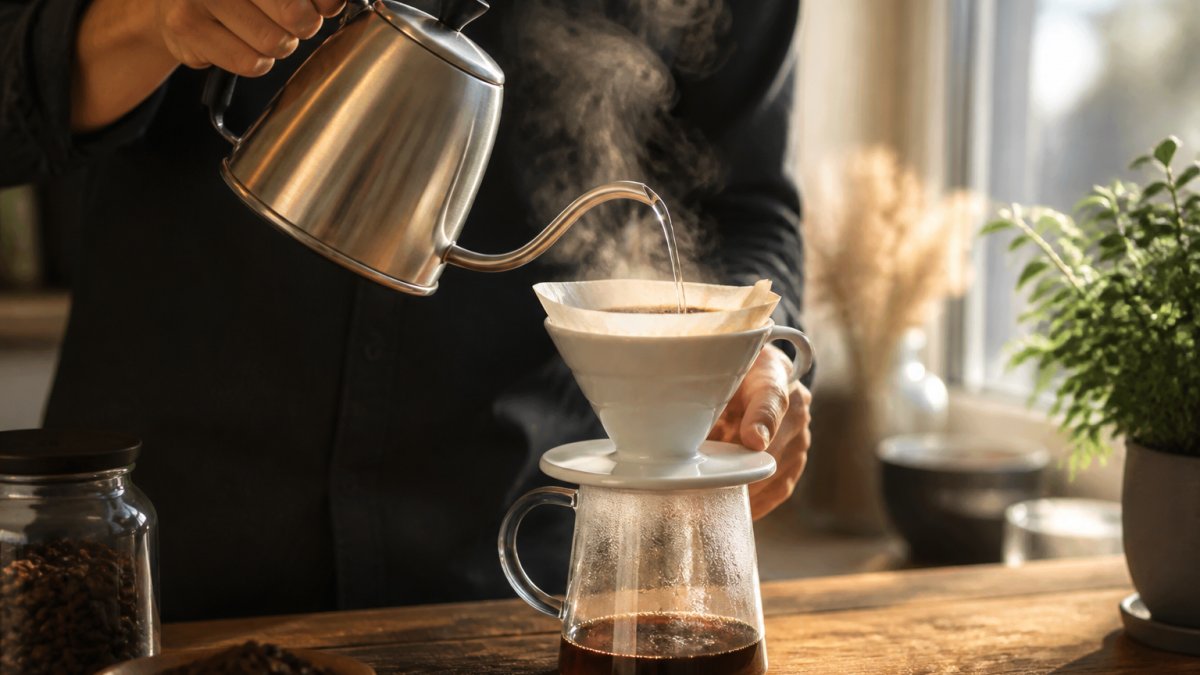
Pour-over brewing
Pour-over is simple, affordable, and produces clean coffee. You control every variable. This method works great for one or two cups.
A pour-over cone or flat-bottomed dripper costs $10-20. Add a kettle and you're set. The brewing process takes 3-4 minutes.
How it works: Place a filter in the cone. Add medium-fine ground coffee. Slowly pour hot water (195-205°F) in circles over the grounds. Watch the coffee drip into your mug. Stop when you reach your desired amount.
Pour-over gives you a clean cup with bright flavors. Paper filters trap oils, creating a lighter body. Metal filters let more oils through, creating a fuller cup.
French press for one or two cups
A French press brews by immersion. Coffee grounds steep in hot water for 4 minutes, then you press down a plunger to separate grounds from liquid.
A small French press (3-4 cups) is perfect for small batch brewing. Use medium-coarse ground coffee. The steeping method brings out the full body and richness of the beans.
How it works: Add hot water to the empty press. Swirl it around to warm the glass. Drain the water. Add your ground coffee and hot water. Stir gently. Place the lid on top (don't press yet).
French press coffee has a heavier body than pour-over. You taste more of the bean's oils and complexity.
AeroPress and other compact brewers
An AeroPress is a plastic cylinder with a plunger. It brews in 2-3 minutes and produces excellent coffee. It's durable, portable, and easy to clean.
An AeroPress costs around $30-40. It works with medium to fine grounds. The process combines immersion and pressure, creating a balanced cup.
How it works: Rinse the paper filter. Place it in the basket and attach to the chamber. Add medium-fine ground coffee. Pour hot water to fill the chamber. Stir for 10 seconds.
The AeroPress is forgiving. It works with various grind sizes and brew times. If you like experimenting, this method rewards you with different flavors based on small changes.
Common Mistakes to Avoid When Brewing Small Batch Coffee
Most brewing problems come from a few repeated mistakes.
Mistake 1: Using stale coffee Old beans and ground coffee taste flat and dull. Buy fresh.
Mistake 2: Wrong water temperature Brewing with water that's too hot creates bitter, over-extracted coffee.
Mistake 3: Incorrect ratio Too much coffee makes bitter coffee. Too little makes weak coffee.
Mistake 4: Not measuring consistently Eyeballing your coffee leads to inconsistent results. Use a scale.
Mistake 5: Using poor-quality water Tap water with chlorine or minerals affects flavor. Use filtered water.
Mistake 6: Leaving coffee on heat Drip makers with warming plates cook your coffee over time.
Frequently Asked Questions
What is the best coffee-to-water ratio for a small batch?
The standard ratio is 1:16 (one part coffee to sixteen parts water by weight). For a single 8-ounce cup, use 0.5 ounces (about 14 grams) of ground coffee. For two cups (16 ounces), use 1 ounce (28 grams). If you prefer stronger coffee, adjust to 1:15. Weaker coffee works at 1:17 or 1:18. Using a kitchen scale ensures consistency and repeatable results across batches.
How do I keep small batch coffee from tasting bitter or weak?
Bitterness usually comes from over-extraction: too-hot water, too-fine grounds, or steeping too long. Weakness results from under-extraction: water that's too cool, grounds too coarse, or insufficient brew time. Use water between 195-205°F, measure your grounds precisely by weight, and follow the brew time for your method (3-4 minutes for drip, 4 minutes for French press, 2-3 minutes for pour-over). Freshly roasted beans, like those from Cafe de Mattier, extract more evenly and deliver balanced flavor with proper technique.
Can I make good coffee at home without a grinder?
Yes. Pre-ground coffee from a specialty roaster works well if ground just before you buy it. Ask your roaster to grind beans to your brewing method (medium-fine for drip, medium for pour-over, coarse for French press). Store ground coffee in an airtight container away from light and heat. Use it within two weeks for best flavor. Single-origin options like Brazil Santos or blends like Breakfast Blend arrive in the grind size you specify, making small-batch brewing accessible without equipment investment.
How long should small-batch coffee brew?
Brew time depends on your method. Drip coffee makers typically brew in 5-8 minutes. Pour-over takes 2-3 minutes of active pouring plus settling. French press steeps for 4 minutes before plunging. AeroPress brews in about 1-2 minutes. Cold brew requires 12-24 hours of steeping. The goal is full extraction without over-steeping. If your coffee tastes weak, extend brew time by 30 seconds; if bitter, reduce by the same amount. Consistent timing produces repeatable, balanced cups.
Brewing small batch coffee at home is simple once you understand the basics. Start with fresh beans from Cafe de Mattier, measure carefully, and dial in your method. Our French-inspired roasts from micro-lots and family-owned estates are crafted to shine in small batches, bringing out the complexity and floral notes that make each cup a mindful experience. Subscribe to our emails to discover new single-origin roasts and brewing tips that elevate your daily ritual.