

Manual Brewing vs Automatic Coffee Makers: 2026 Guide
Table of Contents
- Quick Comparison: Manual Brewing vs Automatic Coffee Makers
- How to Brew Micro Lot Coffee: Why Method Matters
- Coffee Extraction Variables That Change Everything
- Manual Coffee Brewing Equipment Guide
- Cost Breakdown: Upfront Investment vs Long-Term Spending
- Workflow, Maintenance, and Daily Reality
- Which Method Fits Your Morning?
- Frequently Asked Questions
Last Updated: September 22, 2026
Quick Comparison: Manual Brewing vs Automatic Coffee Makers
The manual brewing vs automatic coffee makers debate comes down to one trade-off: control versus convenience. Manual brewing gives you hands-on command of every variable, from grind size to pour rate. Automatic machines handle the work for you. This guide from Cafe de Mattier breaks down extraction quality, cost, maintenance, and daily workflow so you can pick the right method for your morning.
Here is the short version:
| Factor | Manual Brewing | Automatic Coffee Makers |
|---|---|---|
| Upfront cost | Low to moderate | Moderate to high |
| Daily effort | 5-10 minutes | Under 1 minute |
| Control over extraction | Full | Limited to preset |
| Consistency | Depends on skill | High, repeatable |
| Maintenance | Simple, occasional descaling | Regular cleaning cycles |
| Best for | Hands-on enthusiasts | Busy professionals |
Manual brewing rewards attention. Automatic machines reward speed. Neither is universally better, and the right answer depends on how you actually spend your mornings.
How to Brew Micro Lot Coffee: Why Method Matters
Learning how to brew micro lot coffee starts with understanding that these beans are delicate. Micro-lot coffees come from small, carefully farmed plots, and their floral and fruit notes fade fast when extraction goes wrong. A method that scorches or over-extracts will flatten everything that makes the bean special.
Manual methods give you the precision these coffees need. You can adjust water temperature, pour speed, and contact time to pull out complexity without bitterness. Automatic machines can brew micro-lot coffee well, but only if they offer temperature control and even saturation. Cheaper drip machines often run too hot or too cool, and the results show it.
The Specialty Coffee Association's brewing standards set clear targets for water temperature and extraction yield. Hitting those targets is easier when you control the variables yourself.
Coffee Extraction Variables That Change Everything
Coffee extraction variables determine whether a cup tastes balanced or harsh. Four factors matter most: grind size, water temperature, brew ratio, and contact time. Get these right and even a simple setup produces excellent coffee.
- Grind size: Fine grinds extract faster; coarse grinds extract slower. Match grind to method.
- Water temperature: Most guidance points to roughly 195-205°F for optimal extraction.
- Brew ratio: A common starting point is 1:15 to 1:17 coffee to water by weight.
- Contact time: Longer exposure pulls more from the grounds, but too long turns bitter.
Automatic machines lock most of these variables into presets. Manual brewing lets you tune each one. A PID controller on an electric kettle holds temperature within a degree, while a basic drip machine may swing widely. For anyone chasing shot consistency or crema quality, that control is the difference between good and great.
The National Coffee Association's brewing guidance confirms that water quality and temperature drive flavor more than most people expect. That leads to an angle most comparisons skip entirely.
Manual Coffee Brewing Equipment Guide
A manual coffee brewing equipment guide starts with four essentials: a grinder, a kettle, a brewer, and a scale. A burr grinder delivers even particle size, which matters more than any other tool. A gooseneck kettle gives you pour control. A pour-over cone, French press, or AeroPress handles extraction. A digital scale keeps your ratio consistent.
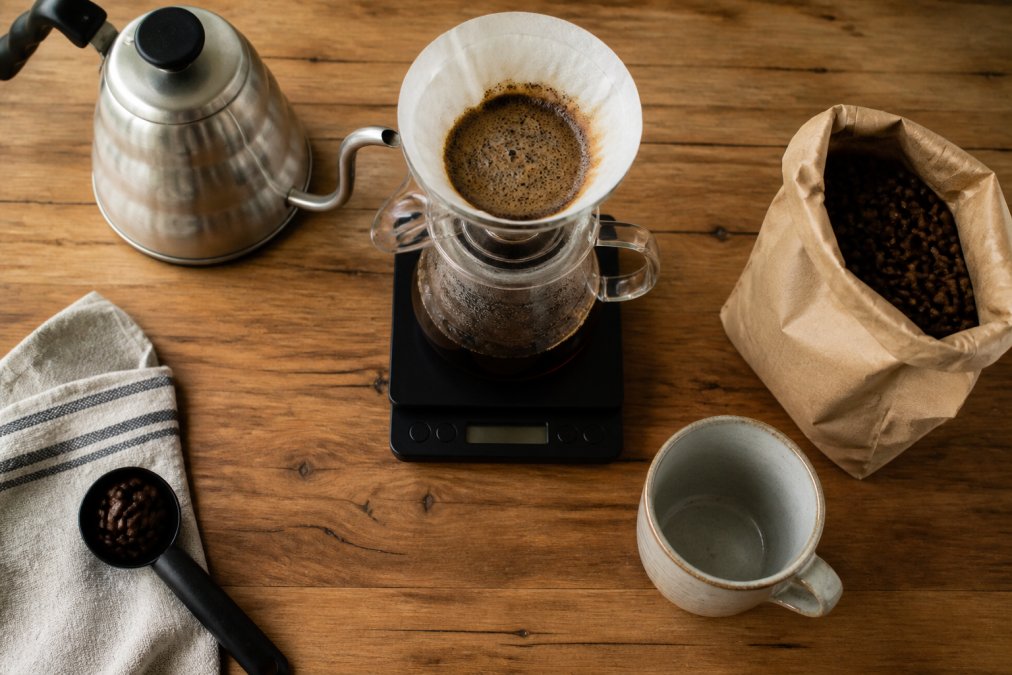
Manual setups range from a manual lever espresso machine to a simple pour-over cone. The pour-over is the easiest entry point. It costs little, teaches you the fundamentals, and produces a clean cup that highlights floral and fruit notes. A French press is more forgiving and delivers a fuller body, though it leaves more sediment.
For those who want a middle path, a semi-automatic machine handles pressure and temperature while you control dosing and timing. It bridges the gap between hands-on control and repeatability.
Cost Breakdown: Upfront Investment vs Long-Term Spending
The sticker price is the least interesting number in this comparison. What matters is cost per cup over three to five years, and that figure splits sharply between manual and automatic setups.
Upfront outlay. A capable manual kit, burr grinder, gooseneck kettle, pour-over cone or French press, and a digital scale, typically lands in the low-to-mid hundreds of dollars. A drip machine with a thermal carafe sits in a similar range. A super-automatic or bean-to-cup machine with a built-in grinder and milk system pushes into four figures. The gap is real, but it is not the whole story.
Cost per cup. Manual brewing runs on beans and paper filters. A 12-ounce bag at a typical specialty price yields roughly 16 to 20 cups at a 1:16 ratio, so the per-cup bean cost is easy to calculate and easy to control. Automatic machines that use proprietary capsules lock you into a single supplier's pricing, and that per-cup number rarely falls even as bean prices do. Machines that grind whole beans avoid the capsule tax but add wear on the burr set and brew group.
Repair and replacement economics. This is where the two paths diverge most.
| Cost Factor | Manual Brewing | Automatic Coffee Makers |
|---|---|---|
| Setup cost | Lower | Higher |
| Cost per cup | Beans and filters only | Beans or proprietary capsules |
| Repair model | User-replaceable parts | Often factory or dealer service |
| Waste stream | Minimal (paper, grounds) | Capsules, filters, electronics |
| Long-term spend | Predictable | Can climb with repairs and pods |
Cafe de Mattier's single-serve capsules offer a convenient path for automatic-machine owners. The 12 Pack Single Serve Coffee Capsules run $19.99, and the 60 Pack runs $59.99. Each capsule is sealed with no oxygen inside so the coffee stays fresh, and an improved filter design absorbs more grounds for a lively cup without slowing brew time. For manual brewers, the Cold Brew Coffee at $23.99 brings chocolate, toffee, and floral tones to cold brew or nitro.


Workflow, Maintenance, and Daily Reality
- Manual: rinse daily, deep clean weekly, descale monthly
- Automatic: run cleaning cycle as prompted, replace filters, descale on schedule, flush milk lines daily
For busy professionals, an automatic machine plus quality capsules solves the time problem. For enthusiasts, the ritual is the point. The honest answer is that most people who love coffee end up with both, and the workflow, not the spec sheet, tells you which one gets used on a Tuesday.
Which Method Fits Your Morning?
The right method fits your routine, not the other way around. Use this framework to decide:
- Choose manual brewing if: you enjoy the process, want full control, brew one or two cups, and value cost savings over speed.
- Choose automatic if: you need coffee fast, brew for several people, want repeatable results without thinking, and accept higher upfront cost.
- Choose a hybrid if: you want control over dosing but not pressure, which is where semi-automatic machines shine.
Frequently Asked Questions
What is the best type of coffee maker for home use?
The best coffee maker depends on your priorities. If you want hands-on control over coffee extraction variables like grind size, water temperature, and flow rate, a manual pour-over or French press gives you that flexibility. If you value speed and repeatability, a super-automatic or semi-automatic machine handles the work. For those who want craft quality without the ritual, single-serve capsules from a roaster like Cafe de Mattier offer a middle path: sealed for freshness, consistent, and ready in under two minutes.
Is a manual coffee maker better for specialty micro-lot beans?
Manual brewing often highlights the floral and fruit notes in micro-lot beans because you control every variable, from water temperature to pour speed. Learning how to brew micro lot coffee means adjusting grind size and timing to match each roast. That said, a well-calibrated automatic machine with a PID controller and pre-infusion can also produce excellent results. The key difference is who makes the adjustments: you or the machine's programming.
How much time does manual brewing actually take compared to automatic?
A full manual pour-over routine, including grinding, heating water, blooming, and pouring, typically takes four to six minutes. Automatic drip machines finish in about the same time once the water heats, but super-automatic espresso machines can produce a shot in under a minute. Single-serve capsules brew in roughly sixty seconds. If your mornings are tight, the convenience factor of an automatic or capsule system may outweigh the hands-on control of manual brewing.
Do automatic coffee makers sacrifice the complexity of floral notes?
Not necessarily. The biggest factors in preserving floral notes are water temperature stability, grind consistency, and bean freshness. A machine with thermal stability and a PID controller can maintain the 195-205°F range that coaxes out delicate flavors. The real risk is stale beans. Capsules sealed with no oxygen inside, like those from Cafe de Mattier, protect those compounds until the moment you brew. Manual brewing gives you more room to experiment, but a good automatic machine with fresh coffee closes much of the gap.
What equipment is essential for starting a manual brewing routine?
At minimum, you need a burr grinder, a scale, a gooseneck kettle, and a brewing device such as a pour-over cone, French press, or AeroPress. A manual coffee brewing equipment guide will tell you the same. The grinder matters most because consistent particle size directly affects coffee extraction variables. Start with a mid-range burr grinder and a pour-over cone, then add tools as your palate develops. Total startup cost can range from $80 to $250 depending on quality.