

Premium Coffee Subscription Box Reviews
Table of Contents
- What Makes a Premium Coffee Subscription Worth It
- How We Tested Premium Coffee Subscriptions
- Best Overall: Cafe de Mattier Best Sellers Sample Pack
- Best Single-Origin Coffee Subscription: Single Origin Favorites Sample Pack
- How to Choose a Coffee Subscription That Matches Your Brewing Method
- Freshness Standards for Specialty Coffee: What Separates Premium from Ordinary
- Best Light Roast Coffee Options for Nuanced Flavor Profiles
- Cancellation Policies and Customer Service: What Actually Matters
- Frequently Asked Questions
Last Updated: September 3, 2026
What Makes a Premium Coffee Subscription Worth It
A premium coffee subscription delivers access to coffees unavailable at grocery stores through superior sourcing, roasting philosophy, and freshness standards. At Cafe de Mattier, we understand that discerning coffee drinkers invest in an experience: slow-roast tradition and micro-lots from family-owned estates that separate premium offerings from mass-market alternatives.

Premium subscriptions eliminate stale inventory, guesswork about roast dates, and settling for sale items. Instead, you receive curated selections at peak freshness with detailed tasting notes and brewing recommendations. The best premium subscriptions balance three elements: sourcing transparency, roasting expertise, and delivery logistics that actually matter to how your coffee tastes.
How We Tested Premium Coffee Subscriptions
We analyzed subscription services across five core dimensions: freshness standards, sourcing transparency, roast profile variety, pricing relative to quality, and subscription management experience.
Freshness testing tracked roast dates and flavor evolution over the first two weeks post-roast, when specialty coffees peak. We examined packaging seals and one-way valves that preserve aroma and oils.
Sourcing transparency meant verifying specific farm names, altitude data, processing methods, and supply chain documentation. Vague language like "ethically sourced" without certification details flagged services as less rigorous.
We compared roast profile ranges across subscriptions and assessed whether each roaster's philosophy aligned with their actual product lineup. Pricing analysis compared cost per ounce, subscription flexibility, and cancellation ease.
| Testing Dimension | What We Evaluated | Why It Matters |
|---|---|---|
| Freshness | Roast dates, packaging seals, flavor evolution over 2 weeks | Stale beans undermine premium quality |
| Sourcing | Farm names, altitude, processing methods, supply chain transparency | Traceability confirms ethical claims |
| Roast Variety | Light, medium, dark, and blend options available | Matches different brewing methods and preferences |
| Pricing | Cost per ounce, flexibility, cancellation ease | Premium shouldn't mean overpaying for convenience |
| User Experience | Subscription management, customization, customer service responsiveness | Friction in cancellation signals poor customer focus |
Best Overall: Cafe de Mattier Best Sellers Sample Pack
Cafe de Mattier's Best Sellers Sample Pack stands out as the strongest entry point for serious premium coffee drinkers. At $24.99, the pack includes six 2-ounce samples: 6Bean Blend, Cowboy Blend, Breakfast Blend, Peru Single Origin, Mexico Single Origin, and Bali Single Origin.

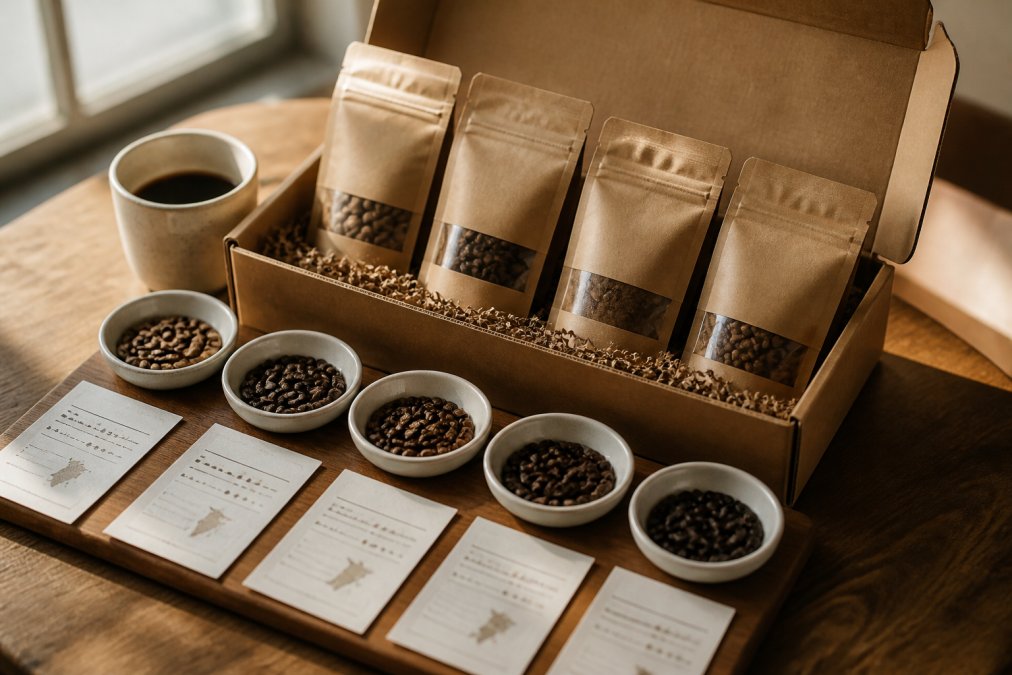
The roasting philosophy sets this pack apart. The 6Bean Blend uses dark roast ideal for espresso, while Cowboy Blend bridges dark and medium roasts with cocoa, caramel, and vanilla. Single-origins demonstrate how origin and altitude create flavor complexity: Peru's salted caramel and citrus, Mexico's chocolate and cinnamon, Bali's dark chocolate and molasses.
Each single-origin includes grower information, altitude, soil type, and processing method. Peru's beans come from Cooperativa Agricola de Servicios Norandino at 1100-1700 meters, processed through gully washing and sun drying. Mexico's coffees come from family growers in Chiapas and Oaxaca. Bali's smallholder farmers in Kintamani use hand-picked, wet-hulled beans dried on raised beds.
The pack works across multiple brewing methods. The blends perform well in espresso machines and French presses. Single-origins shine in pour-overs and Aeropress where subtle notes aren't overwhelmed by milk or heavy extraction.
At roughly $4.17 per origin, the pack delivers reasonable pricing for specialty single-origin beans when factoring in freshness guarantees and direct sourcing. Most specialty roasters charge $15-18 for comparable 12-ounce bags.
The limitation is that this is a one-time purchase rather than an ongoing subscription. For gift-givers or first-time premium coffee buyers, though, the Best Sellers Sample Pack removes decision paralysis and delivers genuine variety in one box.
Best Single-Origin Coffee Subscription: Single Origin Favorites Sample Pack
If your palate has evolved beyond blends, Cafe de Mattier's Single Origin Favorites Sample Pack is the logical next step. At $24.99 for six 2-ounce samples, Brazil Santos, Colombia, Costa Rica, Ethiopia, Honduras, and Tanzania, it illustrates how geography shapes flavor.
Single-origin coffee reveals what roasters mean by complexity. Brazil Santos delivers smooth cocoa notes from volcanic loam and pulped natural processing. Colombia's dried orange, berry, and chocolate character comes from volcanic loam at 1300-1500 meters. Costa Rica's sweet apple, raisin, and honey notes reflect eco-pulped processing at high altitude. Ethiopia's milk chocolate, fruity, and caramel profile emerges from indigenous heirloom cultivars.
Each origin includes documented grower organizations: Fazenda Santa Barbara for Brazil, smallholder farmers from Medellin for Colombia, micro farms in Alajuela for Costa Rica. You're buying coffee from specific communities with documented processing methods.
Roast profiles vary strategically. Brazil and Colombia arrive as medium roasts, ideal for filter coffee and espresso. Costa Rica's medium roast preserves fruity sweetness. Ethiopia and Tanzania arrive as medium-light roasts, where their floral and fruity characteristics emerge clearly. Honduras is medium-dark, bridging brightness and body.
Like the Best Sellers pack, this is a one-time purchase. For exploring the full spectrum of single-origin coffee, it delivers exceptional value and education.
How to Choose a Coffee Subscription That Matches Your Brewing Method
Your brewing method fundamentally shapes which premium subscription makes sense.
Espresso machines demand beans with body and sweetness that survive high-pressure extraction. Dark and medium-dark roasts work best because their oils and caramelized sugars create crema and mouthfeel. Cafe de Mattier's 6Bean Blend and Cowboy Blend specifically mention espresso suitability.
French press brewing extracts coffee slowly through immersion, requiring medium to medium-dark roasts with enough body to stand up to four minutes of hot water contact. Lighter roasts taste thin or sour in a French press.
Pour-over and Aeropress use paper or metal filters and shorter contact times, excelling with medium and light-medium roasts. These methods highlight bright, nuanced flavors that get lost in espresso or French press.
Cold brew requires coarser grinds and 12-24 hour steeping, needing medium-dark roasts with enough flavor intensity to survive dilution. Light roasts often taste thin when cold-brewed.
Before subscribing, check what roast options the service actually offers. Cafe de Mattier's Best Sellers pack includes dark, medium-dark, medium, and medium-light roasts, plus both blends and single-origins, ideal if you rotate between brewing methods.
Freshness Standards for Specialty Coffee: What Separates Premium from Ordinary
Freshness is where premium subscriptions justify their price most clearly. Ordinary grocery store coffee sits in warehouses for months, losing aroma and oils. Premium subscriptions guarantee roast dates and deliver beans within days of roasting.
Peak freshness lasts roughly two weeks post-roast (peer-reviewed research). Within 3-5 days, CO2 is still escaping and flavors haven't settled. Between days 5-14, beans hit optimal balance: CO2 has mostly released but oils and flavor compounds remain vibrant (peer-reviewed research). After two weeks, beans lose aroma and develop a flat, stale taste.
Premium roasters control this through packaging and delivery timing. One-way valve bags let CO2 escape while preventing oxygen entry, slowing oxidation. Quality subscriptions use thick, opaque bags that block light, since UV exposure accelerates degradation.
Fresh beans bloom visibly when hot water is poured over them; stale beans barely bloom. Fresh beans smell vibrant and complex; stale beans smell flat. Fresh beans taste bright and nuanced; stale beans taste muted and bitter.
Cafe de Mattier's small-batch roasting means beans aren't sitting in inventory. Their slow-roast tradition develops flavor complexity while preserving delicate compounds.
Keep beans in an airtight container away from light, heat, and moisture. Whole beans stay fresh for 2-3 weeks after roasting; ground coffee lasts only 1-2 weeks.
Best Light Roast Coffee Options for Nuanced Flavor Profiles
Light roasts reveal what specialty coffee actually tastes like. Unlike dark roasts, which emphasize body and caramelization, light roasts preserve origin characteristics: brightness, acidity, and subtle flavors from terroir.
Light roasts are removed from heat before full cracking, preserving the bean's original sugars and acids. This creates higher acidity (brightness, not sourness), complex flavor notes, and lighter body. Light roast can taste thin or sour at first, but that's usually a brewing issue.
Light roasts shine in pour-over and Aeropress brewing, where paper or metal filters and shorter contact time preserve delicate characteristics. French press and espresso muddy light roasts because longer extraction and higher pressure bring out harsh acids.
Cafe de Mattier's Single Origin Favorites pack includes Ethiopia and Tanzania as medium-light roasts. Ethiopia delivers milk chocolate, fruity, and caramel notes with floral characteristics. Tanzania emphasizes pear, floral, jasmine, and strawberry, flavors that disappear in dark roasts.
Use water between 195-205°F (sca.coffee). Grind beans just before brewing. For pour-over, aim for 3-4 minute brew time. For Aeropress, experiment with 1.5-2 minute steep times.
Light roasts pair differently with milk. A dark roast with milk becomes creamy and chocolate-forward. A light roast with milk often tastes thin or sour. Most specialty enthusiasts drink light roasts black to appreciate their nuance.
Cancellation Policies and Customer Service: What Actually Matters
A subscription that makes ordering easy but cancellation difficult isn't premium, it's predatory.
The best subscriptions let you pause, skip, or cancel through your account dashboard without calling or emailing. If a service requires customer service contact to cancel, that's a friction point designed to retain unwilling customers.
Cancellation timing matters. Some subscriptions charge immediately upon signup, then don't ship for 30 days. Better services don't charge until shipment or offer full refunds within 7-14 days if you cancel before your first shipment.
Frequency flexibility signals quality. Can you change delivery schedules or skip months without losing your subscription? Can you customize which coffees you receive?
Customer service responsiveness matters when something goes wrong. Premium subscriptions typically respond within 24 hours. If beans arrive stale, a premium service replaces them or offers refunds without requiring hoops.
Choosing a premium coffee subscription comes down to matching your brewing method, valuing freshness and sourcing transparency, and selecting a service that respects your ability to cancel without friction. Cafe de Mattier's Best Sellers Sample Pack and Single Origin Favorites Sample Pack deliver on sourcing and quality fronts, each bean arrives with documented origin details, altitude, and processing information reflecting genuine premium standards. If you're ready to move beyond ordinary grocery store coffee and experience what specialty roasting and direct sourcing taste like, these packs offer an excellent entry point without requiring long-term subscription commitment. Subscribe to our emails to stay updated on new roasts and seasonal single-origins.
Frequently Asked Questions
Q: What are the best monthly coffee subscription boxes for specialty beans?
A: The best specialty coffee subscriptions focus on single-origin beans with documented provenance, direct-trade relationships, and cupping scores above 85. Look for subscriptions that provide detailed tasting notes, grower information, and altitude data. Cafe de Mattier's Single Origin Favorites Sample Pack ($24.99) features six micro-lot coffees from documented family-owned estates with specific flavor profiles and processing methods clearly labeled for each origin.
Q: How do I know if a coffee subscription is actually ethically sourced?
A: Authentic ethical sourcing requires transparency beyond marketing claims. Verify that the roaster lists the grower's name, farm location, and cooperative affiliation. Third-party certifications like Fair Trade or Rainforest Alliance provide independent verification. Cafe de Mattier identifies specific growers (like Cooperativa Agricola de Servicios Norandino in Peru) and processing methods, allowing you to research the actual farms and verify fair compensation practices directly.
Q: Is a premium coffee subscription worth the extra cost compared to grocery store coffee?
A: Premium subscriptions cost more because they source from micro-lots with controlled processing, specific altitude ranges, and documented tasting profiles. A specialty-grade coffee at $24.99 for a sample pack delivers complexity and freshness that mass-market coffee cannot match. The difference becomes apparent when you compare cupping scores (specialty coffee scores 80+, commercial coffee scores 60-70) and flavor retention after roasting, where specialty roasts maintain acidity and body for weeks rather than days.
Q: What should I look for in a luxury coffee subscription box?
A: Prioritize subscriptions that offer detailed brewing recommendations matched to roast profiles, grinder size guidance, and water temperature specifics. Check whether the subscription provides freshness guarantees (roasted-to-order or roasted within 7-14 days), flexible delivery frequency, and easy cancellation. Cafe de Mattier's sample packs arrive in 2oz portions sealed with no oxygen, preserving freshness through the delivery window, and allow you to test multiple origins before committing to larger quantities.
This article was written using GrandRanker