

Slow Roasted Coffee Flavor Profiles Explained
Table of Contents
- What Defines Slow Roasted Coffee Flavor Profiles
- Impact of Roast Duration on Coffee Acidity
- The Chemistry Behind Slow Roasting: Maillard Reaction and Caramelization
- Flavor Characteristics: Caramel, Chocolate, and Floral Notes
- How to Identify Coffee Flavor Notes at Home
- Coffee Sensory Evaluation at Home Kit: Building Your Tasting Toolkit
- Slow Roasting vs. Fast Roasting: Technical Comparison
- Brewing Adjustments for Slow-Roasted Beans
Last Updated: August 24, 2026
What Defines Slow Roasted Coffee Flavor Profiles
Slow roasted coffee flavor profiles are the distinctive sensory characteristics that emerge when coffee beans are roasted gradually over an extended period, allowing complex chemical reactions to develop fully. Unlike fast roasting, which prioritizes speed and surface-level caramelization, slow roasting gives thermal energy time to penetrate deep into the bean's structure, creating layered flavor development: initial enzymatic flavors give way to deeper caramel notes, chocolate undertones, and often surprising floral or fruity characteristics.
The slow roast tradition represents a philosophical shift toward balance rather than intensity. A slow-roasted bean develops its body gradually, creating that silk-like mouthfeel that distinguishes artisanal coffee from commodity roasts. Slow roasting isn't simply "dark roasting done slowly", it's a distinct technique where roast duration, heat transfer method, and bean selection work together to produce coffee with remarkable complexity and multiple flavor layers that reveal themselves across the tasting experience.
Impact of Roast Duration on Coffee Acidity
Extended roasting time fundamentally alters how acidity manifests in your cup. The relationship between roast duration and acidity is more nuanced than the common assumption that darker roasts automatically mean lower acidity.
How Extended Heat Exposure Changes Acidity Levels
Acidity in coffee is a feature that contributes to brightness and complexity. During slow roasting, prolonged heat exposure breaks down chlorogenic acids (the primary acids in raw beans) through a process that parallels the maillard reaction (peer-reviewed research). This transformation converts harsh, green-tasting acidic compounds into smoother, more pleasant ones without eliminating acidity entirely.
As beans spend more time in the roaster, extended conduction and convection heat gradually reduces the solubility of certain acid compounds, creating a different acid profile than fast-roasted beans at the same color level. You get lower perceived sharpness while retaining the brightness that makes coffee interesting. This means slow-roasted beans work beautifully for people who find typical medium roasts too sharp.
Body and Mouthfeel Development During Slow Roasting
Body, the weight and texture of coffee on your palate, develops progressively throughout slow roasting. The gradual heat allows for even extraction of oils and soluble compounds throughout the bean, creating a silk-like body without heaviness. Fast roasting often creates uneven development where the outside reaches the desired color while the interior remains underdeveloped.
The mouthfeel you experience results from the breakdown of cellulose structures, caramelization of sugars, and formation of complex compounds that coat your mouth with pleasant texture. A well-executed slow roast creates that full-bodied sensation without drying out the palate.
The Chemistry Behind Slow Roasting: Maillard Reaction and Caramelization
Two primary chemical processes define slow roasting: the maillard reaction and caramelization. The maillard reaction begins around 300°F and creates hundreds of new flavor compounds (peer-reviewed research). In slow roasting, because heat exposure is extended, this reaction happens more completely and evenly throughout the bean, whereas fast roasting rushes the process and often creates bitter or harsh flavors from incomplete reactions.
Caramelization occurs separately as sugars break down under heat, beginning around 320°F and creating sweet, nutty, and eventually bitter compounds depending on temperature and duration (peer-reviewed research). In slow roasting, caramelization develops gradually, creating a progression of flavors rather than a single dominant note. Fast roasting tends to trigger both reactions simultaneously, overwhelming the palate with intensity rather than sophistication.
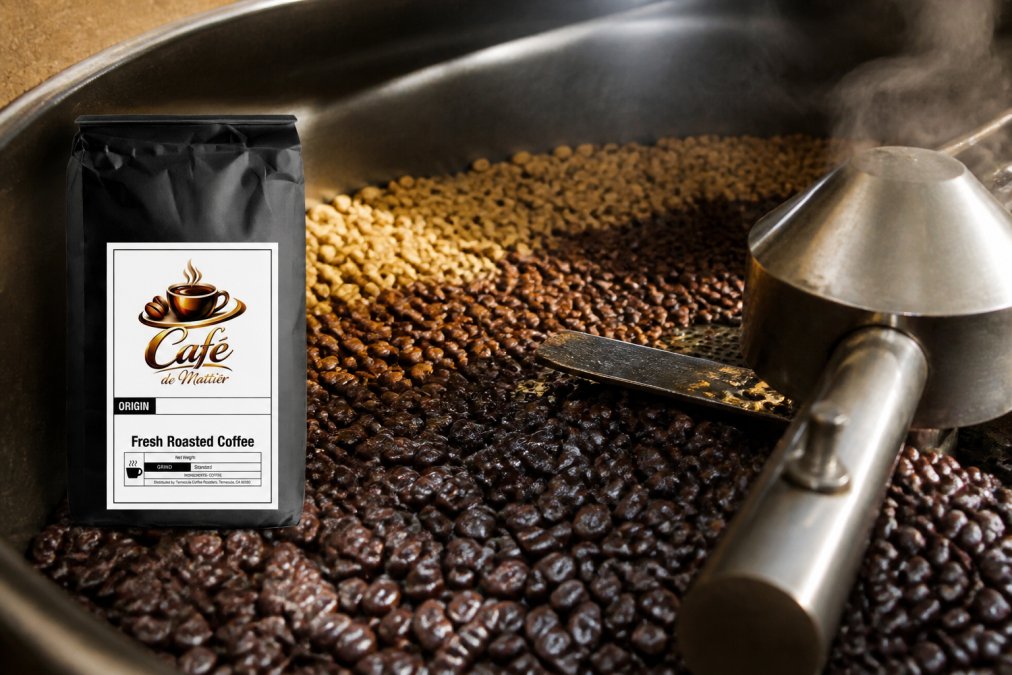
Flavor Characteristics: Caramel, Chocolate, and Floral Notes
Slow-roasted coffee flavor profiles typically feature three dominant sensory categories: caramel sweetness, chocolate depth, and floral complexity, emerging in sequence as you taste rather than all at once.
Caramel notes develop early in the slow roast as sugars break down into compounds that taste sweet and buttery. In Cafe de Mattier's Cowboy Blend, this caramel character combines with vanilla undertones to create an approachable, balanced profile.

Chocolate flavors emerge from advanced caramelization and pyrazine compound formation, ranging from milk chocolate sweetness to dark chocolate bitterness. The chocolate notes in a slow roast tend to be smooth and integrated rather than sharp, complementing the coffee's natural origin characteristics.
Floral notes are where slow roasting truly distinguishes itself. These delicate sensory impressions, hints of jasmine, rose, or orchid, come from volatile compounds that form during extended roasting and are easily destroyed by aggressive heat. These notes often surprise tasters because they expect coffee to taste only like coffee.
Identifying Sweet and Fruity Sensory Notes
Sweetness in coffee comes from residual sugars and flavor compounds created during roasting. Slow roasting preserves more of these sweet sensations because extended development allows sugars to caramelize gently rather than burn away, making well-executed slow roasts taste naturally sweet without added sugar.
Fruity notes emerge from origin characteristics combined with the roasting process. Slow roasting doesn't mask these notes the way aggressive roasting does; instead, it highlights them. You might detect berry notes, citrus undertones, or stone fruit characteristics. These are subtle sensory impressions that add complexity, not literal fruit flavors.
How to Identify Coffee Flavor Notes at Home
Identifying flavor notes requires training your palate and developing a systematic approach to tasting.
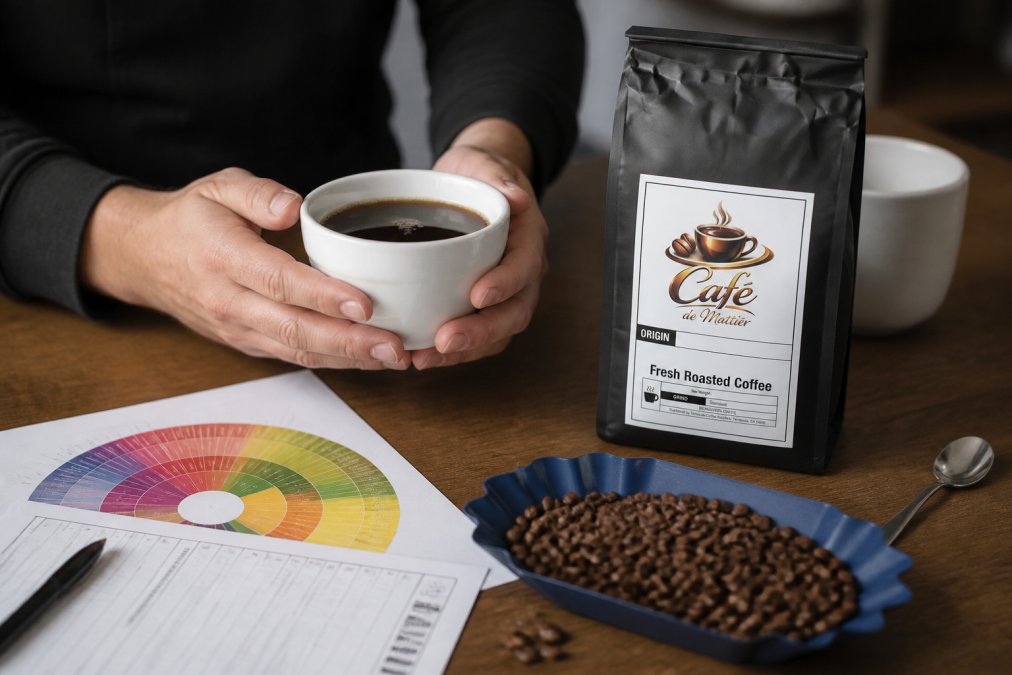
Start by establishing a baseline. Taste the coffee at three different temperatures: hot (just poured), warm (after a few minutes), and cool (after 10 minutes). Flavor notes change as temperature drops, and different compounds become more or less perceptible.
Next, slow down your tasting. Take a small sip and hold it in your mouth for a few seconds before swallowing. This allows your palate to register the full range of flavors. Notice the initial taste, the middle notes, and the finish.
Use reference flavors to anchor your tasting. If you're trying to identify a chocolate note, think about what chocolate tastes like and compare the coffee to that reference. Keep a tasting journal, writing down what you taste, the temperature, and other variables. Over weeks and months, patterns emerge and you'll develop the ability to distinguish between different flavor families.
Coffee Sensory Evaluation at Home Kit: Building Your Tasting Toolkit
Creating a home tasting setup doesn't require expensive equipment. A few simple tools dramatically improve your ability to evaluate slow roasted coffee flavor profiles systematically.
Essential Equipment:
- White ceramic bowls (6-8 oz capacity) for visual assessment and tasting
- A cupping spoon (small, shallow spoon designed for coffee tasting)
- Digital scale for consistent coffee-to-water ratios
- Timer for standardized brew times
- Flavor wheel (printed or digital reference guide)
- Notebook for tasting notes
- Filtered water at consistent temperature (around 200°F)
Consistency is critical. Use the same ratio of coffee to water each time (many professionals use 1:16, or about 10 grams of coffee to 160 milliliters of water). Brew for the same duration and use the same temperature. These variables controlled, the differences you taste come from the coffee itself.
Cupping Techniques for Detecting Subtle Flavor Layers
Professional cupping is the gold standard for coffee evaluation. Start with preparation: grind your coffee medium-fine, place it in your white bowl, and pour hot water over it. Let it steep for 4 minutes. After 4 minutes, break the crust using your cupping spoon and smell deeply, the aroma at this moment is intense and revealing.
Let the coffee cool slightly to around 160°F, then taste using the slurping technique. Draw coffee into your mouth with force, aerating it across your entire palate. This distributes the coffee evenly and enhances flavor perception. Taste multiple times as the coffee cools, as each temperature reveals different flavor layers. Patience reveals complexity that rushing through your tasting misses.
Slow Roasting vs. Fast Roasting: Technical Comparison
Understanding the technical differences between slow and fast roasting explains why slow-roasted coffee flavor profiles taste so different from conventionally roasted coffee.
| Aspect | Slow Roasting | Fast Roasting |
|---|---|---|
| Total Roast Time | 15-20 minutes | 8-12 minutes |
| Heat Transfer Method | Gradual conduction and convection | Rapid convection and radiant heat |
| Bean Development | Even throughout | Uneven (outside develops faster) |
| Maillard Reaction | Prolonged, complete | Rushed, sometimes incomplete |
| Acid Profile | Gentle, balanced | Sharp or flat |
| Flavor Complexity | Layered, reveals over time | Intense, single-note |
| Origin Character | Highlighted and refined | Often masked |
| Typical Color | Medium to dark brown | Dark brown to nearly black |
Fast roasting prioritizes efficiency, moving beans through the roaster quickly. Slow roasting prioritizes development, allowing beans to absorb thermal energy gradually with more complete chemical reactions and even development. For people who value complexity and sensory discovery, slow roasting wins decisively.
Cafe de Mattier's Italian Roast and Whiskey Barrel Aged coffees exemplify slow roasting's potential, with extended development time creating the complexity and silk-like body that define our brand's approach to specialty coffee.


Brewing Adjustments for Slow-Roasted Beans
Slow-roasted beans require different brewing approaches than conventionally roasted coffee. The extended development creates beans with different density, oil content, and extraction characteristics.
Use slightly hotter water than you might with fast-roasted beans, 205-210°F works better than the standard 200°F. The gentler acid profile means you won't over-extract harsh flavors, and the higher temperature helps pull out the subtle sweetness and floral notes that define the profile.
Slow-roasted beans often benefit from a slightly coarser grind than conventionally roasted coffee. The extended roasting creates more fragile beans prone to over-extraction if ground too fine. A coarser grind slows extraction slightly, allowing you to taste the balanced complexity.
Brew time adjustments depend on your brewing method. For pour-over brewing, slow-roasted beans often need 30-45 seconds longer than conventionally roasted beans. For French press, reduce steep time by 30 seconds. Start with your normal brewing parameters, then adjust one variable at a time over a few weeks to develop an intuitive understanding.
The Coffee with Mushrooms Medium Roast and Dark Roast varieties from Cafe de Mattier are specifically designed with slow roasting in mind, meaning they've already been optimized for extraction characteristics.
Understanding slow roasted coffee flavor profiles transforms how you experience your daily cup. The complexity, floral notes, and silk-like body are the result of intentional technique, extended development, and respect for the bean's potential. Cafe de Mattier's commitment to slow-roast traditions means every cup delivers the mindful, reflective experience that defines artisanal specialty coffee. Subscribe to our emails to discover new single-origin micro-lots and master the sensory evaluation techniques that reveal the full depth of your coffee.
Frequently Asked Questions
What are the primary flavor profiles found in slow-roasted coffee?
Slow-roasted coffee develops complex flavor profiles including caramel, chocolate, floral, and subtle fruity notes. The extended roasting time allows sugars to undergo full caramelization, creating sweetness and depth. Floral and silk-like body characteristics emerge as volatile compounds develop slowly, distinguishing slow-roasted beans from faster roasts that emphasize brightness and acidity.
How does roast duration affect the final flavor profile and acidity of specialty coffee?
Extended roast duration reduces acidity while deepening body and mouthfeel. Slow roasting allows the maillard reaction and caramelization to progress fully, creating balanced, rounded flavors. Shorter roast times preserve more enzymatic flavors and acidity. The impact of roast duration on coffee acidity is significant: longer roasts neutralize acids through thermal energy, while shorter roasts retain bright, crisp characteristics.
Can I taste the difference between slow-roasted and fast-roasted coffee at home?
Yes. Slow-roasted beans display smoother, more rounded flavors with pronounced sweetness and complexity. Fast-roasted coffee tastes brighter and more acidic with sharper flavor notes. Using a coffee sensory evaluation at home kit, including cupping bowls, a flavor wheel, and tasting spoons, makes these differences obvious. Brew both side-by-side to compare body, aroma, and aftertaste directly.
What brewing adjustments should I make for slow-roasted beans?
Slow-roasted beans require slightly hotter water (200-205°F) and longer extraction times to fully express their complexity. Use a coarser grind than you would for lighter roasts to prevent over-extraction. Slower brewing methods like French press or pour-over work exceptionally well, allowing the silk-like body and floral notes to develop fully. Start with a 1:16 coffee-to-water ratio and adjust to taste.
How can I identify floral and fruity notes in slow-roasted coffee?
Train your palate using a flavor wheel and tasting notes. Floral notes often appear as jasmine, lavender, or rose; fruity notes may register as berry, stone fruit, or citrus. Slow down your tasting: let coffee cool slightly, breathe in the aroma deeply, then sip slowly. Compare your experience to the flavor wheel's descriptors. With practice, identifying coffee flavor notes becomes intuitive, revealing the origin characteristics and roast development in each cup.
Does slow roasting really produce a more complex coffee flavor than fast roasting?
Yes. Slow roasting extends the maillard reaction and caramelization, creating more layered flavor development. Fast roasting moves through these chemical reactions quickly, preserving acidity but limiting complexity. Slow-roasted beans develop multiple sensory notes, caramel, chocolate, floral, that emerge at different stages of brewing. This complexity is why specialty coffee enthusiasts prefer slow-roasted, artisanal approaches.
What should I look for in a coffee sensory evaluation kit to taste differences at home?
A quality coffee sensory evaluation at home kit includes cupping bowls (preferably ceramic), cupping spoons, a flavor wheel, tasting note sheets, and a grinder. Some kits add a coffee scale for precision and aroma reference cards. The flavor wheel is essential, it provides vocabulary for identifying and naming the subtle notes you're tasting. A thermometer helps maintain optimal tasting temperature (around 160°F after cooling slightly).
This article was written using GrandRanker