

What Makes Specialty Coffee Taste Different
Table of Contents
- The Foundation: What Makes Specialty Coffee Taste Different
- Origin, Altitude, and Terroir Shape Flavor
- Processing Methods and Fermentation Science
- Roasting Techniques That Unlock Complexity
- How to Taste Coffee Like a Professional at Home
- Understanding SCA Coffee Grading Standards
- Building a Coffee Sensory Evaluation at Home Kit
- Conclusion
Last Updated: August 25, 2026
The Foundation: What Makes Specialty Coffee Taste Different
Specialty coffee taste comes from intentional choices at every stage, from where beans grow to how they're roasted and brewed. The Specialty Coffee Association (SCA) uses a rigorous cupping score system where beans must score 80 points or higher to qualify as specialty grade (sca.coffee). Commercial-grade coffee often scores below 70 and prioritizes volume over flavor complexity.
At Cafe de Mattier, we understand that specialty coffee taste comes from intentional sourcing and meticulous roasting. Our French-inspired approach focuses on micro-lots and family-owned estates where growers manage every variable that influences flavor. The foundation of specialty coffee taste rests on three pillars: origin, processing method, and roasting technique. Each compounds the others, creating dramatically different results than commodity blends.
Origin, Altitude, and Terroir Shape Flavor
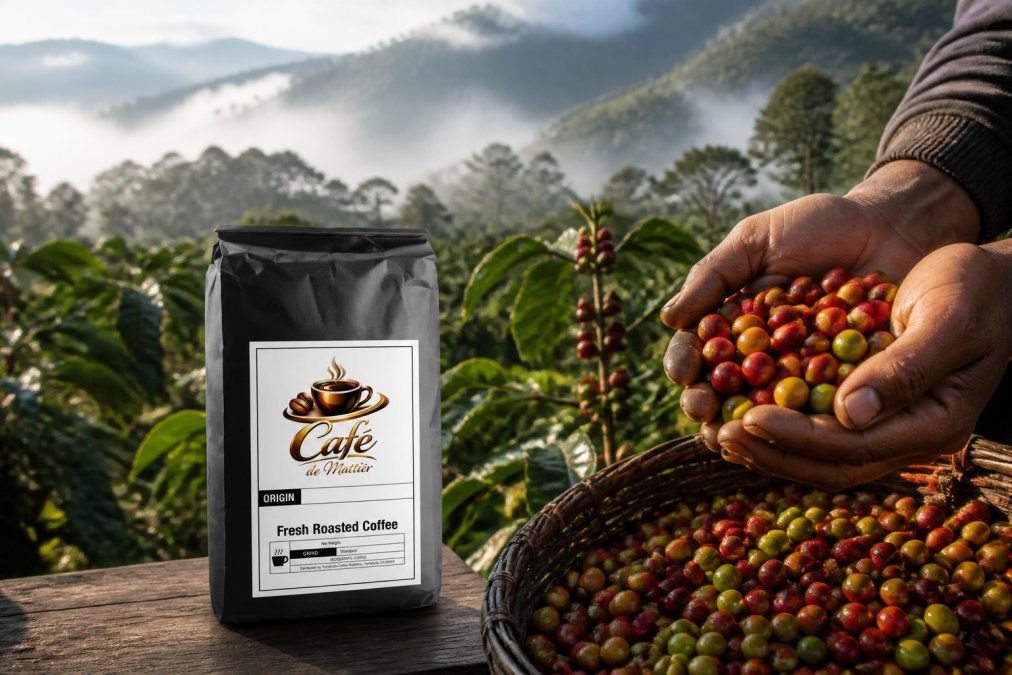
The geography where coffee grows determines its flavor foundation. Altitude, soil composition, rainfall, and temperature all shape what compounds develop in the bean. High-altitude farms (typically 1,200 to 2,000 meters) produce beans with brighter acidity and more pronounced flavor notes because cooler temperatures slow bean maturation, allowing more sugars and acids to develop (peer-reviewed research). A Kenya bean grown at 1,700 meters will taste noticeably different from one grown at 800 meters. The Kenya from our collection, sourced from Othaya in Nyeri County at 1,700-1,890 meters, delivers bright acidity with orange, lemon, and floral notes precisely because of that elevation.

Volcanic soil, common in regions like Bali, Colombia, and Ethiopia, contains minerals that influence nutrient absorption. The Bali Blue from our collection grows in volcanic loam at 1,200-1,600 meters, which contributes to its dark chocolate and molasses character.
Single-origin beans showcase terroir in ways blends cannot. When you buy specialty coffee from a defined origin, you're tasting what that particular place produces. A micro-lot, an even smaller subset from a single farm or harvest, isolates terroir further. Experienced tasters can often identify a bean's region by flavor alone: Ethiopian natural-process beans typically show fruity, wine-like notes, while Colombian washed-process beans tend toward chocolate and caramel.
Processing Methods and Fermentation Science
How coffee cherries are processed after harvest fundamentally changes what the bean tastes like. Three main methods dominate specialty coffee: washed, natural, and honey (pulped natural).
The washed process removes the fruit completely before drying. Beans are fermented in water for 12-72 hours, which breaks down the mucilage layer (sca.coffee). During fermentation, microorganisms consume sugars and create acids and other compounds that influence final flavor. Washed coffees typically taste cleaner, with brighter acidity and more defined flavor notes. The Colombia from our collection uses the fully washed method, dried on solar dryers, which preserves its dried orange, berry, and chocolate character.

The natural process leaves the fruit on the bean while it dries over 3-4 weeks. This extended contact allows sugars to ferment directly into the bean. Natural-process coffees taste fruitier, heavier-bodied, and more wine-like. The Ethiopia Natural from our collection uses this method, which explains its milk chocolate, fruity, and caramel profile.
The honey process splits the difference, leaving some fruit on the bean while it dries, creating balanced acidity with some of the body and fruit character of naturals. Temperature, humidity, and the microbial population present all influence how fermentation proceeds, which is why specialty coffee from the same region often tastes similar.
Roasting Techniques That Unlock Complexity
Roasting transforms green coffee into the brown, aromatic bean you brew. The roast profile determines which flavor compounds develop and which fade. Industrial roasters prioritize speed, roasting at high temperatures for 8-12 minutes. Specialty roasters extend the roast to develop flavor slowly, allowing more Maillard reactions that create hundreds of flavor compounds. A skilled roaster listens to the beans, watches their color, and adjusts heat to coax out specific flavor notes.
The roast level, light, medium, or dark, also shapes taste. A light roast preserves more of the origin's natural acidity and brightness. A medium roast balances origin character with roasted notes. A dark roast emphasizes chocolate, caramel, and body. The Kenya's bright acidity shines at a lighter roast. The Bali Blue's chocolate character deepens at a medium-dark roast. The difference between a roast that unlocks complexity and one that merely browns the bean is time, attention, and skill.
How to Taste Coffee Like a Professional at Home
Tasting coffee professionally doesn't require expensive equipment or years of training. The SCA cupping protocol is accessible to anyone willing to follow a few steps.
Start with fresh, whole beans. Grind them just before brewing. Use a consistent ratio: about 1 gram of coffee to 16 grams of water. Water temperature should be around 200°F. Brew the coffee in a simple white cup or bowl. The white surface lets you see the coffee's color and clarity.
Let it cool slightly, then smell it deeply. Aroma compounds dissolve in steam and reach your nose before you taste anything. Once the coffee has cooled to drinking temperature (around 160°F), take a small slurp and let it coat your mouth. Notice the body, the weight and texture. Notice the acidity, is it bright and crisp, or muted? Notice the flavor notes. Are there chocolate, fruit, floral, or earthy tones? Write these observations down.
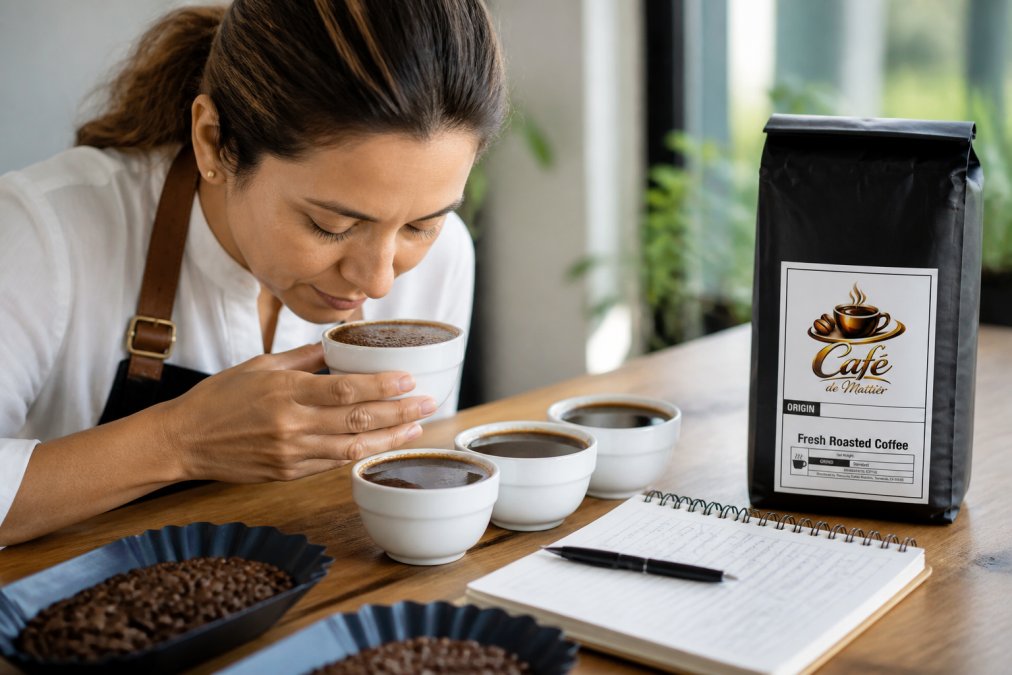
The difference between casual tasting and professional tasting is intentionality. After tasting five coffees side by side, you'll notice differences you'd have missed before. Cafe de Mattier's single-origin beans are ideal for this practice because each one has distinct characteristics.
Understanding SCA Coffee Grading Standards
The Specialty Coffee Association maintains the standard that defines what qualifies as specialty coffee. The SCA cupping score ranges from 0 to 100. Beans scoring 80 or above are classified as specialty grade. Beans scoring 70-79.99 are considered premium commercial grade. Below 70 is commodity coffee.
A Q-grader (certified coffee professional) evaluates coffee on multiple dimensions: aroma, flavor, aftertaste, acidity, body, balance, uniformity, clean cup, sweetness, and overall impression. The clean cup category is particularly important for specialty coffee taste. A "clean cup" means the coffee is free from defects and off-flavors caused by processing errors, mold, or fermentation problems. Commercial coffee often contains defects masked by roasting or blending. Specialty coffee must be clean, which is why it tastes brighter and clearer.
The SCA standard creates accountability. When you buy coffee labeled as specialty grade, you know it has been evaluated against this standard. When Cafe de Mattier sources from micro-lots and family-owned estates, we're sourcing from farms that meet these standards.
Building a Coffee Sensory Evaluation at Home Kit
Creating a home coffee sensory evaluation setup doesn't require expensive equipment. Start with white cupping bowls or mugs to see the coffee's clarity and color. A kitchen scale accurate to 0.1 grams ensures consistency. A burr grinder produces uniform particle size for even extraction, this is where your budget should concentrate, as a better grinder makes more difference than any other equipment.
A gooseneck kettle helps you pour water at a controlled rate, which influences extraction. A simple notebook for tasting notes is invaluable. Over time, these notes create a record of your developing palate.
The most important element isn't equipment, it's fresh, quality beans. Specialty coffee beans from sources like Cafe de Mattier make the difference. Start with one single-origin bean and taste it multiple times over a week. Then try a second origin and compare them directly. This direct comparison is how your palate learns what makes specialty coffee taste different.
Specialty coffee taste represents a commitment to quality that flows from farm to cup. Every choice, where to grow, how to process, when to roast, how to brew, shapes what you experience. The difference is fundamental once you know what to look for.
At Cafe de Mattier, we've built our entire approach around this principle. Our French-inspired slow-roast tradition and sourcing from micro-lots and family-owned estates ensure that every bean in your cup reflects intentional choices at every stage. When you brew a Cafe de Mattier single-origin, whether it's the bright Kenya, the fruity Ethiopia Natural, the chocolate-forward Bali Blue, or the balanced Colombia, you're tasting what happens when terroir, processing, and roasting work in concert. Subscribe to our emails to discover how specialty coffee transforms your daily ritual into a moment of genuine reflection and depth.
Frequently Asked Questions
What is the difference between specialty coffee and commercial grade coffee?
Specialty coffee scores 80 points or higher on the SCA grading scale, while commercial-grade coffee typically scores below 80. Specialty beans come from specific origins with documented terroir, controlled processing, and traceability to the farm. Commercial coffee prioritizes volume and consistency over individual flavor characteristics. The difference shows in your cup: specialty coffee reveals distinct flavor notes like citrus or floral tones, while commercial coffee tastes flat or one-dimensional.
How does altitude and soil affect the taste of specialty coffee?
Higher altitudes slow bean development, concentrating sugars and acids that create complexity and brightness. Volcanic loam soil, common in specialty-growing regions like Ethiopia and Colombia, adds mineral content that enhances acidity and body. For example, beans grown at 1,700-1,900 meters in the Sidama zone of Ethiopia develop fruity and caramel notes that lower-altitude beans cannot achieve. Soil composition directly influences which flavor compounds develop during fermentation and ripening.
Why does the roasting process make such a big difference in specialty coffee flavor?
Roasting controls the chemical reactions that develop flavor. Light roasts preserve origin flavors and acidity, while medium roasts balance origin characteristics with roasting flavors. Dark roasts emphasize body and chocolate or molasses notes. Specialty roasters use precise temperature control and timing to highlight each bean's unique potential. A slow-roast approach allows sugars to caramelize gradually, creating silk-like body and balanced complexity that quick roasts cannot achieve.
How can I tell if coffee beans are actually ethically sourced?
Look for direct trade relationships, third-party certifications, and detailed sourcing information. Reputable specialty roasters provide the farm name, region, altitude, varietal, and processing method on the bag. Some roasters, like Cafe de Mattier, source directly from family-owned estates and smallholder farmers in documented regions like Kintamani, Bali and Medellin, Colombia. Ask roasters for transparency about farmer payments and farming practices. Certification bodies and direct relationships provide the verification you need beyond marketing claims.
This article was written using GrandRanker