

7 Ways Roast Date Changes Micro Lot Flavor Profiles
Last Updated: October 27, 2026
Quick Summary
Roast date changes micro lot flavor because freshness is a curve with a peak, and that peak arrives at different times depending on the bean, roast level and process. A light-roast micro lot brewed on day two can taste thin, so give it a week before you judge it.
- A micro lot is a small, traceable batch of coffee from one farm or one hillside.
- Our Ethiopia Natural has a tasting profile of milk chocolate, fruity, and caramel.
- Our Tanzania is a medium-light roast with pear, floral, jasmine, and strawberry notes.
- Keep beans whole until the day you brew and store them in an airtight, opaque container.
- Check the roast date on the bag, not a vague best-by date.
Table of Contents
- Why Roast Date Hits Micro Lot Flavor Harder Than Blends
- How Roast Level Sets the Clock on Micro Lot Flavor Balance
- Coffee Degassing and Flavor: What Carbon Dioxide Does to Your Cup
- How Long to Rest Coffee After Roasting by Roast Level and Process
- The Best Time to Brew Coffee After Roasting for Peak Aroma
- How to Store Freshly Roasted Coffee Without Losing Origin Character
- How to Taste Roast Date for Yourself: A Controlled Cupping Protocol
- Order Micro Lots With the Roast Date in Mind
- Frequently Asked Questions
Why Roast Date Hits Micro Lot Flavor Harder Than Blends
A micro lot is a small, traceable batch of coffee from one farm or one hillside. For a deeper look at single origin vs blend coffee flavor, see our comparison. That traceability is the point.
At Cafe de Mattier, we roast in small batches from family-owned estates. Ethiopia Natural has a tasting profile of milk chocolate, fruity, and caramel.
How Roast Level Sets the Clock on Micro Lot Flavor Balance
For a deeper look at how roast degree changes what lands in the cup, see our comparison of light vs dark roast coffee.
Our Tanzania is a medium-light roast with a tasting profile of pear, floral, jasmine, and strawberry.
Coffee Degassing and Flavor: What Carbon Dioxide Does to Your Cup
So freshness is not one moment. It is a curve with a peak, and the peak arrives at different times depending on the bean.
How Long to Rest Coffee After Roasting by Roast Level and Process
A common mistake is brewing a light-roast micro lot on day two and deciding it is thin. Give it a week, then judge. The next section covers how to set up that comparison so the result actually means something.
The Best Time to Brew Coffee After Roasting for Peak Aroma
Once you know your window, the next step is brewing to match it. Our guide on how to brew micro lot coffee covers grind, water ratio and technique for these delicate beans.
How to Store Freshly Roasted Coffee Without Losing Origin Character
What works:
- Keep beans whole until the day you brew
- Store in an airtight, opaque container
- Keep it in a cool, dark cupboard, not the fridge
- Buy bags you will finish within a few weeks of the roast date
- Check the roast date on the bag, not a vague best-by date
Here is what the article says works for keeping freshly roasted micro lots at their best.
| Practice | What to do |
|---|---|
| Grinding | Keep beans whole until the day you brew |
| Container | Store in an airtight, opaque container |
| Location | Keep it in a cool, dark cupboard, not the fridge |
| Buying | Buy bags you will finish within a few weeks of the roast date |
| Label check | Check the roast date on the bag, not a vague best-by date |
How to Taste Roast Date for Yourself: A Controlled Cupping Protocol
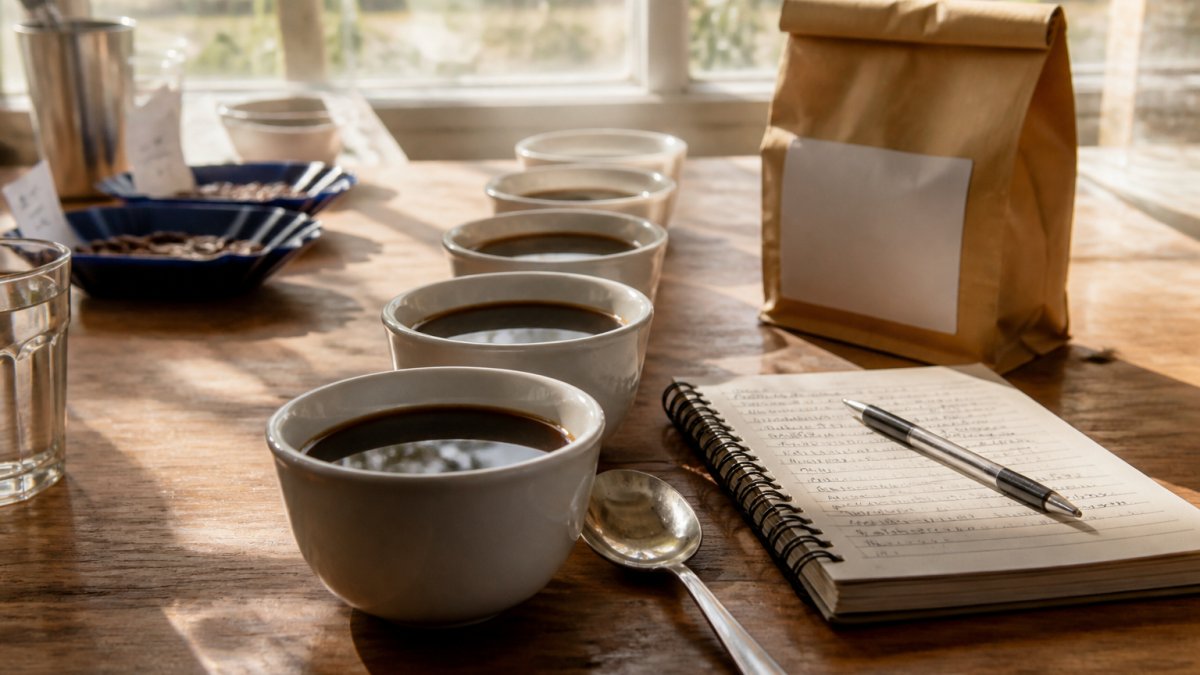
What you need:
Step 1: Set the schedule before you open the bag.
Step 2: Fix every variable except age.
Step 3: Code the cups blind.
Step 4: Score on a fixed rubric, not adjectives.
Step 5: Smell before you taste, and taste at the same temperature.
Step 6: Repeat once.
What to look for at each age.
Separate age from other influences.
Once you have a peak window for a lot, brew to match it. Our guide on how to brew micro lot coffee covers grind, water ratio, and technique for these delicate beans.
Order Micro Lots With the Roast Date in Mind
Our Tanzania is a medium-light roast with a tasting profile of pear, floral, jasmine, and strawberry. Our Colombia is a medium roast with a tasting profile of dried orange, berry, and chocolate. Both are from smallholder farmers.


Frequently Asked Questions
How long should coffee rest after roasting before brewing?
Most washed micro lots peak between 7 and 14 days off roast, while natural-process coffees often settle in around 5 to 10 days. Light roasts need the longer end because their cell structure stays denser and releases gas slowly. Start tasting on day 4, note the cup each morning, and mark the day the fruit and floral notes stop tasting sharp. That date, not a fixed rule, is your rest time for that specific lot.
Does coffee taste better a few days after roasting?
Usually yes, but not on day one or two. Freshly roasted beans release carbon dioxide fast, and that gas interferes with water contact during brewing, which can make early cups taste flat or oddly sour. By day 3 to 5 the degassing slows enough for a cleaner extraction. For dense light-roast micro lots, the bigger jump in sweetness and aroma often lands closer to day 7 to 10, so give the bag a few more days before judging it.
How does roast date affect coffee flavor?
Roast date tracks how far the bean has moved through degassing, oxidation, and aromatic loss. In the first week, bright acidity and fruit notes can taste sharp or muted by escaping gas. In weeks two and three, the flavor balance usually settles and body fills out. Past roughly four to six weeks, volatile aroma compounds fade and stale, papery notes creep in. Micro lots show this curve more sharply than blends because there is no second origin masking the shift.
Do light-roast coffees need more resting time?
Yes. Light and medium-light roasts keep a denser bean structure, so carbon dioxide escapes more slowly and the flavors need longer to integrate. A washed light roast from a high-altitude micro lot often tastes best at 10 to 14 days off roast, while a medium or dark roast can hit its stride at 5 to 7 days. Taste on a schedule rather than guessing, and note that natural-process light roasts sometimes peak earlier than washed ones.
Roast date is the variable most coffee drinkers never track, and it is the one that decides whether a micro lot tastes like the farm it came from. Cafe de Mattier roasts small batches from family-owned estates using French-inspired slow-roast techniques, so each bag carries complexity, floral notes and a silk-like body. Subscribe to our emails and get the next micro lot release with the roast date printed and the peak window clear.
