

Coffee Tasting Guide for Beginners: Train Your Palate
Table of Contents
- Why Your Morning Coffee Deserves a Closer Look
- The Four Building Blocks of Coffee Taste: Acidity, Body, Sweetness, and Bitterness
- How to Identify Coffee Acidity and Body in Your Cup
- Understanding Tasting Notes and the Flavor Wheel
- Cupping Coffee at Home for Beginners: A Step-by-Step Exercise
- How to Brew Micro Lot Coffee for a Cleaner Taste
- Troubleshooting Off Flavors: What Went Wrong?
- Your First Tasting Flight: A Practical Exercise
- Frequently Asked Questions
Last Updated: September 4, 2026
Why Your Morning Coffee Deserves a Closer Look
Most coffee drinkers consume their first cup on autopilot, barely registering more than caffeine and warmth. That daily ritual holds far more depth than you might expect. A coffee tasting guide for beginners 2026 is about slowing down long enough to notice what your roaster worked months to create. At Cafe de Mattier, we believe the difference between a good cup and a memorable one is simply attention.
Coffee is one of the most complex beverages in the world, with over a thousand aroma compounds. When you train yourself to taste deliberately, every morning becomes a small sensory adventure. This guide will walk you through the four building blocks of flavor, show you how to identify them in your cup, and give you a practical cupping exercise to accelerate your palate development. You will also learn how to brew micro lot coffee for maximum clarity and troubleshoot common off flavors.
The goal is not to sound pretentious at the dinner table. It is to genuinely taste the difference between a mass-produced blend and a small-batch, French-inspired roast sourced from a family-owned estate. By the end, you will know exactly what to look for, and you will finally understand why specialty coffee commands the price it does.
The Four Building Blocks of Coffee Taste: Acidity, Body, Sweetness, and Bitterness
Every cup of coffee you have ever drunk is a balance of four primary sensations. Acidity is the bright, lively quality that makes coffee taste crisp rather than flat. Think of the tart snap of a green apple or the zest of citrus. It is not the same as pH level; rather, it is a perceived brightness on your palate.
Body describes the weight and texture of the coffee in your mouth. A coffee can feel light and tea-like or heavy and syrupy. Sweetness is the natural sugar development from the roasting process, ranging from caramel to brown sugar to honey. Bitterness is the final element, a necessary counterweight that provides structure and length to the finish.
A balanced cup integrates all four without any single one dominating. Specialty coffee roasters, particularly those using a slow roast tradition, aim for a harmony where sweetness tames bitterness and acidity lifts the body. When you understand these four elements, you have a vocabulary to describe what you like and why.
How to Identify Coffee Acidity and Body in Your Cup
Identifying acidity and body is a skill you can build with a simple comparative exercise. Brew two very different coffees side by side, ideally one from Ethiopia and one from Indonesia. Take a sip of the Ethiopian first. Let it coat your tongue, then swallow and notice the sensation at the edges of your tongue and under your jaw. That tingling, mouth-watering response is acidity in action.
For body, pay attention to how the coffee feels between your tongue and the roof of your mouth. A washed Colombian coffee will feel cleaner and lighter, while a wet-hulled Bali coffee will feel heavier, almost syrupy. Swirl the coffee in your mouth as if you were tasting wine. The resistance you feel is the body.

A common mistake is confusing acidity with sourness. Acidity is pleasant and vibrant; sourness is sharp and unpleasant, often a sign of under-extraction. Similarly, a heavy body is not the same as bitterness. The Specialty Coffee Association provides excellent resources on standardized cupping protocols and sensory evaluation that professional tasters use to score these attributes consistently.
| Sensation | What It Feels Like | Common Cause |
|---|---|---|
| Acidity | Bright, crisp, mouth-watering | High-altitude beans, light roasts |
| Body | Weight, texture, syrupiness | Processing method, roast level |
| Sweetness | Caramel, fruit, chocolate notes | Slow roast development |
| Bitterness | Sharp, lingering, drying | Dark roasts, over-extraction |
Understanding Tasting Notes and the Flavor Wheel
Tasting notes are not marketing fluff; they are the result of chemical compounds in the bean interacting with your olfactory system. When a roaster describes a coffee as having "notes of dried orange and berry," they are referencing specific aromatic compounds that your nose detects through retro-nasal olfaction. You smell these compounds inside your mouth as you swallow, which is why coffee tastes different when you have a stuffy nose.
The coffee flavor wheel, developed by the Specialty Coffee Association in collaboration with World Coffee Research, organizes these flavors into broad categories. It starts with basic distinctions like fruity, floral, nutty, and sweet, then narrows down to specific descriptors like bergamot, blackcurrant, or molasses. You do not need to memorize the entire wheel. Simply use it to expand your vocabulary when you encounter a taste you cannot name.
The fastest way to improve your palate is to taste a coffee, read the roaster's notes, and try to find what they described. Cafe de Mattier's Ethiopia Natural, for instance, lists milk chocolate, fruity, and caramel. Brew it, sip it, and hunt for those specific flavors. Whether you find them or not, the act of searching sharpens your sensory memory.

Cupping Coffee at Home for Beginners: A Step-by-Step Exercise
Cupping is the standardized tasting method used by professional buyers to evaluate coffee. It requires no special equipment and can be done in your kitchen with a few bowls and spoons. This is the single best exercise for a beginner because it forces you to taste coffee in its purest form, without milk, sugar, or a brewing variable clouding the flavor.
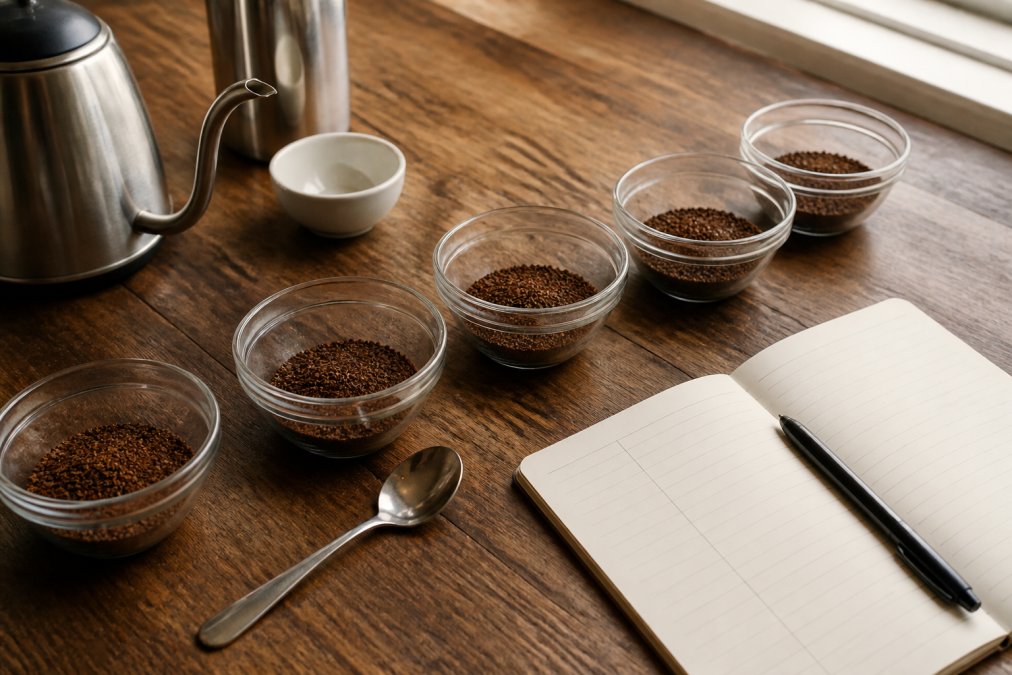
What You'll Need
- 3 to 4 different coffees (use your sample packs)
- Small glass bowls or cups, one per coffee
- A spoon, preferably a deep soup spoon
- A kettle with hot water just off the boil
- A notebook and pen
Step 1: Grind and Smell [Time: 5 minutes] Grind each coffee coarsely, about the texture of sea salt, and place roughly 12 grams in each bowl. Smell the dry grounds and write down your first impressions.
Step 2: Add Water [Time: 2 minutes] Pour hot water over the grounds until each bowl is nearly full. Start a timer for four minutes. Do not stir.
Step 3: Break the Crust [Time: 3 minutes] After four minutes, the grounds will form a crust on top. Use your spoon to push the crust aside while bringing your nose close to the bowl. This releases the most intense aromas. Smell each bowl and note the difference.
Step 4: Skim and Taste [Time: 10 minutes] Remove the floating grounds from the surface, then use your spoon to slurp the coffee. Slurping aerates the coffee and spreads it across your palate. Taste each coffee in the same order, going back and forth to compare.
Step 5: Score and Compare Rate each coffee on acidity, body, sweetness, and bitterness on a scale of 1 to 10. Compare your scores across the coffees. You will be surprised at how quickly you notice differences.
How to Brew Micro Lot Coffee for a Cleaner Taste
Brewing micro lot coffee requires a gentler hand than mass-market beans. A micro lot is a small, often single-farm harvest with a distinct flavor profile. These coffees are roasted lighter to preserve their delicate characteristics, which means your brewing method must extract flavor without introducing harshness.
The most common mistake is using water that is too hot. For a medium or medium-light roast, aim for water between 195 and 205 degrees Fahrenheit. If you do not have a temperature-controlled kettle, let your water sit for 30 seconds after boiling. The second most common mistake is grinding too fine, which over-extracts and produces bitterness that masks the coffee's natural sweetness.
A pour-over method, such as a V60 or Chemex, is ideal for micro lot coffee because it highlights clarity and brightness. Use a 1:16 coffee-to-water ratio, meaning 30 grams of coffee to 480 grams of water. Always use filtered water. Tap water with high mineral content can flatten the delicate floral and fruit notes that make micro lots special. The National Coffee Association's brewing guidelines recommend similar ratios for optimal extraction.
Troubleshooting Off Flavors: What Went Wrong?
When your coffee tastes bad, the problem is usually your brewing, not the beans. A bitter, ashy taste typically means over-extraction, which happens when your water is too hot, your grind is too fine, or your brew time is too long. Fix it by grinding coarser and checking your water temperature.
A sour, sharp taste indicates under-extraction. The water did not pull enough soluble flavor from the grounds, leaving you with only the acidic front notes. Grind finer or extend your brew time. A thin, watery cup with no body means your coffee-to-water ratio is off. Add more coffee or reduce your water.
A common issue with fresh-roasted beans is excessive gas. If your coffee tastes flat or slightly fermented, it may need to degas for a few more days after roasting. Most specialty roasters recommend waiting 4 to 7 days after the roast date before brewing. For a deeper understanding of extraction and the variables that affect it, the UC Davis Coffee Center's research on extraction science offers a rigorous technical foundation.
Your First Tasting Flight: A Practical Exercise
A tasting flight is the most effective way to apply everything in this coffee tasting guide. Order three coffees with contrasting profiles: a natural-processed Ethiopian for fruit and floral notes, a washed Colombian for balance and clean acidity, and a wet-hulled Bali for heavy body and dark chocolate. Brew them all using the same pour-over method to keep the variable consistent.
Taste them in order from lightest to darkest roast. For each coffee, work through the four building blocks, then try to name two specific flavors using the flavor wheel. Write down your impressions before reading the roaster's notes. The exercise is not about getting the "right" answer; it is about training your sensory memory.
The World Coffee Research's sensory lexicon provides a standardized vocabulary that professional tasters use, which is a valuable reference as you build your tasting vocabulary. If you want to practice with genuinely distinct profiles, Cafe de Mattier's Single Origin Favorites Sample Pack includes six different coffees designed for exactly this kind of comparison. At $24.99, it is the most affordable way to taste across regions and processing methods without committing to full bags.

The difference between a casual drinker and a discerning taster is not an innately refined palate. It is practice, vocabulary, and the willingness to pay attention. Start with one coffee, one brewing method, and one focused tasting session per week. The complexity, floral notes, and silk-like body that roasters describe are not marketing language; they are qualities you can learn to taste.
Cafe de Mattier crafts small-batch, French-inspired roasts from micro-lots and family-owned estates specifically for drinkers who want to slow down and savor. Our slow-roast tradition produces the complexity and balance that makes this kind of tasting rewarding. Subscribe to our emails for brewing guides, tasting notes, and early access to limited single-origin releases.
Frequently Asked Questions
What is the 15-15-15 rule for coffee?
The 15-15-15 rule is a simple way to assess a coffee's aroma and flavor. It refers to how long you should pause at each stage of tasting: 15 seconds to smell the grounds before brewing, 15 seconds to inhale the aroma of the brewed coffee, and 15 seconds to let the coffee rest on your palate before swallowing. This structured pause forces you to slow down and notice the subtle shifts in scent and taste that happen quickly.
What equipment do I need for a coffee tasting ritual at home?
You don't need a lab to start a tasting ritual. Begin with a few essentials: whole beans, a burr grinder for consistent grind size, filtered water heated to about 200°F, and a clean cupping bowl or a simple mug. A spoon is useful for slurping, and a notebook helps you track impressions. For a more structured approach, consider a sample pack of single-origin coffees to compare different regions side by side.
How do I identify specific tasting notes in specialty coffee?
Identifying tasting notes starts with association. When you sip, ask yourself what the flavor reminds you of, not what you think it should be. The coffee flavor wheel helps by narrowing broad terms like 'fruity' into specific categories like 'berry' or 'citrus.' Compare the aroma to familiar scents like chocolate, nuts, or dried orange. Over time, your brain builds a tasting vocabulary that makes recognizing notes of fruit or cocoa more automatic.
What is the difference between body, acidity, and flavor in coffee?
Body refers to the weight and mouthfeel of the coffee, often described as light, medium, or full, and felt on your tongue. Acidity is the bright, tangy, or crisp sensation that makes your mouth water, similar to the quality in citrus fruit. Flavor is the overall taste profile, encompassing the tasting notes and sweetness you perceive. Together, these three attributes define a coffee's character and balance.
How does roast level affect the tasting experience?
Roast level heavily influences which flavors dominate. A light roast preserves the bean's origin characteristics, often highlighting floral, fruity, and brighter acidic notes. A dark roast shifts the profile toward roasty, bittersweet chocolate and caramelized sugar flavors, with a heavier body and lower perceived acidity. Medium roasts like our Bali Blue or Colombia strike a balance, offering a mix of origin character and roast depth.
Why does my coffee taste bitter or sour, and how do I fix it?
Bitterness usually points to over-extraction, meaning too much was drawn from the grounds. This can happen with water that's too hot, a grind that's too fine, or a brew time that's too long. Sourness often indicates under-extraction from water that's too cool or a grind that's too coarse. Adjust one variable at a time, starting with grind size, to find the balanced extraction point.
This article was written using GrandRanker