

How to Identify High Quality Coffee Beans
Table of Contents
- What Makes a Coffee Bean High Quality?
- Why the Coffee Roast Date Importance Outweighs the Expiration Date
- Visual Inspection: Color, Uniformity, and the Truth About Oil
- The Aroma and Bloom Test: A Key Sensory Check
- Identifying Coffee Defects Before You Brew
- Building Your Coffee Sensory Evaluation at Home Kit
- How to Taste Quality: Acidity, Body, and Aftertaste
- Your Next Step Toward High Quality Coffee Beans
- Frequently Asked Questions
Last Updated: September 5, 2026
What Makes a Coffee Bean High Quality?
High quality coffee beans are the result of a rigorous chain of decisions, from genetics and altitude to a precise roast profile. The Specialty Coffee Association defines specialty grade as coffee scoring 80 points or above on a 100-point cupping scale. At Cafe de Mattier, we source exclusively from micro-lots and family-owned estates, where growers control every variable from soil health to harvest timing.
The fastest way to identify high quality coffee beans is to look for three markers: a clear roast date, full traceability to a specific farm or cooperative, and a flavor profile that reflects the region rather than the roast. Commodity coffee hides its origins; specialty coffee celebrates them.
Why the Coffee Roast Date Importance Outweighs the Expiration Date
Coffee is a perishable agricultural product, and the coffee roast date importance cannot be overstated when assessing quality. Most commercial bags carry only an expiration date, which tells you little about freshness because it is calculated from a point that may be months in the past. A roast date tells you exactly when the beans left the roaster, the true starting line for flavor.
The science is straightforward: roasted coffee releases carbon dioxide for days after roasting, a process called degassing. According to the National Coffee Association's freshness guidelines, coffee is freshest within a specific window after roasting, and its volatile aromatic compounds begin to oxidize soon after. Whole bean coffee in a sealed bag with a one-way valve will hold its character for roughly two to four weeks after the roast date. Ground coffee loses that freshness in a matter of days.
Visual Inspection: Color, Uniformity, and the Truth About Oil
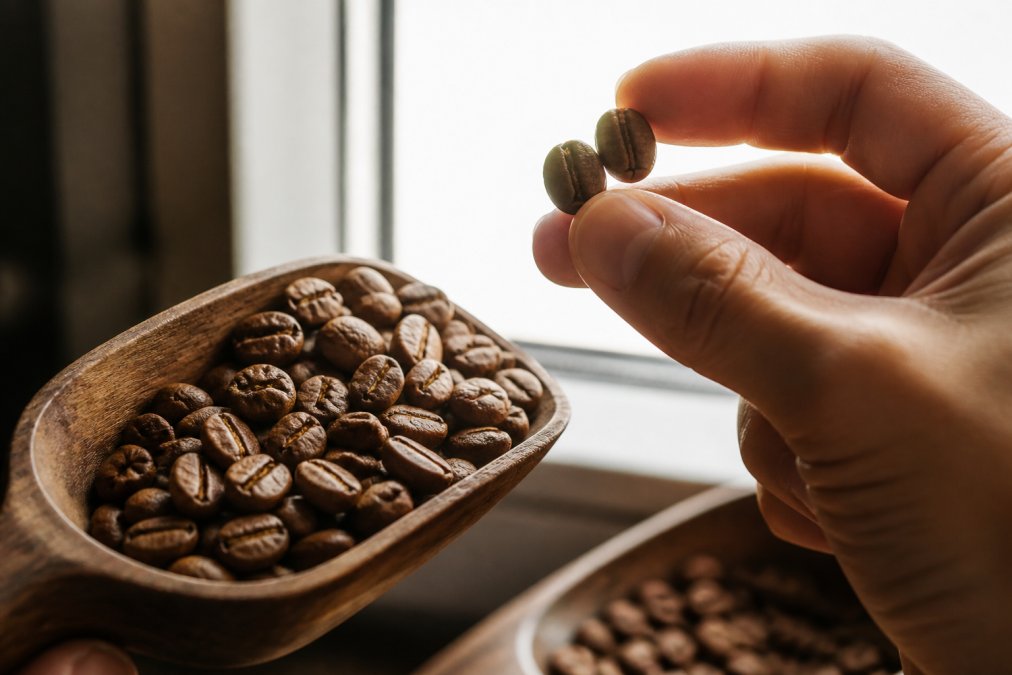
A quick visual check tells you more than any label, and the first thing to assess is uniformity. High quality coffee beans from a single lot should look consistent in size, color, and density. A mix of pale and dark beans, or broken fragments, suggests the batch was blended from different roast levels or handled carelessly.
Color should be even across the batch, and the surface finish is a major clue. Freshly roasted beans have a matte finish with a dry, papery texture. Oil on the surface is not a sign of freshness; it is a sign of age or over-roasting. Beans that look shiny and greasy have typically been roasted dark and sat for weeks, allowing oils to migrate to the surface.
The Aroma and Bloom Test: A Key Sensory Check
Aroma is the first sensory confirmation of quality, best tested at the moment of grinding. Grind a small portion of beans and inhale immediately. Fresh beans release a burst of fragrance that is sweet, complex, and specific, often floral or fruity. Stale beans smell flat, dusty, or vaguely cardboard-like, because the volatile aromatic compounds, over 800 of them, are rapidly oxidizing once the bean's cellular structure is ruptured.
The bloom test is a more precise method that belongs in every coffee sensory evaluation at home kit. When hot water first hits fresh coffee grounds, trapped carbon dioxide escapes, causing the grounds to swell and bubble. A vigorous, even bloom indicates the beans were roasted recently and have retained their internal gases. A weak or absent bloom means the coffee has gone flat, and no amount of brewing skill will revive it.
To perform the test, place freshly ground coffee in your brewer, pour just enough water at around 200 degrees Fahrenheit to saturate the grounds, and watch for thirty seconds. Specialty roasters expect a 1:2 ratio of water to coffee for this initial pour.
The Science of the Bloom: A Structured Sensory Checklist
The bloom is not just a visual cue; it is a measurable indicator of the bean's internal gas pressure, which directly correlates with roast date and storage conditions. Here is a structured sensory checklist:
- Timing: Start your timer the moment water hits the grounds. A high-quality, freshly roasted bean will begin blooming within 5-10 seconds. A delayed bloom (15+ seconds) suggests the beans are past their peak aromatic window.
- Volume: The bloom should roughly double the volume of the coffee bed. A bloom that only rises 25-50% indicates significant degassing has already occurred, meaning the beans are likely more than three weeks past their roast date.
- Uniformity: The bloom should be even across the entire surface. Patchy or one-sided blooming suggests uneven roasting or a blend of beans with different roast profiles, which is a quality control issue.
- Aroma Release: During the bloom, the escaping gas carries the most volatile aromatic compounds. This is the moment to cup your hands over the brewer and inhale deeply. You are looking for a sweet, floral, or fruity fragrance. A sour or baked-bread smell indicates the beans are degrading.
The Role of Packaging Technology in Preserving the Bloom
The bloom test is only meaningful if the beans have been stored correctly, which is where packaging technology becomes a direct indicator of quality control. A high-quality roaster will use a one-way degassing valve on their bags, allowing carbon dioxide to escape without letting oxygen in, preventing the bag from bursting while protecting the beans from oxidation.
Look for a bag with a small, circular valve, often covered by a thin membrane. If the bag has no valve, the roaster is either selling coffee that has already fully degassed or they are not prioritizing freshness. Nitrogen flushing is another advanced technique, where the bag is flushed with nitrogen gas before sealing, displacing oxygen entirely. This can extend the peak freshness window by several weeks, but it is more common in larger commercial operations.
Identifying Coffee Defects Before You Brew
Identifying coffee defects is a skill that separates casual drinkers from true enthusiasts, and the most common defects are visible before grinding. Look for quakers, under-roasted beans that appear pale and chalky compared to their neighbors. These beans taste grassy and sour and can ruin an entire cup if present in number.
Other defects to spot include beans with insect damage, which show small pinholes, and beans with a withered or shriveled appearance, indicating improper drying. The processing method matters here. Fully washed coffees tend to have fewer defects because the fruit is removed quickly, while natural process coffees require more careful sorting. According to the Specialty Coffee Association's green coffee grading protocols, defect counts are a formal part of specialty classification, with strict limits on how many imperfections a batch may contain.
Building Your Coffee Sensory Evaluation at Home Kit
A coffee sensory evaluation at home kit does not require laboratory equipment, just a few inexpensive tools that pay for themselves in better buying decisions. The core kit includes a burr grinder, a scale accurate to 0.1 grams, a cupping bowl or standard mug, a spoon, and a notebook.
Why Each Tool Matters (and What to Avoid)
- Burr Grinder: This is non-negotiable. Blade grinders chop beans into uneven fragments, which extracts inconsistently and masks the true flavor profile. A burr grinder crushes the bean between two abrasive surfaces, producing uniform particles. Look for a grinder with stepless adjustment or at least 30 distinct settings. The difference between a 400-micron and 800-micron particle is the difference between a bright, clean cup and a muddy, bitter one.
- Scale (0.1g accuracy): Coffee-to-water ratio is a matter of chemistry. The Specialty Coffee Association's golden ratio is 55 grams of coffee per liter of water, but for cupping, the standard is 8.25 grams per 150 milliliters. Without a scale, you are guessing, and guessing leads to inconsistent evaluations.
- Cupping Bowl or Mug: Use a standard 6-ounce ceramic bowl or mug. Ceramic retains heat better than glass or plastic, which is critical for the four-minute extraction window. Avoid mugs with a narrow mouth; you need a wide opening to break the crust effectively.
- Spoon: A deep, round spoon is ideal for slurping. The goal is to aerate the coffee across your entire palate, including the back of your tongue where bitterness is detected.
- Notebook: This is your reference library. You will not remember the difference between a Kenya AA and a Colombia Huila after tasting ten coffees. Write everything down.
The Structured Cupping Protocol: A Step-by-Step Method
The cupping method is the industry standard for evaluating beans. It is not just about tasting; it is about isolating variables to identify the bean's intrinsic quality. Here is the exact protocol used by professional graders, adapted for home use:
- Weigh and Grind: Weigh 8.25 grams of coffee per 150 milliliters of water. Grind to a medium-coarse consistency, similar to sea salt. Place the grounds in the bowl.
- Dry Aroma (Fragrance): Smell the dry grounds immediately. Record your impressions. Is it floral, fruity, nutty, or earthy? This is the 'fragrance' stage.
- Add Water: Pour hot water (200°F) over the grounds, filling to the rim. Do not stir. Start a four-minute timer.
- Wet Aroma (Aroma): After four minutes, the grounds will have formed a crust on top. Place your nose close to the bowl and break the crust with your spoon. Inhale deeply. This is the 'aroma' stage, and it is often more intense than the dry fragrance.
- Skim and Taste: Skim the floating grounds off the top. Let the coffee cool for 2-3 minutes. Then, take a spoonful and slurp it aggressively. The slurping aerates the coffee, spreading it across your palate.
- Evaluate: Note the acidity (brightness), body (mouthfeel), and aftertaste. As the coffee cools, these characteristics will change. Taste again at 160°F, 140°F, and room temperature. A high-quality bean will remain pleasant and complex at all temperatures.
Building Your Reference Library
Track what you find in your notebook. Note the roast date, origin, and processing method. Record the aroma, acidity, body, and aftertaste. Over a few weeks, you will build a reference library of flavors that makes future evaluations faster and more accurate.
How to Taste Quality: Acidity, Body, and Aftertaste
Tasting coffee like a professional means moving beyond "strong" or "smooth" and paying attention to three measurable dimensions: acidity, body, and aftertaste. Acidity in specialty coffee is not sourness; it is a bright, lively quality that reads as fruit-like, often citrus or berry. Body is the weight and texture of the coffee on your tongue, ranging from tea-like to syrupy. Aftertaste is the impression that lingers after you swallow, and in high quality coffee it should be clean and pleasant, not bitter or burnt.
The arabica versus robusta distinction matters here. Arabica beans, grown at higher altitudes, deliver the acidity and complexity that specialty drinkers prize. Robusta is hardier and higher in caffeine but tastes more bitter and flat by comparison. A bag labeled 100 percent arabica is a baseline expectation for specialty coffee, not a differentiator.
Flavor notes on a bag should align with what you taste. A coffee described as having dark chocolate and molasses notes should deliver a heavy, sweet body. One promising dried orange and berry should show bright, wine-like acidity. When the description and the cup match, you have found a roaster that understands its product.
Your Next Step Toward High Quality Coffee Beans
You now have the tools to identify high quality coffee beans, from reading roast dates and inspecting color to performing a bloom test and cupping for acidity. The common thread is transparency: a roaster who tells you the origin, the grower, and the roast date is confident in the product. As documented in the Coffee Quality Institute's resources on sustainable sourcing, traceability also supports the ethical certifications and direct relationships that define the specialty tier.
Put these skills to work with a single-origin coffee that carries full traceability. Cafe de Mattier roasts small batches from family-owned estates, with each bag showing the grower, altitude, and processing method. Our Colombia offering, a fully washed coffee from smallholder farms near Medellin, delivers dried orange and chocolate notes at a medium roast. The Costa Rica lot, eco-pulped and sun-dried, brings sweet apple and honey to the cup. Bali Blue offers a med-dark roast with dark chocolate and molasses depth.
The final test is simple: buy a bag with a recent roast date, grind it fresh, and perform the bloom test. If the crust rises and the aroma fills the room, you have found your standard. Explore single-origin offerings from Cafe de Mattier and taste what careful sourcing and slow roasting deliver in every cup.
Frequently Asked Questions
How soon after the roast date should I buy coffee beans?
Look for beans with a roast date within the last 2 to 3 weeks. Coffee needs 3 to 7 days to degas after roasting; this is when it's at its peak for brewing. Buying within this window ensures you have time to enjoy the beans before the flavors flatten. Always prioritize the roast date over the expiration date, which is often a year or more away.
Does a shiny surface mean the coffee beans are fresh?
No. A shiny surface usually indicates the beans have been roasted dark, causing oils to migrate to the surface. While this isn't a defect, it can mean the beans are past their peak flavor if they are older. High quality beans, especially light or medium roasts, should have a dry, matte finish. Rely on the roast date, not the sheen, to judge freshness.
What are the most common visual defects to look for in whole beans?
Look for beans with holes, chips, or a chalky white color, which indicate insect damage or under-roasting. Quakers, or under-ripe beans, appear pale and light, and they taste grassy and sour. A mix of beans with uneven color suggests a poor roast. Specialty grade coffee should have very few of these defects, ensuring a clean and consistent cup.
What tools do I need for a coffee sensory evaluation at home?
You don't need a lab to start. Your basic coffee sensory evaluation at home kit should include a burr grinder, a scale, filtered water, and a cupping bowl or a standard French press. For tasting, use a deep spoon. This setup allows you to assess the dry fragrance, wet aroma, and flavor profile of the beans without specialized equipment.
Choosing high quality coffee beans is a skill built on attention to roast dates, visual inspection, and sensory evaluation. The beans that pass these checks reward you with complexity, floral notes, and a silk-like body in every brew. Cafe de Mattier brings that standard to your morning ritual with small-batch, French-inspired roasts from micro-lots and family-owned estates. Subscribe to our emails and make your next cup a mindful experience.
This article was written using GrandRanker