

How to Reduce Bitterness in Slow Roasted Coffee
Table of Contents
- Why Slow Roasted Coffee Turns Bitter
- How to Brew Micro Lot Coffee Without Over-Extracting
- The Coffee Extraction Variables That Control Bitterness
- The Best Grind Size for Dark Roast and Slow Roasted Beans
- Fixing Bitterness by Brewing Method
- Bean Freshness, Storage, and Equipment Care
- Common Mistakes That Make Slow Roasted Coffee Bitter
- Frequently Asked Questions
Last Updated: September 30, 2026
Why Slow Roasted Coffee Turns Bitter
Bitterness in slow roasted coffee comes from over-extraction, not from the roast itself. When hot water pulls too many bitter compounds from the grounds, even a delicate micro-lot turns harsh and dry.
That surprises people. Slow roasting builds sweetness and floral notes, so the beans start out balanced. The bitterness shows up later, at the brew stage.
At Cafe de Mattier, we roast in small batches from micro-lots and family-owned estates. Those beans have thin margins for error. Push them too hard and the cup goes from silk to ash in seconds.
Below, we'll show you exactly how to reduce bitterness in slow roasted coffee, step by step. The fixes are simple once you know which variable to change.
How to Brew Micro Lot Coffee Without Over-Extracting
To brew micro lot coffee without over-extracting, shorten contact time and lower your water temperature slightly. Micro-lots are dense, fresh, and full of soluble compounds, so they release flavor fast.
Here is the sequence that works:
- Start with a coarser grind than you think you need.
- Drop water temperature to 195-200°F for dark or slow roasted beans.
- Keep total brew time under four minutes for pour-over.
- Taste, then adjust one variable at a time.
Dialing In Your First Micro Lot Brew
Dialing in means making one small change per brew and tasting the result. Most people change three things at once and learn nothing.
A common mistake is chasing the "perfect recipe" from someone else's kitchen. Your grinder, your water, and your beans all differ. Use a recipe as a starting point, then adjust.
- Weigh your coffee: 1 gram of coffee to 16 grams of water.
- Note the time from first pour to last drop.
- Write down what you tasted: sour, bitter, or balanced.
Three brews usually get you close. Two more get you dialed in.
The Coffee Extraction Variables That Control Bitterness
Bitterness is a function of extraction, but the useful question is which compounds you are pulling and when. Once you know the chemistry, the variables stop being a checklist and become levers you can reason about.
Extraction is the process of dissolving flavor compounds from coffee grounds into water. Under-extraction tastes sour and thin. Over-extraction tastes bitter and drying. The order matters: acids and sugars dissolve first, then the heavier bitter compounds.
What Actually Makes Coffee Bitter
Two compound families drive most of the bitterness you taste.
Caffeine contributes a clean, somewhat flat bitterness. It extracts early and steadily, so it is rarely the culprit in an over-bitter cup, you would have to brew something undrinkably weak to remove it.
Chlorogenic acid lactones are the real story. Green coffee contains chlorogenic acids, which are not especially bitter on their own. During roasting, heat drives a reaction that converts some of those acids into lactones, phenylindanes and related compounds.
Water Temperature and Contact Time
Water temperature controls how fast compounds dissolve. Hotter water extracts faster, including the bitter lactones.
- Pour-over: 2:30 to 3:30 total
- French press: 4 minutes, then press
- Espresso: 25-30 seconds
Brew Ratio and Agitation
Brew ratio is the weight of coffee compared to water. A tighter ratio (more coffee) tastes stronger but not necessarily bitter, because strength and extraction are different things. A looser ratio with a long brew time usually turns bitter, because the water has both the time and the solvent capacity to pull lactones.
The Sour-Bitter Axis
Sour and bitter are opposite ends of the same extraction spectrum, and confusing them wastes a lot of coffee. Sour is under-extraction: bright, sharp, thin, sometimes salty. Bitter is over-extraction: harsh, drying, heavy on the finish.
Specialty Coffee Association brewing standards and extraction guidance
The Best Grind Size for Dark Roast and Slow Roasted Beans
The best grind size for dark roast and slow roasted beans is medium-coarse, roughly the texture of sea salt. Dark roasts are more soluble, so they need less surface area to extract well.
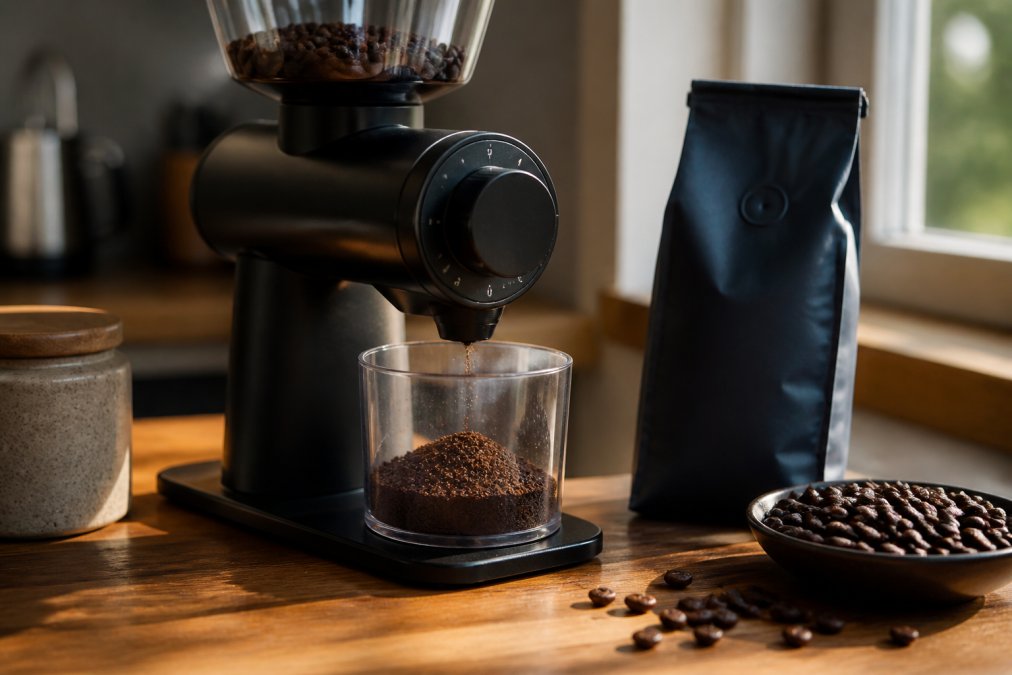
- Espresso: fine, but dial back temperature
- Pour-over: medium to medium-coarse
- French press: coarse
- Drip: medium
Fixing Bitterness by Brewing Method
Each brewing method has its own failure point, because the extraction mechanics differ. A fix that rescues a French press can ruin an espresso shot. Here is where each method tends to over-extract and what to change first.
Pour-Over and Drip
Pour-over bitterness usually comes from a grind that is too fine or a pour that is too aggressive. Water channels through cracks in the coffee bed, a problem called channeling, and over-extracts those spots while under-extracting the rest. The result is a cup that tastes both sour and bitter.
French Press
French press bitterness comes from steep time and from fines. The metal mesh lets fine particles through, and those particles keep extracting in the cup after you press. Four minutes is plenty. Past five, the coffee oils and fine particles keep releasing lactones.
Espresso
Espresso bitterness comes from too fine a grind and too long a shot. Pull 25-30 seconds for a standard double. If it tastes harsh, coarsen the grind before you change the dose, grind is the dominant variable, and dose changes mask the problem.
Cold Brew and AeroPress
Cold brew is the most forgiving method for bitterness because cold water extracts lactones far more slowly. If your cold brew still tastes bitter, the cause is almost always a grind that is too fine or a steep that ran past 18 hours. Coarsen the grind and cap the steep.
Matching the Fix to the Method
| Method | Most Common Bitter Cause | First Fix |
|---|---|---|
| Pour-over | Channeling from a fine grind or fast pour | Coarsen grind, slow the pour |
| Drip | Machine running above 205°F | Check brew temperature |
| French press | Steep time and fines in the cup | Cap at 4 minutes, decant immediately |
| Espresso | Grind too fine, shot too long | Coarsen grind, pull 25-30 seconds |
| Cold brew | Grind too fine, steep past 18 hours | Coarsen grind, cap the steep |
| AeroPress | Water too hot, steep too long | Drop to 175-185°F, steep under 2 minutes |
The pattern holds across every method: bitterness is a late-extraction problem, and each brewer just gives you a different lever to stop it.
Bean Freshness, Storage, and Equipment Care
Stale beans and dirty equipment cause bitterness that no brewing tweak can fix. This is the part most guides skip.
- Rinse your brew basket after every use.
- Wash your French press and carafe daily.
- Clean grinder burrs every few weeks.
- Descale your drip machine monthly.
Common Mistakes That Make Slow Roasted Coffee Bitter
| Mistake | What Happens | The Fix |
|---|---|---|
| Grind too fine | Over-extraction, harsh cup | Go one setting coarser |
| Water too hot | Tannins and bitter compounds pulled out | Drop to 195-200°F |
| Brew time too long | Oils and fines keep extracting | Cut 30 seconds |
| Too much agitation | Fast, uneven extraction | Stir gently, once |
| Dirty equipment | Rancid oils in the cup | Clean grinder and basket |
| Stale beans | Flat, harsh flavor | Buy fresh, store airtight |
Cafe de Mattier roasts in small batches to keep flavor compounds intact, which means our beans reward careful brewing. Try our House Blend for a smooth, balanced starting point, or explore single-origin options like Brazil Santos and Colombia to taste how origin shapes the cup.


Frequently Asked Questions
What cancels out bitterness in coffee?
Salt and a pinch of sugar can mask bitterness temporarily, but the real fix is adjusting your brew. Coarsen the grind, lower water temperature to 195-200°F, and shorten contact time. Bitterness comes from over-extraction of bitter compounds and chlorogenic acid lactones, so changing how you brew works better than adding anything to the cup. If your slow roasted coffee still tastes harsh, check bean freshness and clean your equipment to remove rancid coffee oils.
Does grind size affect the bitterness of slow-roasted beans?
Yes, grind size is one of the biggest coffee extraction variables you control. A finer grind exposes more surface area and pulls out bitter compounds faster, while a coarser grind slows extraction. For dark roast and slow roasted beans, which are more porous and soluble, start with a coarser grind than you would use for a light roast. If your cup tastes bitter, go one step coarser before changing anything else.
How does water temperature influence coffee extraction and bitterness?
Water that is too hot, above 205°F, extracts bitter compounds and tannins aggressively. Water that is too cool under-extracts and leaves the cup sour. The sweet spot for most slow roasted coffee is 195-200°F. If you do not have a temperature-controlled kettle, boil water and let it rest for 30-45 seconds before pouring. This single change often fixes bitterness without touching grind size or ratio.
How do I keep micro lot beans fresh so they do not turn bitter?
Store beans in an airtight, opaque container away from light, heat, and moisture. Buy in amounts you will finish within two to three weeks of the roast date. Oxidation and stale coffee oils create rancid, bitter flavors that no brewing adjustment can fix. For micro lot coffee, which is often more delicate, freshness matters even more. Grind right before brewing and keep the bag sealed between uses.
Bitterness is the most common complaint home brewers bring to us, and it is almost always fixable. Cafe de Mattier crafts small-batch, French-inspired slow roasts from micro-lots and family-owned estates, so every bean is built for balance. Our slow-roast tradition protects the floral notes and silk-like body that make a cup worth savoring. Subscribe to our emails and get brewing guidance, new micro-lot releases, and the mindful coffee experience our roasters set out to create.