

Is Gourmet Coffee Worth It? An Honest Review
Table of Contents
- The Real Cost of Gourmet Coffee: What $23.99 Actually Buys
- Specialty Coffee vs Commercial Coffee: The Quality Gap
- Does Your Brewing Setup Justify the Price?
- How to Store Gourmet Coffee Beans for Peak Flavor
- The Diminishing Returns Threshold: When Premium Stops Paying Off
- Subscription vs. One-Off: Which Buying Model Fits You?
- Cafe de Mattier Picks: Which Gourmet Coffee Is Worth It
- Frequently Asked Questions
Last Updated: September 19, 2026
The Real Cost of Gourmet Coffee: What $23.99 Actually Buys
The short answer is yes, gourmet coffee beans are worth it, but only if your brewing setup and daily habits can capture what you're paying for. At Cafe de Mattier, we roast in small batches from micro-lots and family-owned estates. A 12-ounce bag of our gourmet coffee runs $23.99, steep next to a supermarket tub, until you divide it by the cups it produces.
Price Per Cup: Gourmet vs. Grocery Store
| Factor | Gourmet Coffee | Grocery Store Coffee |
|---|---|---|
| Typical bag price | $23.99 / 12 oz | $8-$12 / 12 oz |
| Cups per bag | 16-18 | 20-24 |
| Cost per cup | ~$1.40 | ~$0.60 |
| Roast date on bag | Yes | Rarely |
| Origin transparency | Farm and region listed | Blended, unspecified |
| Flavor stability over time | Holds 2-4 weeks post-roast | Often stale on arrival |
The per-cup gap is real, roughly double, but smaller than most people assume, and it disappears entirely against a daily coffee-shop habit.
Specialty Coffee vs Commercial Coffee: The Quality Gap
Specialty coffee scores 80 or higher on the 100-point scale used by licensed graders; commercial coffee falls below that threshold and is typically sold on volume rather than traceability. The Specialty Coffee Association maintains the cupping standards that define this cutoff, and the difference shows up in the cup before you read a label.
Grading, Sourcing, and What the Labels Mean
Commercial beans are usually a blend of many origins, roasted dark to mask defects and keep flavor consistent. Specialty beans are typically 100% Arabica, hand-picked at peak ripeness, and traceable to a region, farm, or single micro-lot. Our Colombia comes from smallholder farmers from Medellin, fully washed and dried in solar dryers to protect the coffee from rain.
A few labels worth knowing:
- Single-origin: one country or region, one flavor story
- Micro-lot: a small, separated harvest from one farm or plot
- Washed process: fruit removed before drying, for a cleaner, brighter cup
- Natural process: fruit dried on the bean, for heavier body and fruit-forward notes
- Direct trade: roaster buys straight from the grower, often at a premium
Does Your Brewing Setup Justify the Price?
Your equipment matters more than most buyers expect. A $23.99 single-origin bean brewed through a dirty drip machine with a stale filter will taste worse than a $9 grocery blend brewed well. The bean is only half the cup; the other half is extraction, and extraction is set by your gear.
The Equipment Tiers, and What Each One Unlocks
Think of your setup as a gate that either lets the bean's flavor through or blocks it.
- Blade grinder + timed drip machine: captures roughly the bottom third of a gourmet bean's potential. Fix the grinder first.
- Burr grinder + basic drip machine that hits 195-205°F: captures most of it. This is the single biggest jump in the chain, and it costs less than two bags of beans.
- Burr grinder + pour-over, French press, or AeroPress: captures nearly all of it, because you control temperature, ratio, and time.
- Burr grinder + espresso machine: captures everything, but only if the grinder is espresso-capable. A grinder that's fine for drip will choke or channel on espresso.
A Quick Self-Audit Before You Buy Another Bag
Answer honestly. Each "no" is a place where your setup is eating your premium.
- Do you grind immediately before brewing, whole bean to basket?
- Is your grinder a burr grinder, not a blade?
- Does your brewer reach at least 195°F at the brew bed?
- Do you weigh your coffee and water, or scoop by eye?
- Is your water filtered and free of heavy chlorine or mineral taste?
Best Brewing Methods for Gourmet Coffee
Each method pulls different flavor notes forward. Match the method to the bean and you'll taste the difference you paid for.
- Pour-over: highlights floral and citrus notes; best for light and medium roasts
- French press: full immersion, heavy body, good for natural-process beans
- AeroPress: quick, forgiving, ideal for a single strong cup
- Drip machine: convenient, but only if it reaches proper temperature and you use it fresh
- Espresso: concentrates flavor; works best with medium to dark roasts
How to Store Gourmet Coffee Beans for Peak Flavor
Store gourmet coffee beans in an airtight, opaque container at room temperature, away from light, heat, and moisture. Whole beans keep their flavor far longer than pre-ground because the oils and aromatics stay locked inside until you grind; once ground, oxidation begins within minutes.
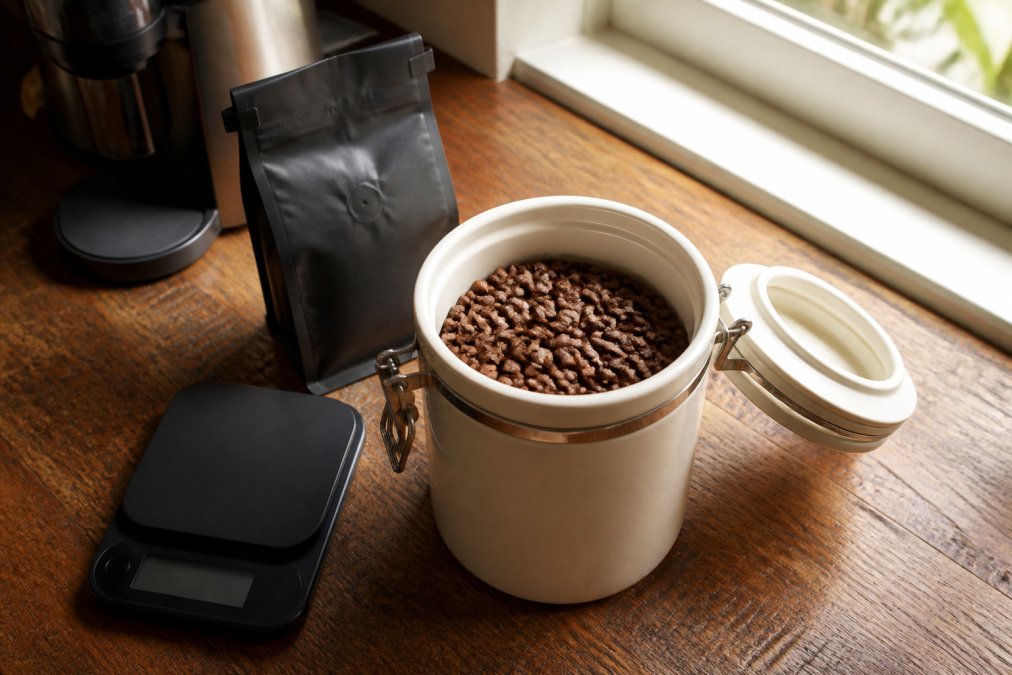
The enemies, in order of damage:
- Oxygen: causes oxidation and stale, cardboard-like flavor
- Heat: accelerates the loss of volatile aromatics
- Light: breaks down oils on the bean surface
- Moisture: invites mold and clogs your grinder
The Diminishing Returns Threshold: When Premium Stops Paying Off
Gourmet coffee stops being worth it when the price climbs faster than the flavor. There's a real threshold, and most drinkers hit it before they realize it, here's how to find yours.
Where the Curve Actually Flattens
Each additional dollar buys less flavor than the dollar before it. The question is where that curve goes flat for your palate and your setup.
- Under roughly $12 per 12 ounces: you're mostly buying convenience and consistency, not character. Freshness is a coin flip.
- Around $15 to $25 per 12 ounces: this is the sweet spot for most home brewers. You get a roast date, a named origin, and a cup that clearly separates itself from the grocery aisle.
- Above roughly $30 per 12 ounces: the gains become subtle and highly personal. You may be paying for a specific farm, a rare varietal, or a high cupping score, all real, but not automatically better in your mug.
Find Your Threshold With a Blind Test
You can't trust a price tag to tell you what you taste. You have to test it. Here's a simple home method that takes one weekend morning.
- Pick two beans. One gourmet bag with a recent roast date, one mid-tier grocery bean. Same roast level if you can manage it.
- Brew them identically. Same grinder setting, same water weight, same method, same temperature. If the variables differ, the test is worthless.
- Label the cups A and B on the bottom, not the top, so you can't see which is which while drinking.
- Taste both, then write down which you preferred and why, sweetness, acidity, body, aftertaste.
- Reveal and compare. If you consistently pick the gourmet cup, your threshold is above that price. If you can't tell them apart, you've found your ceiling.
The Variables That Move Your Threshold
Your threshold isn't fixed. It shifts with three things:
- Your setup. A burr grinder and a scale lower your threshold, because you can actually taste the difference. A blade grinder and a timed drip machine raise it, because the gear masks the gap.
- Your palate. Regular tasters develop sensitivity to acidity, sweetness, and body over time. What tastes identical today may separate clearly in six months.
- Your consumption. If you drink one cup a day, a $23.99 bag lasts about two weeks, so the upgrade costs you a few dollars a week. If you drink several cups and brew carelessly, you're paying a premium and tasting a fraction of it.
The point of the threshold isn't to talk you out of good coffee. It's to stop you from paying for flavor you can't taste. Once you know your number, every bag you buy is a deliberate choice instead of a guess.
Subscription vs. One-Off: Which Buying Model Fits You?
A subscription wins if you drink coffee daily and want a steady supply of freshly roasted beans. A one-off purchase wins if you drink occasionally, want to try before committing, or gift coffee to someone whose taste you don't know. The trap is ending up with more beans than you can finish before they go stale, or a plan you can't easily pause.
A simple decision framework:
- Daily drinker, fixed routine: subscribe, choose a cadence that matches your consumption
- Weekend drinker: buy one bag at a time and finish it before reordering
- Curious taster: start with a sample pack or a single-origin bag
- Gift-giver: pick a curated sample set so the recipient can find their own favorite
Cafe de Mattier Picks: Which Gourmet Coffee Is Worth It
To test the value question for yourself, start with a bean that matches how you already brew. Every Cafe de Mattier bag is $23.99, roasted in small batches from micro-lots and family-owned estates, so the price is consistent and the variable is flavor.
Our picks by drinker:
- Brazil Santos ($23.99): an elegant, smooth cup with cocoa notes, grown by Fazenda Santa Barbara in Paraná and São Paulo. Best for a mellow, chocolatey morning cup.
- Colombia ($23.99): dried orange, berry, and chocolate, from smallholder farmers near Medellín. Best for pour-over drinkers who want bright acidity.
- House Blend ($23.99): medium body with nutty, sweet chocolate, and mild citrus. Best for an everyday drip that stays consistent.
- Gourmet Donut Shop ($23.99): light-medium with cocoa, caramel, toffee, and mild fruit. Best if you want a balanced cup with a bit more strength than a breakfast blend.
- Breakfast Blend ($23.99): a smooth South American blend. Best for a light, easy start.
Frequently Asked Questions
Is it really worth buying expensive coffee beans?
It depends on your brewing setup and how much you notice flavor differences. Gourmet coffee costs more because of hand-picking, small-batch roasting, and traceable sourcing. If you brew with a pour-over or French press and care about tasting notes like floral or citrus, the difference is clear. If you drown your coffee in cream and sugar or use a drip machine past its prime, you may not taste the upgrade.

What is the difference between gourmet and regular coffee beans?
Gourmet coffee is typically specialty grade, meaning it scores 80 or above on the SCAA cupping scale. It is usually 100% Arabica, single-origin or carefully blended, and roasted in small batches with a visible roast date. Regular commercial coffee often uses lower-grade beans, includes Robusta, and is roasted in large volumes with no freshness date, which affects flavor notes and aroma.
How do I store gourmet coffee beans to keep them fresh?
Store whole beans in an airtight container away from light, heat, and moisture. A ceramic or opaque canister in a cool cupboard works well. Avoid the refrigerator because condensation damages beans. The freezer is acceptable for long-term storage if you seal beans in a vacuum bag and let them thaw fully before grinding. Buy only what you will use within two to three weeks for peak flavor.
Does the roasting process justify the price of gourmet coffee?
Yes, in part. Small-batch roasting lets roasters dial in a roast profile that highlights a bean's natural sweetness, acidity, and body. Large commercial roasters often roast darker and faster to mask defects, which creates bitterness and hides origin character. The slow-roast approach used by artisanal roasters costs more in time and labor, and that cost shows up in the final price.
What factors contribute to the cost of premium coffee beans?
Key cost drivers include hand-picking at peak ripeness, altitude and micro-lot separation, processing method (washed, natural, or honey), fair trade or direct trade premiums paid to farmers, small-batch roasting, and packaging with one-way degassing valves. A 12 oz bag at $23.99 reflects these steps. Lower-priced beans cut corners on several of them.