

Peet's Coffee Alternative for Connoisseurs: 2026 Guide
Table of Contents
- Why Connoisseurs Are Moving Beyond Peet's
- What Is Micro-Lot Coffee and Why It Matters
- How to Identify High-Quality Coffee Beans
- Single-Origin vs Blend Coffee: Which Suits Your Palate?
- Top Peet's Coffee Alternatives for Connoisseurs
- Price vs Value: What You Get for $23.99
- Brewing Methods and Subscription Options
- Conclusion: Elevating Your Daily Cup
- Frequently Asked Questions
Last Updated: September 14, 2026
Why Connoisseurs Are Moving Beyond Peet's
Experienced drinkers seek a Peet's Coffee alternative for connoisseurs because mass-market consistency and craft nuance are different goals. Peet's built its name on dark, smoky roasting, but that style can bury what connoisseurs chase: origin character, floral aroma, and the delicate acidity that separates a good cup from a memorable one.
This guide from Cafe de Mattier maps the transition from supermarket dark roasts to specialty craft coffee: micro-lot sourcing, reading a roast date, and brewing methods that reward a lighter, more complex bean.
Most guides stop at "buy better beans." The real shift is the relationship between roast level, origin, and brew method, get that right and even a familiar morning ritual tastes new.
What Is Micro-Lot Coffee and Why It Matters
Micro-lot coffee is a small, separately harvested and processed batch from a single farm, cooperative, or farm section, kept distinct rather than blended into a commodity lot. Small volume lets the producer focus on quality over consistency at scale.
That distinction matters for flavor. A micro-lot lets you taste a specific place and process, much like a single-vineyard wine. Blends are built for balance and repeatability; micro-lots are built for character. The Specialty Coffee Association's guidance on green coffee grading explains how lots are evaluated for defects and cup quality.
The practical takeaway: to identify what you love, buy lots that name their origin and processing method. Cafe de Mattier sources from micro-lots and family-owned estates so those details stay traceable.
How to Identify High-Quality Coffee Beans
High-quality coffee beans show three reliable signals: a recent roast date, a named origin, and a roast level matched to the bean's character.
Here is a practical checklist you can use in any shop or product page:
- Roast date printed, not just a "best by" date
- Specific origin listed (farm, region, or cooperative)
- Processing method named (washed, natural, honey, anaerobic)
- Roast level described honestly (light, medium, dark)
- Whole bean available, so you control grind size
- Tasting notes that describe flavor, not marketing adjectives
A common mistake is judging freshness by the bag's seal or its "roasted in small batches" claim. Neither tells you when the beans were roasted. A roast date does.
What roast date should I look for?
Buy beans roasted within two to four weeks for filter brewing, and one to three weeks for espresso (Standards). Past that window, aroma fades first, then sweetness, and the cup flattens.
Single-Origin vs Blend Coffee: Which Suits Your Palate?
Single-origin coffee comes from one defined place, highlighting a specific flavor profile. A blend combines beans from multiple origins for balance, body, and consistency.
Neither is objectively better. The choice depends on what you want from the cup:
| Factor | Single-Origin | Blend |
|---|---|---|
| Flavor focus | Distinct, place-specific character | Balanced, repeatable profile |
| Consistency | Varies by harvest | Stable year-round |
| Best for | Pour-over, tasting, exploration | Espresso, drip, daily routine |
| Acidity and body | Often brighter, more variable | Usually rounder, fuller body |
| Learning curve | Rewards attention to brew method | Forgiving of small errors |
If you want the same cup every morning, a blend is safer. If you want to taste terroir and track a region harvest to harvest, go single-origin.
Top Peet's Coffee Alternatives for Connoisseurs
The best Peet's Coffee alternative for connoisseurs keeps the bold, full-bodied character dark-roast drinkers love while adding the origin transparency and freshness craft coffee demands. The five roasts below from Cafe de Mattier cover that range.
1. 6 Bean Blend ($23.99) is the closest bridge from a classic dark roast: a house blend of coffees from around the world, dark roasted for espresso, with bold, chocolatey depth. If you are not ready to leave dark coffee behind, start here.

2. Italian Roast ($23.99) is the darkest roast in the lineup, a slow-roasted blend of specialty-grade Arabica and Robusta. Expect smoky, intense, low-acidity cups with a heavy body. Connoisseurs who assume Robusta is always inferior should taste this one first.
3. French Roast ($23.99) brings a Central American blend to a dark roast profile, keeping the bold, smoky character dark-roast fans expect but with more sweetness and a cleaner finish than a supermarket French roast.
4. African Espresso ($23.99) is a medium-dark blend of beans from Kenya, Tanzania, and Ethiopia. Bright, fruity, and floral notes start to appear here, the next step for drinkers ready to explore acidity and aroma without losing body.
5. Whiskey Barrel Aged ($23.99) is a single-origin Guatemalan coffee aged 30 days in a Bourbon barrel and roasted to order. It is the most distinctive option here, layering caramel and oak notes over the bean's natural sweetness. Roasted to order means the roast date is as fresh as it gets.
Price vs Value: What You Get for $23.99
At $23.99 per bag, every roast sits at the same price, so the value question is what that price buys: small-batch roasting, traceable sourcing, and roast-to-order freshness rather than brand advertising.
Do the cost-per-cup math before you judge the premium. A 12-ounce bag yields roughly 24 to 30 cups at a 1:16 ratio. At $23.99, that is roughly $0.80 to $1.00 per cup; a $10 supermarket bag lands closer to $0.33 to $0.42. The real premium is about 40 to 60 cents per cup, not the $14 shelf-tag gap.
Here is how the five options compare on the criteria that actually matter:
| Roast | Roast Level | Character | Best For |
|---|---|---|---|
| 6 Bean Blend | Dark | Bold, balanced, chocolatey | Espresso, dark-roast loyalists |
| Italian Roast | Darkest | Smoky, intense, heavy body | Strong morning cups, milk drinks |
| French Roast | Dark | Smoky with a sweeter finish | Drip, French press |
| African Espresso | Medium/Dark | Fruity, floral, bright | Espresso, pour-over |
| Whiskey Barrel Aged | Medium/Dark | Caramel, oak, spirit-kissed | Slow sipping, gifting |
What the premium pays for. Three things separate a $23.99 craft bag from a supermarket dark roast:

- Roast-to-order freshness. A shelf-stable bag may sit in a warehouse for weeks or months. Freshness is the biggest driver of aroma and sweetness.
- Traceable sourcing. Micro-lot and single-origin beans cost more at the green stage because the producer is paid for quality and separation, not commodity volume. That traceability lets you taste a specific place and process rather than a blended average.
- Small-batch roasting. Small batches let a roaster develop a profile for a specific bean instead of roasting everything to one uniform dark level.
The honest limitation. A $23.99 bag costs more than a supermarket dark roast, and if you drink coffee purely for caffeine, that premium is hard to justify. The value case holds only if you care about origin character, aroma, and freshness.
Subscription vs. retail on price. Buying direct on a recurring order avoids the grocery-store markup and guarantees a roast date rather than a "best by" date. The trade-off is commitment: a subscription makes sense once you know your weekly volume and preferred roast, while one-off purchases let you explore without locking in.
Brewing Methods and Subscription Options
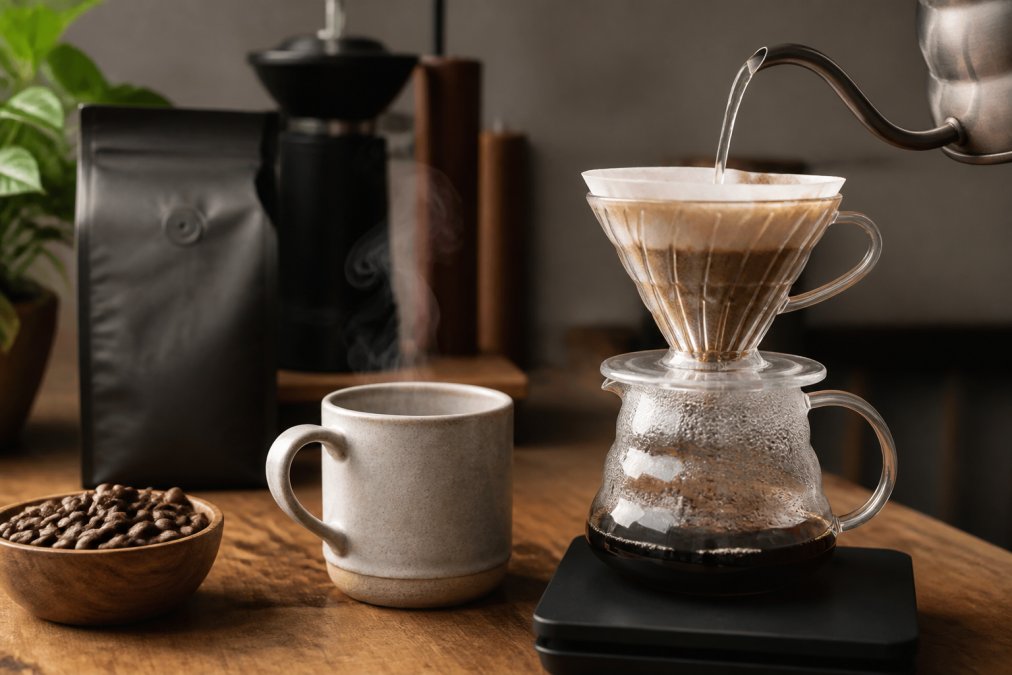
Switching from a mass-market dark roast to a specialty craft roast is not a one-for-one swap. Darker beans are more porous and extract faster, so the grind and temperature that worked for a supermarket French roast will often over-extract a lighter, denser craft bean into bitterness. Adjust two variables first: grind coarser and drop your water temperature.

Here is a starting-point table for dialing in each of the five roasts. Treat these as launch points, then adjust one variable at a time.
| Roast | Best Method | Grind | Water Temp | Ratio |
|---|---|---|---|---|
| 6 Bean Blend | Espresso, drip | Fine (espresso) / medium (drip) | 200-205°F | 1:15 |
| Italian Roast | Espresso, moka, milk drinks | Fine | 198-202°F | 1:14 |
| French Roast | French press, drip | Coarse | 195-200°F | 1:15 |
| African Espresso | Pour-over, espresso | Medium-fine | 200-205°F | 1:16 |
| Whiskey Barrel Aged | Pour-over, AeroPress | Medium | 200-205°F | 1:16 |
Why temperature matters when you switch roasts. A dark roast is already developed at the roaster, so it gives up solubles easily; brew it too hot and you pull out harsh, ashy compounds. A medium or medium-dark craft roast is denser and less soluble, so it needs more heat and often a slightly finer grind to reach full sweetness. If the African Espresso tastes thin and sour, you are under-extracting: go finer or hotter. If the Whiskey Barrel Aged tastes bitter and drying, you are over-extracting: go coarser or cooler.
Grind size is the lever with the biggest effect. Moving from a blade grinder to a burr grinder improves cup consistency more than any single bean upgrade, because a blade grinder produces dust and boulders that extract unevenly. Buy whole bean and grind immediately before brewing. For pour-over, aim for table-salt texture; French press, coarse sea salt; espresso, fine powder just short of flour.
Match the method to the roast's intent.
- Pour-over: best for African Espresso and Whiskey Barrel Aged; a paper filter traps oils and highlights acidity, floral notes, and clarity.
- French press: best for French Roast and 6 Bean Blend; the metal filter keeps oils for a fuller body, but use a coarse grind to avoid sludge.
- Espresso: best for 6 Bean Blend and African Espresso; grind fine, and if the shot runs under 25 seconds it is likely under-extracted.
- Drip: works with any roast; use a medium grind and a ratio near 1:16 coffee to water.
- AeroPress: a forgiving middle ground for anyone still dialing in a new roast, since you can adjust steep time as well as grind.
Subscription vs. one-off: the freshness logistics. A grocery bag may be months past roast yet labeled with a "best by" date rather than a roast date. That freshness window is the whole point, because aroma fades first, then sweetness.
The trade-off is planning. A recurring subscription suits drinkers who go through a bag on a predictable schedule and want a guaranteed roast date without reordering. One-off purchases suit anyone still exploring flavor profiles, because you are not locked into a roast you have not dialed in yet. A practical middle path: start with one-off bags to identify your roast, then move to a recurring order once you know your weekly volume. The U.S. Department of Agriculture's guidance on coffee storage and freshness is a useful reference for keeping beans at their best between orders.
Conclusion: Elevating Your Daily Cup
Moving beyond a familiar dark roast is less about abandoning what you like than discovering what a roast can reveal when origin, freshness, and brew method line up. The five roasts above give you a clear path from bold and smoky to bright and floral, all at one price.
If you want a craft coffee that keeps the depth you love while adding complexity and a silk-like body, Cafe de Mattier roasts in small batches from micro-lots and family-owned estates, with French-inspired techniques and a slow-roast tradition behind every bag. Start with the 6 Bean Blend if you are loyal to dark coffee, or the Whiskey Barrel Aged if you want something genuinely different. Subscribe to our emails and we will help you find the roast that fits your ritual.
Frequently Asked Questions
Which coffee brand is most comparable to Peet's for dark roast lovers?
For dark roast enthusiasts, Cafe de Mattier's Italian Roast and French Roast offer similar boldness with more complexity. Italian Roast is the darkest, blending Arabica and Robusta for a heavy body, while French Roast uses Central American beans for a smoky, chocolatey profile. Both are slow-roasted in small batches, preserving oils that mass-market roasts often lose. At $23.99 per bag, they provide a connoisseur-level alternative to Peet's dark roasts.
What defines a premium specialty coffee compared to commercial roasts?
Premium specialty coffee is defined by traceability, roast date transparency, and cup score. Micro-lot beans from family-owned estates, like those used in Cafe de Mattier's offerings, are often single-origin or carefully curated blends. Commercial roasts prioritize consistency and shelf life, while specialty roasters focus on flavor nuance, small-batch production, and ethical sourcing. Look for roast dates within two weeks and detailed tasting notes to identify true specialty quality.
Why do coffee connoisseurs prefer micro-lot beans over mass-market blends?
Micro-lot beans come from a single farm or cooperative, offering distinct terroir-driven flavors that mass-market blends cannot replicate. Connoisseurs value the traceability and seasonal variations, which reflect the beans' origin and processing. Micro-lots are often hand-picked and small-batch roasted, preserving delicate floral and fruity notes. This contrasts with commercial blends, which are designed for uniformity and may include lower-grade beans.
How does the slow-roast process affect the flavor profile of coffee?
Slow roasting extends the Maillard reaction, developing deeper caramelization and complexity without scorching the beans. This method, used by Cafe de Mattier, results in a silk-like body and balanced acidity. Unlike fast roasting, which can impart bitterness, slow roasting preserves the beans' natural sweetness and origin characteristics. The outcome is a cup with layered notes of caramel, chocolate, or fruit, depending on the bean's origin.