

Best Coffee for a Mindful Morning
Table of Contents
- The Sensory Experience of Mindful Coffee
- Coffee Meditation Techniques for Your Morning Ritual
- Single-Origin vs. Blended Coffee for Focus and Clarity
- Benefits of Slow-Roast Coffee for Morning Rituals
- Best Coffee Pods for Busy Mornings
- Troubleshooting a Distracted Mind During Your Coffee Ritual
- Choosing Beans That Match Your Mindfulness Goals
- Conclusion
Last Updated: August 29, 2026
The Sensory Experience of Mindful Coffee
The best coffee for a mindful morning begins with intention, not just caffeine. When you slow down and engage your senses, a simple cup transforms into a grounding ritual that anchors your entire day.

Aroma, Taste, and Texture as Grounding Tools
Your sense of smell arrives at the brain faster than any other sensory input (peer-reviewed research). Before you take the first sip, the aroma of freshly brewed coffee activates your nervous system and pulls you into the present moment. The tactile experience matters equally: the warmth of the ceramic mug in your hands, the weight of it, the slight resistance as you bring it to your lips.
Texture is often overlooked in coffee conversations. A silk-like body signals quality and care in preparation. Cafe de Mattier's slow-roast tradition creates coffees with this distinctive texture, where complexity unfolds on your palate rather than hitting you with sharp bitterness. Single-origin coffees from family-owned estates tend to offer more nuanced flavor profiles than mass-produced blends.
The flavor profile of your coffee shapes the entire experience. Coffees with floral notes, citrus undertones, or caramel sweetness each create different mental states. Experiment with tasting notes that appeal to you.
Coffee Meditation Techniques for Your Morning Ritual
Coffee meditation is not about achieving a blank mind. It's about directing your attention deliberately toward one experience: the ritual of brewing and drinking coffee.
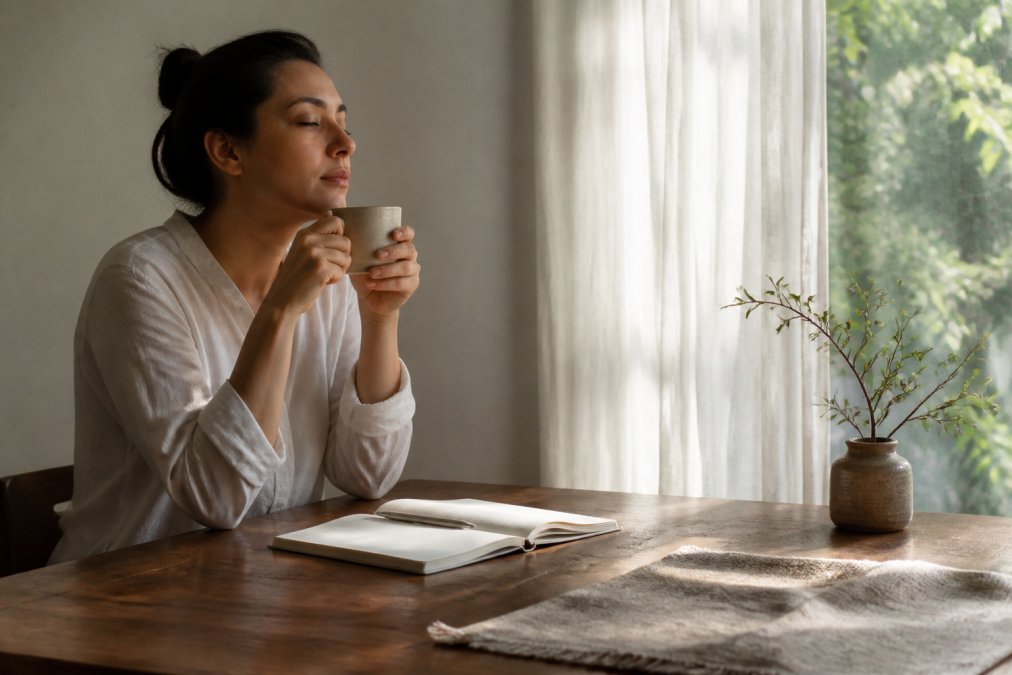
A Step-by-Step Brewing Meditation
The brewing process itself becomes your meditation practice:
-
Gather your materials with intention (2 minutes). Arrange your coffee, grinder, brewing equipment, and cup in front of you. Notice each object.
-
Observe the beans (1 minute). Before grinding, look at the beans. Notice their color, shape, and surface. Smell them.
-
Grind with presence (2 minutes). Feel the resistance of each turn or listen to the sound of an electric grinder. Don't multitask.
-
Heat water mindfully (3-5 minutes). Watch the water heat. Listen to it. This waiting period is part of the meditation.
-
Brew with attention (3-5 minutes). Pour water slowly. Watch it bloom and flow. Smell the aroma intensifying.
-
Pause before drinking (1 minute). Once brewed, sit with the cup in front of you for a full minute without touching it.
-
Taste deliberately (5-10 minutes). Take the first sip slowly. Let it sit on your tongue for a few seconds before swallowing. Take 5-10 small sips over several minutes.
Total time: 15-25 minutes. This is intentional, not rushed.
Breathing and Presence While Brewing
Your breath is the anchor point for mindfulness. As you brew, synchronize your breathing with the process. When water heats, take slow, deep breaths. Inhale for a count of four, hold for four, exhale for four. This activates your parasympathetic nervous system (the NIH).
When you smell the coffee, take three deliberate deep breaths of the aroma before you drink anything. Many people find that coffee meditation naturally extends their breathing practice throughout the morning, creating a reset button whenever you feel scattered.
Single-Origin vs. Blended Coffee for Focus and Clarity
Single-origin coffees come from one specific region or farm and offer distinct flavor profiles that demand your attention. A Nicaragua coffee with cocoa and floral tones is different from a Costa Rica with apple and honey notes. This variety keeps your sensory experience fresh and prevents your mind from going on autopilot.
Blended coffees are engineered for consistency and balance, which can be comforting but less engaging for mindfulness practice. Single-origin coffees create more variation and therefore more opportunity for presence.
Cafe de Mattier's single-origin offerings, including their Nicaragua, Costa Rica, and Peru Decaf, are sourced from micro-lots and family-owned estates. This sourcing approach means you're tasting the story of a specific place and the people who grew it.

For focus and clarity, medium roasts tend to perform better than dark roasts. Medium roasts preserve more of the bean's original characteristics, offering complexity that engages your mind.
| Coffee Type | Flavor Complexity | Best For Mindfulness | Consistency |
|---|---|---|---|
| ---िजन | --- | --- | --- |
| Single-Origin Medium Roast | High | Daily ritual with variety | Changes by origin |
| Single-Origin Dark Roast | Medium-High | Strong, bold presence | More uniform |
| Blend Medium Roast | Medium | Comfort and familiarity | Very consistent |
| Blend Dark Roast | Medium | Bold, predictable taste | Very consistent |
Benefits of Slow-Roast Coffee for Morning Rituals
Slow roasting refers to roasting coffee beans at lower temperatures over a longer period, rather than high-heat rapid roasting. When beans are roasted slowly, the sugars caramelize gradually rather than burning, resulting in a coffee with complexity and multiple flavor notes that emerge as you drink.

Slow roasting also produces a silk-like body, the texture and weight of the coffee on your palate, that signals quality and care. This mouthfeel invites slowness and makes the sensory experience inherently more meditative.
The floral notes that emerge in slow-roasted coffees are particularly valuable for mindfulness practice. These subtle aromatics require you to pay attention and keep you present.
Cafe de Mattier's French-inspired slow-roast tradition creates coffees that naturally support mindful consumption. The process is deliberate, which aligns with the intention you're bringing to your morning ritual.
Best Coffee Pods for Busy Mornings
Not every morning allows for a 20-minute meditation. On days when you're pressed for time, coffee pods offer a compromise: convenience without sacrificing quality.
The challenge with most coffee pods is that they prioritize speed over flavor. The best pods for busy mornings are those made from specialty-grade coffee with transparency about origin, roast level, and tasting notes.
Cafe de Mattier does not currently offer coffee pods. Reusable pod systems allow you to use your own ground coffee, giving you full control over the beans and grind size.
Sustainable and Ethical Sourcing as Mindfulness
Mindfulness extends beyond your own experience. It includes awareness of impact. When you choose coffee from family-owned estates and micro-lots, you're making a conscious choice about who benefits from your purchase.
Industrial coffee farming often relies on monoculture and heavy pesticide use, with underpaid workers. Ethically sourced coffee, particularly from micro-lots and family-owned estates, typically involves direct relationships between buyers and growers, creating accountability and transparency.
Look for third-party certifications like Fair Trade or Rainforest Alliance. Ask the roaster for the names of their growers and regions. Cafe de Mattier's sourcing from family-owned estates demonstrates this level of transparency. Slow roasting uses less energy than rapid roasting, and specialty coffee farming often involves shade-grown practices that preserve forest ecosystems.
Troubleshooting a Distracted Mind During Your Coffee Ritual
Even with the best coffee and clearest intention, your mind will wander. The practice isn't about achieving perfect focus; it's about noticing when you've drifted and gently returning your attention.
If your mind keeps jumping to your to-do list, anchor yourself in sensory experience. Feel the warmth of the mug. Taste the coffee. These physical sensations pull you back to the present moment.
If the coffee tastes flat, the problem might be stale beans. Beans roasted more than 2-3 weeks ago lose their aromatic compounds (peer-reviewed research). If your coffee smells muted, invest in fresh, specialty-grade beans.
If you're grinding too finely, coffee can taste bitter and harsh. Experiment with a slightly coarser grind. The goal is a balanced extraction that tastes clean and complex.
Some people find that adding ritual elements helps with focus. Use the same mug each morning. Brew at the same time. Sit in the same spot. These repeated elements create a neural pathway that signals to your brain: "This is meditation time."
If external distractions are the problem, create boundaries. Put your phone in another room. Brew coffee before anyone else wakes up. Close the door.
Choosing Beans That Match Your Mindfulness Goals
Your mindfulness goals shape which beans you should choose. Are you seeking calm or alertness? Comfort or exploration?
For grounding and anxiety reduction, choose coffees with warm, comforting notes: caramel, chocolate, honey, nutty flavors. Cafe de Mattier's Costa Rica (sweet apple, raisin, honey) and their Coffee with Mushrooms blends create this grounding effect. The mushroom infusion, Lion's Mane, Cordyceps, and Reishi, adds support for mental clarity and calm.

For focus and alertness, choose coffees with bright, complex notes: citrus, floral, fruity. The Nicaragua (cocoa, floral, citrus) works well for this purpose.
For exploration and novelty, rotate through different single-origins. Each region produces distinctly different flavor profiles, keeping your mind curious rather than settling into autopilot.
If you're new to specialty coffee, start with a medium roast from a single origin. Medium roasts are more forgiving than light roasts and more interesting than dark roasts.
| Goal | Roast Level | Flavor Profile | Best Choice |
|---|---|---|---|
| Calm & Grounding | Medium to Dark | Caramel, chocolate, honey, nutty | Costa Rica or Coffee with Mushrooms |
| Focus & Alertness | Light to Medium | Citrus, floral, fruity, bright | Nicaragua |
| Sleep-Friendly | Decaf | Any preferred profile | Peru Decaf |
| Exploration | Medium | Varies by origin | Rotate between single-origins |
The practice of mindful coffee isn't about becoming a coffee snob. It's about reclaiming 15-25 minutes of your morning for intentional presence. When you choose coffee that supports this practice, specialty-grade beans with complexity, slow-roasted for depth, sourced ethically, you're investing in a ritual that pays dividends throughout your day.
Cafe de Mattier's commitment to French-inspired slow roasting and micro-lot sourcing creates coffee that naturally invites mindfulness. The complexity in every cup, the silk-like body, the floral notes, these characteristics exist because someone cared enough to roast slowly and source carefully. That care becomes part of your morning ritual. Subscribe to our emails to explore our full collection of single-origins and specialty blends, and discover which coffee best supports your mindful morning practice.
Frequently Asked Questions
Q: What type of coffee is best for a mindful morning routine?
A: Single-origin specialty coffee from micro-lots works best for mindfulness because it has distinct flavor profiles that demand your full sensory attention. Medium-roast beans preserve complexity and floral notes without overwhelming the palate. Slow-roasted coffee from family-owned estates like those in our collection encourages intentional sipping and present-moment awareness. The brewing process itself becomes the ritual, not just the caffeine consumption.
Q: How can coffee meditation techniques improve my morning clarity?
A: Coffee meditation combines grounding breathing with sensory awareness. Before sipping, spend two minutes inhaling the aroma deeply, noticing the bean's origin story and roast profile. Hold the warm mug and feel its tactile warmth. Then taste slowly, identifying distinct notes. This practice anchors your mind in the present moment, reducing anxiety and sharpening focus before your day begins. The ritual itself signals to your brain that this is intentional self-care time.
Q: What makes slow-roast coffee better for mindfulness than fast-roasted options?
A: Slow-roasting preserves the bean's delicate floral notes, complexity, and silk-like body, which requires slower sipping and deeper sensory engagement. Fast-roasted coffee often tastes bitter and demands quick consumption, missing the ritualistic aspect of mindfulness. Slow-roast beans from specialty producers reveal subtle caramel, citrus, and cocoa undertones that keep your attention engaged throughout your cup, extending the moment of reflection rather than rushing through caffeine intake.
Q: Are ethically sourced coffee beans worth the higher price for a mindful practice?
A: Yes. Knowing your coffee comes from family-owned estates and micro-lots adds a gratitude dimension to your ritual. You're not just consuming a beverage; you're honoring the growers' work and sustainable practices. This intentionality deepens mindfulness by connecting you to the larger story behind each cup. When you understand the origin, altitude, and process of your beans, the sensory experience becomes more meaningful and your morning practice more aligned with conscious consumption values.
This article was written using GrandRanker