

How to Brew Coffee for Complexity: 2026 Guide
Table of Contents
- What Defines Complexity in a Coffee Cup
- Coffee Extraction Variables That Shape Flavor
- Water to Coffee Ratio for Flavor Depth
- How to Brew Micro Lot Coffee: A Step-by-Step Method
- Common Mistakes That Flatten a Complex Brew
- Choosing Beans Built for Complexity
- Conclusion: Your Ritual for a More Complex Cup
- Frequently Asked Questions
Last Updated: September 8, 2026
What Defines Complexity in a Coffee Cup
Most coffee drinkers chase intensity. Complexity is the way a single sip unfolds into layered, shifting impressions rather than one flat note, dark chocolate at the front, red fruit mid-palate, and a soft floral whisper at the finish.
At Cafe de Mattier, we roast small batches to preserve these layered profiles. Complexity is the measurable result of how you extract the hundreds of aromatic compounds locked inside the bean, yielding distinct tasting notes that evolve as the cup cools, balanced acidity and sweetness, and a finish that lingers.
Complexity is fragile, easy to flatten into a one-dimensional bitter or sour cup. The good news is that you can brew coffee for complexity as a learnable skill built on controlling a handful of extraction variables.
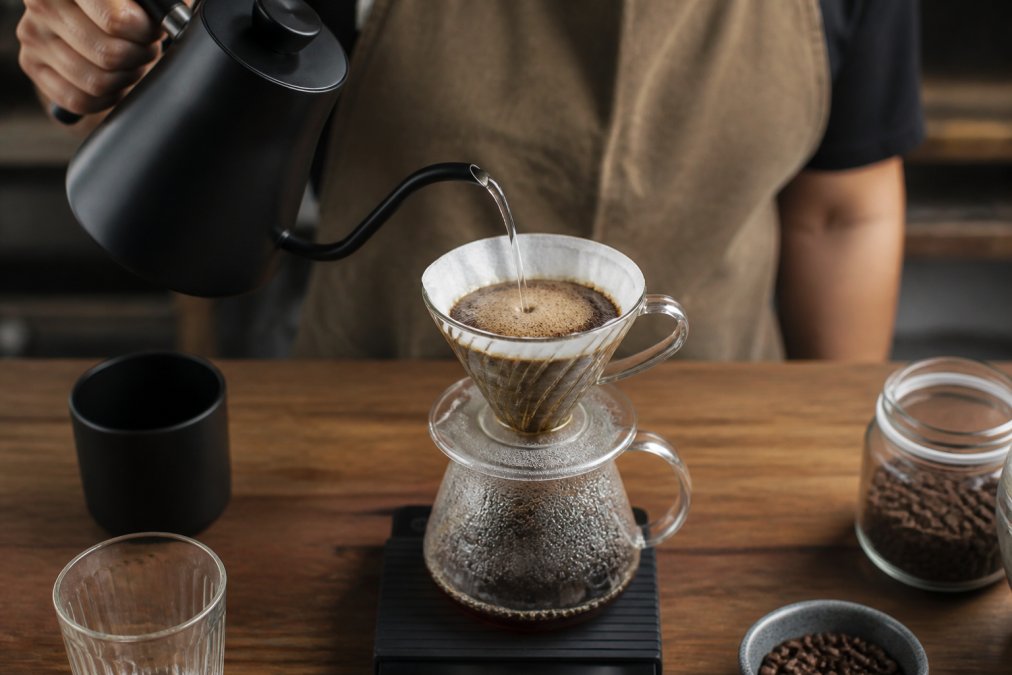
Coffee Extraction Variables That Shape Flavor
Extraction dissolves soluble compounds from coffee grounds into water. The goal is to hit the sweet spot where desirable flavors, acids, sugars, and aromatic oils are drawn out in balance, without pulling the bitter, astringent compounds at the tail end.
Four variables dominate: grind size, water temperature, brew ratio, and contact time. Grind size controls surface area; finer grounds extract faster. Water temperature drives solubility; hotter water extracts more aggressively. Brew ratio determines strength, while contact time dictates how long extraction occurs.
These variables do not operate in isolation, a coarse grind with very hot water might extract similarly to a fine grind with cooler water. Understanding the interplay lets you correct a dull cup rather than guessing.
Water to Coffee Ratio for Flavor Depth
The brew ratio, the weight of coffee to water, sets the ceiling for flavor depth. A common pour-over starting point is 1:16, producing a balanced cup where acidity and sweetness stay in proportion. For a more concentrated, syrupy body, many enthusiasts tighten the ratio to 1:15. Weighing your coffee and water matters more than any other single upgrade; volume measurements are wildly inconsistent because bean density and grind size change how much coffee fits in a scoop.
Ratio is only half the equation; water is the other half. Most guides treat water as a neutral solvent, but it is a chemical participant. The minerals dissolved in your water, magnesium, calcium, and bicarbonate, directly determine which flavor compounds get pulled from the grounds and how quickly.

Magnesium ions are the most aggressive extractors, binding readily with acids and sugars to pull out bright, fruity, complex compounds. Calcium extracts more slowly and emphasizes body. Water high in magnesium and moderate in calcium produces more pronounced acidity and aromatic complexity; water high in calcium but low in magnesium tastes fuller but flatter.
Bicarbonate acts as a buffer against acidity. In high concentrations, it neutralizes organic acids, dulling bright, complex notes and leaving a chalky, muted cup, why hard water with high alkalinity often brews flat coffee.
Most municipal tap water falls between 50 and 300 ppm total hardness, varying wildly by region (usgs.gov). Very soft water (under 50 ppm) makes extraction sluggish, leaving sour, thin flavors; very hard water (over 250 ppm) risks over-extraction and bitterness.
A practical fix is filtered water. A basic carbon filter removes chlorine and organic off-flavors but does little to adjust minerals. To take water chemistry seriously, build your own brewing water from distilled water and mineral concentrates, a practice common among competition brewers. A simpler middle ground is bottled spring water in the SCA's recommended range or a remineralization filter.
If your coffee consistently tastes hollow despite fresh beans and a proper grind, test your water. Brew one cup with tap water and one with bottled spring water, keeping every other variable identical. If the spring water cup shows more pronounced acidity, sweetness, and nuance, your tap water is the limiting factor, a change that can unlock complexity no grinder or kettle upgrade will reveal.
How to Brew Micro Lot Coffee: A Step-by-Step Method
Micro lot coffees, single-origin beans from a specific farm or harvest, are prized for their distinctive character, often carrying delicate floral and fruit notes that are easy to lose with careless brewing. This method protects those nuances.
You will need a gooseneck kettle, a pour-over brewer, a paper filter, a scale, and a timer. Start with freshly roasted whole bean coffee; pre-ground coffee loses its volatile aromatic compounds quickly, so grind right before brewing.
Step 1: Dial in Your Grind Size
Grind size is the first lever. For pour-over, aim for a medium-fine grind, similar to sea salt. If your brew finishes in under two and a half minutes, the grind is too coarse, tasting weak and sour; over four minutes means too fine, producing bitterness.
Adjust one variable at a time, keeping ratio and temperature constant. Taste each adjustment and note how acidity, sweetness, and body shift, small grind changes produce noticeable differences.
Step 2: Master Your Water Temperature
Water temperature directly controls solubility. Boiling water at 212°F will scorch delicate floral notes; the ideal range for most light to medium roasts is 195°F to 205°F. Without a temperature-controlled kettle, let water sit about 30 seconds after boiling to drop into range.
Darker roasts extract more easily and benefit from the cooler end, around 195°F; lighter, denser roasts often need closer to 205°F. Dialing in temperature is the fastest way to brighten a flat cup or tame a bitter one.
Step 3: Perfect Your Pour and Agitation
The pour controls agitation, determining how evenly the grounds are saturated. Start with a bloom pour: twice the weight of the coffee in water, about 50 grams for 25 grams of coffee, and let it sit 30 to 45 seconds to release trapped carbon dioxide.
After blooming, pour in slow, concentric circles, keeping the water level steady and avoiding the paper filter. Total brew time should land between three and three and a half minutes for a more even extraction and cleaner flavor.
Common Mistakes That Flatten a Complex Brew
The most common mistake is using stale beans. Coffee is a perishable product; flavor peaks within a few weeks of roasting. Guidance from the Specialty Coffee Association on freshness and storage confirms that whole bean coffee loses its aromatic complexity rapidly after roasting. Buying whole beans in small quantities and using them within a month preserves the tasting notes.
A second mistake is inconsistent grinding. A grinder producing many particle sizes extracts unevenly, with fine particles over-extracting and coarse ones under-extracting, masking complexity. A burr grinder with uniform particle size is worth the investment.
Skipping the scale is another frequent error. Guessing at the ratio leads to inconsistent strength from cup to cup, making it impossible to diagnose and fix problems. Finally, many brewers neglect water quality. Research on water chemistry from the Water Quality Association shows that mineral content materially affects extraction and flavor. If your water tastes flat, your coffee will too.
Beyond mechanical errors, the most insidious mistake is not knowing how to taste for complexity. Without a structured way to evaluate your cup, you cannot tell whether a change in grind or ratio improved anything. Sensory evaluation, the disciplined tasting professional cuppers use, becomes your most powerful diagnostic tool.
Here is a practical framework. As your coffee cools from hot to warm to room temperature, evaluate it in three passes.
First pass: aroma. Immediately after brewing, inhale over the cup and identify the first impression, floral, fruity, nutty, or earthy. Stir with a spoon to release more volatiles and smell again. A complex coffee reveals multiple aromatic layers; a flat coffee smells one-dimensional.
Second pass: flavor and structure. Take a sip and let the coffee coat your palate. Focus on three dimensions. Acidity: bright and crisp like citrus, or soft and round like stone fruit? A complex coffee has defined, pleasant acidity that is not sour or sharp. Sweetness: caramel, honey, or brown sugar notes balance acidity and mark good extraction. Body: light and tea-like, or heavy and syrupy? Complexity often shows as a progression, acidity at the front, sweetness in the middle, and a lingering finish.
Third pass: finish and evolution. After swallowing, note the aftertaste, does it disappear immediately or linger with a pleasant, clean note? A complex coffee has a finish that evolves, perhaps cocoa fading into subtle fruitiness. Let the cup cool to room temperature and taste again; complex coffees change character as they cool, revealing hidden notes. If it tastes identical at every temperature, it is likely under-developed or flat.
Home brewers often chase bitterness or sourness as the only indicators of extraction problems, but those are just two points on a spectrum. Sour and thin means under-extracting, grind finer, raise temperature, or extend brew time. Bitter and astringent means over-extracting, grind coarser, lower temperature, or shorten brew time. Salty or dull points to water chemistry; hollow, with no distinct notes at any temperature, points to the beans.
Choosing Beans Built for Complexity
Brewing skill can only reveal what the bean contains. Complexity starts at origin, with variety, altitude, and processing method. Washed coffees from high-altitude regions like Kenya tend to showcase bright, floral acidity. Natural or honey-processed coffees often carry heavier fruit and chocolate notes with a fuller body.
When selecting beans, look for detailed origin information and specific tasting notes. A bag listing the farm, altitude, and processing method signals a roaster committed to transparency and quality, where micro lot coffees shine, offering profiles you cannot find in commodity blends.
For a coffee that demonstrates what complexity can be, our African Kahawa Blend is a strong starting point. It layers hints of toffee, caramel, chocolate, raisins, green apples, and red fruits with a soft floral finish. The beans are hand-picked and hand-processed at the farm, and our slow-roast tradition preserves those delicate notes through to your cup.
Conclusion: Your Ritual for a More Complex Cup
To brew coffee for complexity is not about expensive equipment or elaborate technique. It is about controlling a few key variables, grind size, water temperature, ratio, and pour, and using fresh, well-sourced beans. Each cup becomes a small ritual of attention, rewarding you with new layers with every sip.
At Cafe de Mattier, we source micro-lots from family-owned estates and roast them in small batches to protect their inherent character. Our slow-roast tradition delivers a balanced cup with floral notes and a silk-like body, designed for drinkers who treat coffee as a sensory experience. Explore our single-origin offerings like the Kenya or Sumatra to find a profile that speaks to you, and subscribe to our emails for brewing guides and new arrivals.

Frequently Asked Questions
What is the ideal water temperature for brewing complex coffee?
Aim for 195°F to 205°F (90°C to 96°C). Water at this temperature extracts the full range of soluble compounds from the grounds. Below this range, you risk under-extraction, which leaves the cup tasting sour and flat. Above it, you can scorch the grounds, causing bitter, burnt flavors. If you do not have a temperature-controlled kettle, let boiling water sit for 30 to 45 seconds before pouring to bring it into the ideal range.
Why do micro-lot coffees require specific brewing techniques?
Micro-lot coffees come from a single farm or even a single harvest, so they have a distinct, delicate flavor profile that standard brewing can mask. Their dense beans often need a slightly finer grind and a gentler pour to extract evenly. Using a consistent water to coffee ratio and controlling your coffee extraction variables like temperature and time lets the specific tasting notes, such as the floral hints in a Kenya or the dark chocolate in a Sumatra, come through clearly.
What is the 4-6 method for coffee and how does it affect complexity?
The 4-6 method is a pour-over technique. You divide your total water into four pours for the first 40% and then two pours for the final 60%. The first four pours control the sweetness and acidity by adjusting their size, while the last two control the strength of the brew. This level of control over your water to coffee ratio for flavor depth and agitation directly shapes the final complexity in the cup.
How does grind size consistency impact the flavor of my coffee?
Inconsistent grind size creates uneven extraction. Smaller particles over-extract and add bitterness, while larger pieces under-extract and contribute sourness. This muddies the flavor profile and hides the subtle notes in a high-quality bean. A burr grinder produces a more uniform particle size than a blade grinder. For a pour-over aiming for complexity, a medium-fine grind, similar to table salt, is a strong starting point.