

7 Keys to Coffee Acidity and Body in Micro Lots
Last Updated: October 29, 2026
Quick Summary
Coffee acidity is the bright, lively sensation that makes a cup taste vivid rather than flat, and it is judged separately from body, which is the texture and weight of the coffee on your palate. In micro lots, processing, roast level, and origin all shift both attributes, so you should diagnose acidity versus sourness before adjusting your brew.
- Acidity is pleasant and fades cleanly, while sourness bites and leaves a drying sensation.
- Let the cup cool to around 160°F so acidity, sweetness, and defects become easier to spot.
- Sour plus thin body points to under-extraction; grind finer or raise water temperature toward 200-205°F.
- Washed coffees taste clean and bright, while wet-hulled coffees show low-to-medium acidity and big body.
- Score each micro lot 1 to 5 on acidity, body, balance, and finish for a total out of 20.
Table of Contents
- Why Coffee Acidity and Body Matter in Micro Lots
- Coffee Body Meaning: Texture, Weight, and Mouthfeel
- How to Taste Coffee Acidity Without Confusing It With Sourness
- Coffee Processing Methods and Flavor: Washed, Natural, and Wet-Hulled
- Coffee Roast Level and Acidity: What the Roast Changes
- A Simple Acidity and Body Scoring Rubric for Micro Lots
- Compare Micro Lots Side by Side Before You Subscribe
- Frequently Asked Questions
Why Coffee Acidity and Body Matter in Micro Lots
Coffee acidity is the bright, lively sensation that makes a great cup taste vivid rather than flat.
Micro lots are tiny, traceable parcels of coffee from a single farm or even a single plot. For a deeper look at what makes micro lots different from commercial roasts, read our comparison guide.
The Specialty Coffee Association publishes cupping standards that treat acidity and body as two separate attributes, not one combined score. Specialty Coffee Association cupping standards
Below, we break down what body means, how to taste acidity without mistaking it for sourness, and how to score both.
Coffee Body Meaning: Texture, Weight, and Mouthfeel
Coffee body meaning comes down to texture and weight on your palate. It is not a flavor.
Think of the difference between skim milk and whole milk. That gap in weight and coating is body.
What most guides miss is that body and roast level are not the same thing.
- Light-bodied: delicate, tea-like, quick finish
- Medium-bodied: rounded, creamy, balanced
- Full-bodied: syrupy, coating, long finish
Our Sumatra is a clear example of the full end: syrupy body, dark chocolate, and a long lingering finish.
How to Taste Coffee Acidity Without Confusing It With Sourness
Learning how to taste coffee acidity starts with one rule: acidity is pleasant, sourness is not. For practical cues to judge quality in light roasts, keep a few markers in mind.
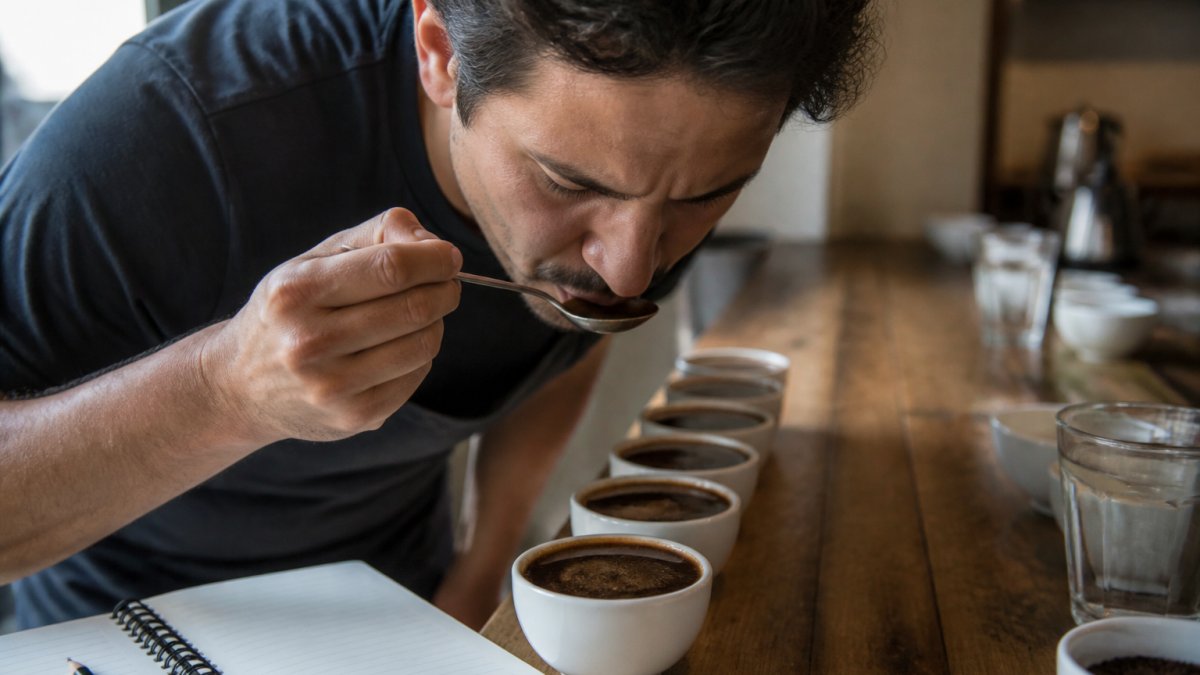
Slurp loudly. This spreads the coffee across your whole palate and pushes aroma to the back of your nose. Then wait.
A common mistake is tasting too hot. Let the cup cool to around 160°F. Acidity and sweetness both come forward as coffee cools, and defects get easier to spot.
A Diagnostic Workflow: Acidity, Sourness, Under-Extraction, or Roast Defect
Instead of guessing, run the cup through a short decision tree.
Step 1, Is the sensation pleasant or aggressive? Pleasant lift that makes you want another sip points to healthy acidity.
Step 2, Is the body thin or full? Thin, tea-like body paired with sourness almost always means under-extraction.
Step 3, Is there sweetness? Healthy acidity is almost always accompanied by sweetness, fruit, caramel, honey.
Step 4, Does the finish dry out? A clean, lingering finish supports healthy acidity.
Corrective Actions by Diagnosis
- Sour plus thin equals under-extraction. Grind finer in small steps, raise water temperature toward 200-205°F, or extend brew time. Change one variable at a time so you can attribute the result.
- Sour plus full body equals a processing or roast issue. A natural process that fermented too long can read as sour rather than fruity. A very light roast can leave malic acid unresolved. Try a slightly longer roast rest or a different lot from the same producer.
- Flat plus ashy equals a roast defect. Baked or scorched roasts lose brightness entirely. No brewing change will bring acidity back, the defect is in the bean.
- Bright plus sweet equals healthy acidity. This is the target. Record the recipe so you can repeat it.
Sensory Prompts to Calibrate Your Palate
Use the same three prompts every time you cup a micro lot:
- Where do I feel it? Acidity tends to sit on the sides and back of the tongue; sourness often bites at the tip and edges.
- What does it remind me of? Citrus, stone fruit, and berry notes suggest healthy acidity. Vinegar, green apple skin, or unripe tomato suggest sourness or under-development.
- Does it make me want another sip? This is the simplest and most reliable test. Pleasant acidity invites; sourness repels.
Coffee Processing Methods and Flavor: Washed, Natural, and Wet-Hulled
Coffee processing methods and flavor are tightly linked.
Washed process: the fruit is removed before drying. Cups taste clean, bright, and structured.
Natural process: the fruit dries around the seed.
Wet-hulled process: used widely in Sumatra. The parchment is removed while the bean is still wet.
Our Kenya is fully washed and dried on raised beds, with bright acidity, orange, lemon, and floral notes.
Coffee Roast Level and Acidity: What the Roast Changes
Coffee roast level and acidity move in opposite directions. As roast degree climbs, organic acids break down and perceived acidity drops. Light roasts keep more citric and malic acid. Dark roasts trade brightness for bittersweet depth.
But roast level is only half the story. Roast duration and profile shape change how much acidity and body survive. Roast duration and curve shape change how much acidity survives.
- Light roast: highest perceived acidity, most origin character
- Medium roast: balanced acidity and sweetness
- Dark roast: low acidity, heavier bitterness
A Simple Acidity and Body Scoring Rubric for Micro Lots
A structured rubric beats memory every time. Score each micro lot from 1 to 5 on four attributes, then total the score out of 20.
| Attribute | Score 1 | Score 3 | Score 5 |
|---|---|---|---|
| Acidity | Flat, dull | Clear, pleasant | Bright, juicy, complex |
| Body | Thin, watery | Rounded, medium | Syrupy, coating |
| Balance | Sharp or hollow | Pleasant | Sweet and acid in harmony |
| Finish | Short, drying | Medium | Long, clean, lingering |
How to run a scoring session:
- Grind the same dose for every sample
- Use the same water temperature and brew time
- Taste blind, with labels hidden
- Score while the cup is warm, then again as it cools
- Note the processing method beside each score
Keep notes on origin, altitude, variety, and process. Traceability is what separates a micro lot from a blend, and your notes are how you learn your own palate.
Compare Micro Lots Side by Side Before You Subscribe
Controlled side-by-side comparison is the fastest way to train your palate, and it is the step most micro-lot buyers skip. If you want subscription services that let you compare micro lots directly, browse our roundup. Brew two micro lots back to back, same dose, same grind, same water. Then score both on the rubric above. That is the short version.
The Controlled Comparison Protocol
A fair comparison changes exactly one thing between cups. Everything else stays fixed.
- Dose: weigh the same amount of ground coffee for every sample. Eyeballing scoops introduces more variation than most people realize.
- Grind: use the same grinder setting. If you switch beans, expect the grind to need a small adjustment, note it, but keep it consistent within a single comparison.
- Water: same source, same temperature, same volume. Water chemistry affects perceived acidity more than many brewers account for; hard water can mute brightness, while very soft water can make acidity read sharp.
- Brew method and time: same dripper, same filter, same contact time. A switch from a paper filter to a metal filter changes body noticeably.
- Rest: compare lots at a similar number of days off roast. A lot rested three days and a lot rested fourteen days are not a fair pair.
Isolating One Variable at a Time
Micro lots are traceable, which means you can design comparisons that hold most variables constant. Three comparison designs are worth repeating:
- Same producer, different processing. If a farm offers both a washed and a natural lot from the same harvest, cupping them side by side isolates processing. Expect the washed cup to read brighter and more structured, and the natural cup to read fruitier with heavier body.
- Same processing, different origin. Compare a washed East African lot against a washed Central American lot. This isolates origin and variety, and it is the fastest way to learn how much of a cup's character comes from the ground rather than the mill.
- Same lot, different roast. If your roaster offers the same green coffee at two roast levels, that pair isolates roast. Perceived acidity usually drops as roast degree climbs, while body often thickens, but not always, which is why the cup matters more than the curve.
Micro-Lot Traceability Prompts
Before you taste, write down what you know about each lot. Traceability is what separates a micro lot from a blend, and the notes are how you learn your own palate.
- Producer and farm name
- Region and altitude
- Cultivar or variety, if disclosed
- Harvest date and processing method
- Lot size, if available, smaller lots often show more variation between bags
- Roast date and roast level
A Worked Example: Washed African vs. Wet-Hulled Indonesian
Start with a washed African lot for bright acidity, then taste a wet-hulled Indonesian lot for body. The contrast teaches more than any description can. Our Kenya, at $23.99, is a strong first sample: bright acidity, orange, lemon, and floral notes from Nyeri County. Our Sumatra is giling basah, the wet-hulled style, and it delivers dark chocolate and a syrupy body instead.
You can shop the Kenya micro lot to practice the rubric yourself.

Frequently Asked Questions
Does coffee acidity mean the coffee is sour?
No. Coffee acidity is the brightness or liveliness a cup carries, the quality that makes flavors read as citrus, berry, or floral. Sourness is a defect signal, usually from under-extraction or underdeveloped beans. The test: pleasant acidity makes you want another sip and fades cleanly, while sourness sits sharply on the front of your tongue and lingers. If a micro lot tastes sour rather than bright, adjust grind and brew time before blaming the bean.
How can I taste acidity and body in a micro-lot coffee?
Brew the same micro lot two ways, one finer grind and one coarser, and taste them side by side. Slurp from a spoon so the coffee spreads across your palate. Note where the acidity hits: front of the tongue, mid-palate, or finish. Then judge body by how the liquid coats your mouth, thin and tea-like or syrupy and heavy. Write both impressions down before you compare, since memory fades fast between cups.
How do roast level and processing affect coffee acidity and body?
Lighter roasts keep more of the bean's organic acids, so they read brighter and often thinner. Darker roasts mute acidity and build body through roast-derived bitterness and oils. Processing matters just as much: washed coffees show clean, defined acidity, natural process coffees push fruit and heavier body, and wet-hulled lots like a Sumatra land on low acidity with a syrupy texture. Roast and process together decide the final balance.
What is the difference between coffee acidity and stomach acidity?
They are unrelated measurements. Coffee acidity refers to perceived brightness and the acids naturally present in the bean, such as citric and malic acid.
Building a palate takes repetition, and repetition is easier when the coffee is worth tasting twice. Cafe de Mattier slow-roasts small batches from micro lots and family-owned estates, so each cup carries the complexity, floral notes, and silk-like body that make side-by-side tasting worthwhile. Subscribe to our emails and get first access to new micro-lot releases, tasting notes, and brewing guidance built for a more mindful morning ritual.
